Giải đề IELTS Cambridge 21 – Test 2: Listening Part 3
Cùng IZONE luyện tập giải đề Giải đề IELTS Cambridge 21 Test 2 Listening Part 3 và tham khảo phần giải thích đáp án chi tiết trong bài viết này nhé!
Bài nghe Cambridge 21 – Test 2: Listening Part 3
Questions 21 and 22
Choose TWO letters, A–E.
Which TWO facts in the sessions on food safety were new information for Nadia and Fergus?
A. the amount of plastic in the ocean
B. the number of diseases caused by contaminated food
C. the amount of food that is wasted
D. the number of people who are obese
E. the result of treating animals with antibiotics
Questions 23 and 24
Choose TWO letters, A–E.
Which TWO features of a project aiming to prevent food fraud impressed Fergus?
A. the new technology it used
B. the publicity it received
C. the use of multiple tests on food items
D. the variety of dietary requirements included
E. the way information was made widely accessible
Questions 25 and 26
Choose TWO letters, A–E.
Which TWO topics do both students recommend should be included in the course?
A. sustainable fishing
B. targeted nutrition
C. global differences in consumption
D. sustainable agriculture
E. digital technology and food
Questions 27–30
Complete the flow-chart below.
Choose FOUR answers from the box and write the correct letter, A–F, next to Questions 27–30.
| Letter | Answer |
|---|---|
| A | This was challenging but enjoyable. |
| B | This led to some disagreement. |
| C | This was easy to decide on. |
| D | This was helped by the guidelines provided. |
| E | This seemed like an unnecessary stage. |
| F | This involved selecting a new ingredient. |
Student project: developing a new food product
Initial aim 27_____ |
↓
Literature review 28_____ |
↓
Product development 29_____ |
↓
Product production 30_____ |
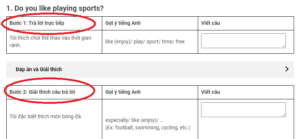
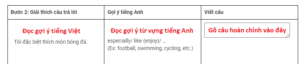
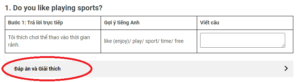
Luyện tập Cam 21 với giao diện chuẩn thi máy IDP/BC tại Website Luyện tập Listening và Reading của IZONE:
Trải nghiệm ngay Web Luyện tập IZONE để tiến bộ hơn mỗi ngày! |

Audiotranscripts Cambridge 21 Test 2: Listening Part 3
TUTOR: Thanks for coming along, Nadia and Fergus. So this is a chance for you to give us some feedback about different aspects of your course. What would you like to begin with?
NADIA: I’ve enjoyed the sessions on food safety. There was some information there that I found really surprising, although some was stuff I knew already, like the rise in rates of obesity.
FERGUS: Yeah, that’s been in the news a lot. But I hadn’t realised that unsafe food causes more than 200 different diseases.
NADIA: No, I’d no idea it was that many. And speaking of diseases, I knew resistance to antibiotics is on the increase, but I didn’t know why.
FERGUS: That it’s partly because when animals are treated with antibiotics, then consumed by humans, the antibiotics get into the food chain. I had no idea about that either.
NADIA: Then the sessions provided a lot of information about plastic pollution from food packaging in the ocean, but I think that most of us were already aware of that.
FERGUS: Yeah, but I thought we could have done more on how much food is thrown away unnecessarily through fear of it being out of date. That was only mentioned in passing.
TUTOR: OK, I’ll bear that in mind. What did you think about the sessions from visiting lecturers, Fergus?
FERGUS: For me, the most interesting one was about that project to prevent companies giving incorrect information to consumers about food.
TUTOR: Ah, food fraud, yes.
FERGUS: I thought it was really good to address a problem that’s faced by so many different groups. People with special religious rules, as well as vegetarians and vegans.
NADIA: And those with allergies.
FERGUS: Yeah. And another thing, we’ve had effective ways of analysing DNA for some time now, and these can easily be applied to analysing food. But what the researchers succeeded in doing was to ensure that these tests were carried out at different stages in the food’s journey, from the producer to the consumer.
NADIA: So they knew that the food actually came from the place it was supposed to, and had the ingredients it was meant to.
FERGUS: Exactly. So customers can be confident about what they buy.
NADIA: And the researchers had a good system for publicising their findings too.
FERGUS: Well, I thought there were some problems with that actually.
TUTOR: Okay. And do you have any recommendations for new topics that we could include in the course?
NADIA: Well, I’m interested in how crop yields can be increased without damaging the environment.
FERGUS: But we’ve already done quite a bit on that. But not so much on the seafood industry, where stocks are in danger of being overexploited as a food source, unless we can find ways of keeping stocks up.
NADIA: Yes, that’d be a good topic. And I’m interested in the idea of a personalised approach to diet, now we have the technology to analyse exactly what individuals need.
FERGUS: That sounds more like a medical topic than food science.
NADIA: Okay. What about sessions on the variety of food and eating habits around the world? That’s very relevant nowadays.
FERGUS: Yes. I think the whole class would be interested in that.
NADIA: Then there’s technological stuff, things like 3D printing of food and smart packaging.
FERGUS: Maybe too specialist.
TUTOR: Now, I’m particularly interested in your project, the one where you developed a new food product. So talk me through the stages. First, you had to decide on your initial aim.
FERGUS: We decided we wanted to create something people could eat on the go rather than in a restaurant.
NADIA: Yeah. So we chose falafel, which was originally a Middle Eastern snack.
FERGUS: We made up our minds about that pretty quickly. I know some students found this a lot harder to choose and wasted a lot of time.
NADIA: Then we had to do the literature review. We hadn’t done one of these before, so the handout with advice for the project was very useful here.
FERGUS: Yes, especially the advice on how to present the information. Then product development, actually deciding what we’d use to make the falafel, and for me, the interesting thing about that was that we wanted it to be something a bit different from an ordinary falafel.
NADIA: We really made the right choice when we finally decided to use jackfruit, even though it wasn’t something that either of us had ever tasted before.
FERGUS: Yeah, like the name tells you, it’s a fruit, but actually it’s really good in savoury dishes. The product production, working out how to make the falafel, was harder than I expected because I’d never made them before.
NADIA: It was mostly trial and error. We started off with the basic recipe, and then experimented, and when it went wrong…
FERGUS: Which it did a lot of the time…
NADIA: We just moved on and kept adapting it. And in the end, it turned out fine and we had a lot of fun.
FERGUS: We did.
TUTOR: Thank you. Well, your project was very good…

Đáp án và giải thích chi tiết IELTS Cambridge 21 – Test 2: Listening Part 3
MCQ25: Questions from 21 to 26 | |
Part 3: Question 21-26 Dạng MCQ (2 đáp án đúng) Cách làm:
Lưu ý: Ta có thể loại trừ đáp án bằng cách lần lượt trả lời 2 câu hỏi: Câu 1: Các thông tin trong câu hỏi ĐỀU TÌM ĐƯỢC NỘI DUNG TƯƠNG ỨNG trong bài nghe hay không?
Câu 2: Có thông tin nào trong câu hỏi bị TRÁI NGƯỢC/SAI LỆCH với nội dung bài nghe hay không?
| |
Câu 21: Which TWO facts in the sessions on food safety were new information for Nadia and Fergus?
Cần tìm những thông tin mới về an toàn thực phẩm đối với Nadia và Fergus. Nadia và Fergus đều từng không biết rằng thực phẩm không an toàn gây ra hơn 200 căn bệnh khác nhau.
=> Đáp án câu 21: B – the number of diseases caused by contaminated food | FERGUS: Yeah, that’s been in the news a lot. But I hadn’t realised that unsafe food causes more than 200 different diseases. |
Câu 22: Which TWO facts in the sessions on food safety were new information for Nadia and Fergus?
Nadia từng không biết tại sao con người lại đang tăng tỉ lệ kháng kháng sinh.
=> Đáp án câu 22: E – the result of treating animals with antibiotics | NADIA: No. I’d no idea it was that many. And speaking of diseases, I knew resistance to antibiotics is on the increase, but I didn’t know why … FERGUS: that it’s partly because when animals are treated with antibiotics then consumed by humans. the antibiotics get into the food chain. I had no idea about that either. |
A. the amount of plastic in the ocean
Cụ thể: Nadia nói rằng thông tin này hầu hết chúng ta đều đã biết (already aware) => Đáp án là FALSE | NADIA: Then the sessions provided a lot of information about plastic pollution from food packaging in the ocean, but I think that most of us were already aware of that. |
C. the amount of food that is wasted
Cụ thể: không đề cập tới việc lượng thức ăn bị lãng phí có phải thông tin mới (new information) với Nadia và Fergus không. => Đáp án là NOT GIVEN | FERGUS: Yeah. But I thought we could have done more on how much food is thrown away unnecessarily through fear of it being out of date, that was only mentioned in passing. |
D. the number of people who are obese
Cụ thể: trong bài không có thông tin về những người bị béo phì => Đáp án là NOT GIVEN | |
Câu 23: Which TWO features of a project aiming to prevent food fraud impressed Fergus?
Cần tìm hai yếu tố của dự án có mục tiêu giảm tình trạng gian lận thực phẩm mà tạo ấn tượng cho Fergus.
Fergus ấn tượng với việc các xét nghiệm được thực hiện ở nhiều giai đoạn khác nhau trong hành trình của thực phẩm từ nhà sản xuất tới người tiêu dùng. => Đáp án đúng: C – the use of multiple tests on food items
| FERGUS: … what the researchers succeeded in doing was to ensure that these tests were carried out at different stages in the food’s journey from the producer to the consumer.
|
Câu 24: Which TWO features of a project aiming to prevent food fraud impressed Fergus?
Cần tìm hai yếu tố của dự án có mục tiêu giảm tình trạng gian lận thực phẩm mà tạo ấn tượng cho Fergus.
Fergus đánh giá cao việc dự án giải quyết vấn đề cho rất nhiều nhóm người khác nhau như người theo quy tắc tôn giáo, người ăn chay, người thuần chay và người bị dị ứng thực phẩm.
=> Đáp án đúng: D – the variety of dietary requirements included | FURGUS: For me the most interesting one was about that project to prevent companies giving incorrect information to consumers about food. TUTOR: Ah, food fraud, yes. FERGUS: I thought it was really good to address a problem that’s faced by so many different groups – people with special religious rules, as well as vegetarians and vegans.
NADIA: And those with allergies. |
A. the new technology it used
Cụ thể: Fergus nói rằng công nghệ phân tích DNA đã tồn tại từ lâu (“for some time now”), điều anh ấy ấn tượng không phải là công nghệ mới mà là cách áp dụng nó.
⇒ Đáp án là FALSE | FERGUS: Yeah. And another thing, we’ve had effective ways of analysing DNA for some time now and these can easily be applied to analysing food. |
B. the publicity it received
Cụ thể: Nadia cho rằng các nhà nghiên cứu có hệ thống quảng bá kết quả nghiên cứu tốt, nhưng Fergus lại nói rằng anh thấy vẫn có một số vấn đề với việc đó.
⇒ Đáp án là FALSE | NADIA: And the researchers had a good system for publicising their findings too.
FERGUS: Well, I thought there were some problems with that, actually. |
E. the way information was made widely accessible
Cụ thể: bài nghe chỉ đề cập đến việc công bố (publicise) kết quả nghiên cứu, không đề cập đến việc làm cho thông tin trở nên dễ tiếp cận rộng rãi đối với công chúng.
⇒ Đáp án là NOT GIVEN | |
Câu 25: Which TWO topics do both students recommend should be included in the course?
Cần tìm hai chủ đề mà cả Nadia và Fergus đều đề xuất nên được đưa vào khóa học.
Fergus đề cập đến ngành thủy sản và lo ngại nguồn lợi thủy sản có thể bị khai thác quá mức. Nadia đồng ý rằng đây là một chủ đề hay. ⇒ Đáp án đúng: A – sustainable fishing | FERGUS: … not so much on the seafood industry, where stocks are in danger of being overexploited as a food source unless we can find ways of keeping stocks up.
NADIA: Yes, that’d be a good topic.
|
Câu 26: Which TWO topics do both students recommend should be included in the course?
Cần tìm hai chủ đề mà cả Nadia và Fergus đều đề xuất nên được đưa vào khóa học.
Nadia đề xuất các buổi học về sự đa dạng của thực phẩm và thói quen ăn uống trên thế giới. Fergus đồng ý và cho rằng cả lớp đều sẽ hứng thú với chủ đề này. ⇒ Đáp án đúng: C – global differences in consumption | NADIA: OK. What about sessions on the variety of food and eating habits around the world? That’s very relevant nowadays.
FERGUS: Yes. I think the whole class would be interested in that. |
B. targeted nutrition
Cụ thể: Nadia đề xuất chủ đề này nhưng Fergus cho rằng nó thiên về y học hơn là khoa học thực phẩm.
⇒ Đáp án B FALSE | NADIA: And I’m interested in the idea of a personalised approach to diet, now we have the technology to analyse exactly what individuals need.
FERGUS: That sounds more like a medical topic than food science. |
D. sustainable agriculture
Cụ thể: Fergus cho rằng chủ đề này đã được đề cập khá nhiều trong khóa học rồi, nên không xem đây là một chủ đề cần bổ sung thêm.
⇒ Đáp án D FALSE | NADIA: Well, I’m interested in how crop yields can be increased without damaging the environment.
FERGUS: But we’ve already done quite a bit on that … |
E. digital technology and food
Cụ thể: Nadia đề xuất chủ đề này nhưng Fergus cho rằng nó có thể quá chuyên sâu.
⇒ Đáp án E FALSE | NADIA: Then there’s technological stuff, things like 3D printing of food and smart packaging.
FERGUS: Mmm – maybe too specialist. |
Matching Questions from 27 to 30 | |
Part 3: Question 27-30 Dạng Matching Cách làm: Bước 1: Đọc qua câu hỏi (các câu hỏi sẽ không bị paraphrase nên không cần lo lắng là không nhận ra chúng trong audio) Bước 2: Đọc kỹ các phương án lựa chọn, đảm bảo rằng đã hiểu và phân biệt được sự giống-khác nhau giữa chúng Bước 3: Nghe kỹ Audio và take notes paraphrase Bước 4: Chọn đáp án | |
27 – Initial aim
Bài nghe cho thấy hai sinh viên ngay lập tức thống nhất mục tiêu ban đầu là tạo ra một sản phẩm có thể ăn khi di chuyển, và họ không mất nhiều thời gian để quyết định điều này.
⇒ Đáp án đúng là C – This was easy to decide on | TUTOR: Now, I’m particularly interested in your project – the one where you developed a new food product. So talk me through the stages … first you had to decide on your initial aim.
NADIA: We decided we wanted to create something people could eat on the go rather than in a restaurant.
FERGUS: We made up our minds about that pretty quickly. I know some students found it a lot harder to choose, and wasted a lot of time. |
28 – Literature review
Bài nghe cho thấy phần literature review là lần đầu họ thực hiện dạng nhiệm vụ này, và họ được hỗ trợ rất nhiều bởi tài liệu hướng dẫn của dự án, đặc biệt là phần hướng dẫn cách trình bày thông tin.
⇒ Đáp án đúng là D – This was helped by the guidelines provided | NADIA: Then we had to do the literature review. We hadn’t done one of these before so, the handout with advice for the project was very useful here.
FERGUS: Yes, especially the advice on how to present the information. |
29 – Product development
Trong giai đoạn phát triển sản phẩm, họ quyết định sử dụng một nguyên liệu mới là jackfruit, thứ mà cả hai chưa từng thử trước đó.
⇒ Đáp án đúng là F – This involved selecting a new ingredient | FURGUS: Yes. especially the advice on how to present the information. Then product development, actually deciding what we’d use to make the falafel, and for me the interesting thing about that was that we wanted it to be something a bit different from an ordinary falafel. NADIA: We really made the right choice when we finally decided to use jackfruit, even though it wasn’t something that either of us had ever tasted before. |
30 – Product production
Quá trình sản xuất gặp nhiều khó khăn do phải thử nghiệm nhiều lần, nhưng cuối cùng họ cảm thấy rất vui và hài lòng với kết quả đạt được.
⇒ Đáp án đúng là A – This was challenging but enjoyable | FURGUS: Yeah, like the name tells you, it’s a fruit but actually it’s really good in savoury dishes. The product production, working out how to make the falafel, was harder than I expected because I’d never made them before. NADIA: It was mostly trial and error. We started off with the basic recipe and then experimented and when it went wrong … FURGUS: … which it did a lot of the time … NADIA: … we just moved on and kept adapting it and in the end it turned out fine and we had a lot of fun. |
Trên đây là phần giải IELTS Cambridge 21 – Test 2: Listening Part 3 chi tiết từ IZONE. Luyện tập giải Cam 21 tại chuyên mục Giải đề Cambridge với phần giải thích đáp án chi tiết.