Giải đề IELTS Cambridge 21 – Test 3: Reading Passage 2: The problems of getting around the city of Dar es Salaam

Cùng IZONE luyện tập giải đề IELTS Cambridge 21 Test 3 Reading Passage 2 The problems of getting around the city of Dar es Salaam và tham khảo phần giải thích đáp án chi tiết trong bài viết này nhé!
Bài đọc IELTS Cambridge 21 Test 3 Reading Passage 2
READING PASSAGE 2
You should spend about 20 minutes on Questions 14–26, which are based on Reading Passage 2 below.
The problems of getting around the city of Dar es Salaam
Dar es Salaam in Tanzania is one of the fastest growing cities in Africa. Its population has increased eightfold since 1980 and swells by half a million people every year. United Nations projections anticipate it will become a megacity within seven years as its population passes 10 million, reaching 13.4 million by 2035. Daniel Hoornweg for the Global Cities Institute forecasts the city could be home to an incredible 73.7 million people by 2100.
Today, four out of five of its people live in single-storey informal settlements on the spreading edges of the city, where the journey to and from the centre regularly takes over two hours. It can be longer if rain turns the dirt roads to mud.
Even in the middle of the day, traffic frequently slows to a stop without warning. It is not unusual for cars and minibuses to queue for 20 minutes at a key intersection. A single suburban rail line serves residents in a few areas to the south but is tiny in the context of the wider city. Outside the centre many rely on boda boda (motorbike taxis) to navigate the narrow side streets and potholed mud roads that make up much of the metropolis. Their safety record is scandalous.
Dar es Salaam’s reliance on four arterial roads into the city is a legacy of the colonial government that planned the city at the start of the 20th century to cater for a population of 35,000. Most of the current growth is made up of young people arriving from the countryside to find work, and as the population has exploded, Dar es Salaam has grown around those four highways. Nearly all the expansion is happening on the periphery, and nearly all takes place informally without any agreed strategy.
But Dar es Salaam is pinning its hopes on a solution that could offer a different model for Africa’s megacities, giving them an alternative to a future controlled by the private car. Unlike many cities on the continent, Dar es Salaam isn’t trying to build a metro. It has chosen a less exciting but cheaper and more achievable method: the bus.
The DART bus rapid transit (BRT) system runs on bus lanes separated from other traffic, mostly in the middle of the road to reduce stoppages. Ticket purchase and control takes place at stations prior to boarding and the buses are step-free, which means the entire route is accessible to people using wheelchairs or who are travelling with baby buggies.
‘The new buses are much, much better,’ says Paulas George, a young IT worker. He takes the bus every day and it has cut his journey time by two-thirds. He says it is not perfect, though, complaining that drivers often refuse to turn on the air conditioning to save fuel.
That is not the only problem. A shortage of buses after a serious flood at the main depot during the rainy season means the system is carrying 200,000 people a day – half the expected capacity. Smartcards can’t be used as the mechanical readers aren’t working either, forcing passengers to buy individual paper tickets for every journey. Each is printed with a scannable QR code, but there are no scanners. Staff stand by the gates and tear tickets as people enter. As a result, queues are considerable at peak times.
Morogoro Road to the north-west of the city was phase I of the BRT project. Phases II and III will install bus lanes along Nyerere Road to the south-west and Kilwa Road to the south. Construction on both routes is due to start imminently. Phase IV, towards Bagamoyo in the north, is in the preliminary design stage. ‘Much of the city will have access to a world-class transport system within the space of a few years,’ says Chris Kost, the Africa director of ITDP (the Institute for Transportation and Development Policy). All phases are being planned to high standards and, once complete, a third of city residents will be within a short walk of the BRT network.
The ITDP regrets Africa’s obsession with metros. ‘With a metro, an international firm will often just parachute in its own system,’ says Kost. ‘Bus rapid transit allows existing stakeholders to get involved. That’s what we did in Dar es Salaam and what we’re planning in Nairobi, where the bus bodies will be built in the city and local operators will look after tickets, fare collection and IT …Bus rapid transit has been transformational for Dar es Salaam. For millions of people in African cities, this is their best hope of ever being connected.’
Questions 14–18
Do the following statements agree with the information given in Reading Passage 2?
In boxes 14–18 on your answer sheet, write
TRUE if the statement agrees with the information
FALSE if the statement contradicts the information
NOT GIVEN if there is no information on this
14 The population of Dar es Salaam is rising more rapidly than was previously predicted.
15 Most of the residents of Dar es Salaam live in high-rise blocks on the edge of the city.
16 Residents have been consulted about their views on the suburban rail line in Dar es Salaam.
17 The majority of the present residential development in Dar es Salaam is unplanned.
18 Dar es Salaam’s authorities have decided to follow the public transport plan adopted by a large number of African cities.
Questions 19–26
Complete the notes below.
Choose ONE WORD ONLY from the passage for each answer.
Write your answers in boxes 19–26 on your answer sheet.
Dar es Salaam’s DART Bus Rapid Transit system
Features
the buses use designated 19 __________ to cut down on delays
passengers pay fares before 20 __________
passengers in 21 __________ can use every part of the system
Problems
the temperature control is sometimes not activated in order to reduce 22 __________ use
insufficient number of vehicles are available due to the effects of a severe 23 __________
passengers are unable to use 24 __________ because some equipment is out of action
tickets have to be checked manually at station 25 __________
26 __________ frequently build up during rush hours
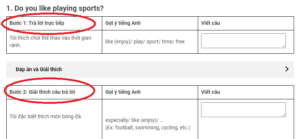
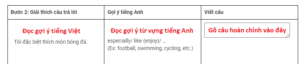
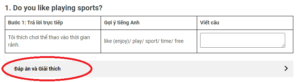
Luyện tập Cam 21 với giao diện chuẩn thi máy IDP/BC tại Website Luyện tập Listening và Reading của IZONE:
Trải nghiệm ngay Web Luyện tập IZONE để tiến bộ hơn mỗi ngày! |

Đáp án và giải thích chi tiết IELTS Cambridge 21 Test 3 Reading Passage 2
Questions 14-18: Dạng TRUE/FALSE/NOT GIVEN & YES/NO/NOT GIVEN (Chú ý chọn nội dung phù hợp) Cách làm: Bước 1: Đọc kĩ câu hỏi và gạch chân từ khóa Bước 2: Scan từ khóa đã gạch trong bài đọc Bước 3: Chú ý tới controlling words (not, only, the majority etc.) Bước 4: Chọn đáp án phù hợp Chọn đáp án bằng cách lần lượt trả lời 2 câu hỏi: Câu 1: Các thông tin trong câu hỏi ĐỀU TÌM ĐƯỢC NỘI DUNG TƯƠNG ỨNG trong bài đọc hay không? *Nội dung tương ứng là những nội dung cùng chỉ về 1 điều, mang cùng 1 chức năng trong câu. Ví dụ: Anh ấy đến nơi lúc 8h vs. Sau 9h anh ấy mới tới => “lúc 8h” và “sau 9h” đều nêu thời điểm anh ta tới nơi => 2 thông tin này dù khác về nội dung những vẫn được coi là tương ứng với nhau (đều chỉ mặt thời gian) Nếu không (có thông tin trong câu hỏi mà không có phần tương ứng trong bài đọc): đáp án là NOT GIVEN. Nếu có: loại phương án NOT GIVEN và chuyển sang câu hỏi 2 Câu 2: Có thông tin nào trong câu hỏi bị TRÁI NGƯỢC/SAI LỆCH với nội dung bài đọc hay không? Nếu không (mọi thông tin đều khớp): đáp án là TRUE. Nếu có: đáp án là FALSE | |
14 The population of Dar es Salaam is rising more rapidly than was previously predicted.
=> Đáp án là: NOT GIVEN | United Nations projections anticipate it will become a megacity within seven years […] Daniel Hoornweg […] forecasts the city could be home to an incredible 73.7 million people by 2100. |
15 Most of the residents of Dares Salaam live in high-rise blocks on the edge of the city. Giải thích:
=> Đáp án là: FALSE | Today, four out of five of its people live in single-storey informal settlements on the spreading edges of the city. |
16 Residents have been consulted about their views on the suburban rail line in Dares Salaam.
=> Đáp án là: NOT GIVEN | A single suburban rail line serves residents in a few areas to the south […] |
17 The majority of the present residential development in Dar es Salaam is unplanned.
=> Đáp án là TRUE | Nearly all the expansion is happening on the periphery, and nearly all takes place informally without any agreed strategy. |
18 Dares Salaam’s authorities have decided to follow the public transport plan adopted by a large number of African cities.
=> Đáp án là FALSE | Unlike many cities on the continent, Dares Salaam isn’t trying to build a metro. It has chosen a less exciting but cheaper and more achievable method: the bus. |
Questions 19-26: Dạng Sentence Completion Cách làm: Bước 1: Đọc kĩ câu hỏi và gạch chân từ khóa, khoanh tròn giới hạn từ Bước 2: Xác định từ loại và loại thông tin cần điền trong chỗ trống (VD: noun – a person) Bước 3: Scan từ khóa đã xác định trong đoạn văn Bước 4: Điền vào chỗ trống, kiểm tra lại giới hạn từ & ngữ pháp | |
Câu 19: the buses use designated 19. ________ to cut down on delays Từ cần điền là một danh từ số nhiều (chỉ cơ sở hạ tầng giao thông). Đoạn văn giới thiệu các đặc điểm nổi bật của hệ thống xe buýt nhanh DART, bao gồm làn đường riêng dành cho xe buýt, cách mua vé và những tiện ích giúp hành khách di chuyển thuận tiện hơn. => Đáp án là lanes | Đoạn 6: The DART bus rapid transit (BRT) system runs on bus lanes separated from other traffic, mostly in the middle of the road to reduce stoppages. |
Câu 20: passengers pay fares before ________ Từ cần điền là một danh từ hoặc danh động từ. Đoạn văn tiếp tục mô tả quy trình sử dụng hệ thống xe buýt DART, trong đó có thông tin về thời điểm hành khách mua và kiểm tra vé trước khi lên xe. => Đáp án là: boarding | Đoạn 6: Ticket purchase and control takes place at stations prior to boarding and the buses are step-free, which means the entire route is accessible to people using wheelchairs or who are travelling with baby buggies. |
Câu 21: passengers in ________ can use every part of the system Từ cần điền là một danh từ số nhiều. Đoạn văn đề cập đến khả năng tiếp cận của hệ thống xe buýt đối với những nhóm hành khách có nhu cầu đặc biệt. Xe buýt được thiết kế không có bậc lên xuống, vì vậy người sử dụng xe lăn có thể tiếp cận toàn bộ tuyến xe. => Đáp án là: wheelchairs | Đoạn 6: Ticket purchase and control takes place at stations prior to boarding and the buses are step-free, which means the entire route is accessible to people using wheelchairs or who are travelling with baby buggies. |
Câu 22: the temperature control is sometimes not activated in order to reduce ________ use Từ cần điền là một danh từ. Sau khi giới thiệu những ưu điểm của hệ thống DART, đoạn văn chuyển sang những hạn chế mà hành khách gặp phải. Một trong số đó là việc tài xế không bật điều hòa để tiết kiệm một loại nhiên liệu. => Đáp án là: fuel | Đoạn 7: ‘The new buses are much, much better,’ says Paulas George, a young IT worker. He takes the bus every day and it has cut his journey time by two-thirds. He says it is not perfect, though, complaining that drivers often refuse to turn on the air conditioning to save fuel. |
Câu 23: insufficient number of vehicles are available due to the effects of a severe ________ Từ cần điền là một danh từ. Đoạn văn tiếp tục trình bày nguyên nhân khiến số lượng xe buýt không đáp ứng được nhu cầu, xuất phát từ một hiện tượng thời tiết nghiêm trọng ảnh hưởng đến nơi tập kết xe. => Đáp án là: flood | Đoạn 8: A shortage of buses after a serious flood at the main depot during the rainy season means the system is carrying 200,000 people a day – half the expected capacity. |
Câu 24: passengers are unable to use ________ because some equipment is out of action Từ cần điền là một danh từ số nhiều. => Đáp án là: smartcards | Đoạn 8: Smartcards can’t be used as the mechanical readers aren’t working either, forcing passengers to buy individual paper tickets for every journey. |
Câu 25: tickets have to be checked manually at station ________ Từ cần điền là một danh từ số nhiều. => Đáp án là: gates | Đoạn 8: […] Staff stand by the gates and tear tickets as people enter […] |
Câu 26: ________ frequently build up during rush hours Từ cần điền là một danh từ số nhiều. Đoạn văn kết luận phần nói về các vấn đề của hệ thống bằng cách nêu hệ quả của việc kiểm tra vé thủ công, đặc biệt vào những giờ cao điểm. => Đáp án là: queues | Đoạn 8: […] As a result, queues are considerable at peak times. |
Trên đây là phần giải đề IELTS Cambridge 21 Test 3 Reading Passage 2 The problems of getting around the city of Dar es Salaam chi tiết từ IZONE. Luyện tập giải Cam 21 tại chuyên mục Giải đề Cambridge với phần giải thích đáp án chi tiết.