Giải đề IELTS Cambridge 21 – Test 4: Listening Part 3 Presentation on houses of the future

Cùng IZONE luyện tập giải đề IELTS Cambridge 21 Test 4 Listening Part 3 Presentation on houses of the future và tham khảo phần giải thích đáp án chi tiết trong bài viết này nhé!
Bài nghe Cambridge 21 – Test 4: Listening Part 3 Presentation on houses of the future
Questions 21–23
Choose the correct letter, A, B or C.
Presentation on houses of the future
21. Which aspect of their presentation are Mia and Leo both concerned about?
A. meeting the deadline
B. finding suitable examples
C. including original ideas
22. The students decide to focus their assignment on housing for
A. family groups.
B. old people.
C. single people.
23. The students agree that demand for accommodation in urban areas should be met by
A. repurposing offices and factories.
B. constructing tall buildings.
C. developing creative ideas for smaller homes.
Questions 24–30
What opinion is given about each of the following developments?
Choose SEVEN answers from the box and write the correct letter, A–I, next to Questions 24–30.
Opinions A. This could cause unnecessary anxiety. |
Developments
24. use of roof space for gardens __________________
25. shared working spaces __________________
26. moveable internal walls __________________
27. smart mirrors in bathrooms __________________
28. bike sheds with charging points __________________
29. restriction of cars to certain areas __________________
30. communal vegetable plots __________________
Luyện tập Cam 21 với giao diện chuẩn thi máy IDP/BC tại Website Luyện tập Listening và Reading của IZONE:
Trải nghiệm ngay Web Luyện tập IZONE để tiến bộ hơn mỗi ngày! |

Audiotranscripts IELTS Cambridge 21 – Test 4: Listening Part 3 Presentation on houses of the future
Mia: You know that joint presentation we’ve got to do this semester, Leo?
Leo: On houses of the future?
Mia: That’s right. I’m a bit concerned. Are we meant to come up with creative new suggestions for these houses?
Leo: I don’t think so. It’s more a matter of reporting and evaluating possible developments. But we mustn’t be too general. We’ve got to support our points by referring to specific cases, so that’ll need a lot of work.
Mia: Mm, I’m afraid so. When’s it got to be done by?
Leo: In about six weeks, so that’s not too much of a rush.
Mia: Good. We’d better decide now what type of housing we’re going to focus on.
Leo: How about housing for different generations living together?
Mia: Mm, we could do. Or accommodation for one person?
Leo: I think someone else is doing that.
Mia: Ah.
Leo: I was wondering about housing for the elderly. That’s likely to become more important.
Mia: Yeah, that’s true. But I think your suggestion about intergenerational living might be more interesting. Let’s go with that.
Leo: Okay. Now, I think the future demand is mainly going to be for accommodation in urban areas. So, one way of meeting that demand might be to use existing commercial buildings and adapt them to form accommodation.
Mia: Mm, or come up with original ways of organizing space so that people can live in smaller homes. But I think the solution is to design multi-story apartment blocks.
Leo: Building up rather than out, yes.
Before you hear the rest of the discussion, you have some time to look at questions 24 to 30.(Pause) Now listen and answer questions 24 to 30.
Mia: Let’s think of some specific developments for houses of the future.
Leo: Okay. How about increase use of roof space on high-rise buildings for gardens?
Mia: Yes! In fact, it doesn’t have to be high-rise. You can do it on a one-story building in a suburb. But it would greatly improve how you feel if you live in an urban high-rise.
Leo: Especially if you don’t have a balcony.
Mia: Yes. I think homes of the future will all need access to a shared working space, somewhere in the same building or group of houses, where people can go and work instead of just having a laptop on the kitchen table.
Leo: Yes, so they aren’t having to travel to an office, but can still interact with others. Mm, that’s often how new ideas get generated by chatting to someone from a different profession.
Mia: Yeah. I read about a type of design where the internal walls of an apartment are movable, so the space can be adapted over time as people’s needs change.
Leo: Like when children leave school and start working but still continue to live with their parents for many years, or when an elderly relative moves in with the family. It would mean they could still have their own space, specially designed for their needs.
Mia: Yes. Have you heard about those smart bathroom mirrors which can monitor people’s health? They recognize signs of illness and contact a doctor automatically.
Leo: Hm… not so sure they’re a good idea.
Mia: Nor am I. People might worry about conditions which aren’t serious at all. What about transport? Wouldn’t it be good if there were bike sheds with charging points, so people could store their electric bikes securely and charge them up at the same time?
Mia: Yes! That would encourage more people to cycle instead of using their car. Much better for the planet.
Leo: Mm. I read about one housing development where cars had to be left just outside it, so the center was all a pedestrianized area. Great for families with children.
Mia: Maybe, but what if you’re disabled or elderly and can’t walk far? It wouldn’t be so good for people like that.
Leo: No.
Mia: I saw a scheme for communal vegetable plots, where neighbors could decide what to grow together. That’d be a great way for older people to get to know one another, especially if they’re no longer going out to work.
Leo: Yes, doing something together’s always more enjoyable, isn’t it? Do you think we might be able to look into…
That is the end of part 3. You now have 30 seconds to check your answers to part 3.
Đáp án & Giải chi tiết Cambridge 21 – Test 4: Listening Part 3
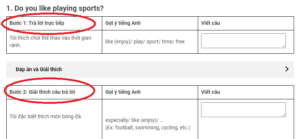
Question 21-23 Dạng MCQ Cách làm: Bước 1: Đọc kỹ các câu hỏi và đáp án. Trong 3 đáp án sẽ có 1 đáp án đúng (True), 2 đáp án còn lại cũng được đề cập đến trong bài nhưng sẽ ở dạng False hoặc Not given Bước 2: Gạch chân các từ khóa ở câu hỏi và các đáp án Bước 3: Dự đoán những từ có thể được paraphrase trong audio Bước 4: Nghe, take notes paraphrase và lựa chọn đáp án đúng Lưu ý: Ta có thể loại trừ đáp án bằng cách lần lượt trả lời 2 câu hỏi: Câu 1: Các thông tin trong câu hỏi ĐỀU TÌM ĐƯỢC NỘI DUNG TƯƠNG ỨNG trong bài nghe hay không? *Nội dung tương ứng là những nội dung cùng chỉ về 1 điều, mang cùng 1 chức năng trong câu. Ví dụ: Anh ấy đến nơi lúc 8h vs. Sau 9h anh ấy mới tới => “lúc 8h” và “sau 9h” đều nêu thời điểm anh ta tới nơi => 2 thông tin này dù khác về nội dung những vẫn được coi là tương ứng với nhau (đều chỉ mặt thời gian) Nếu không (có thông tin trong câu hỏi mà không có phần tương ứng trong bài nghe ): đáp án là NOT GIVEN. Nếu có: loại phương án NOT GIVEN và chuyển sang câu hỏi 2 Câu 2: Có thông tin nào trong câu hỏi bị TRÁI NGƯỢC/SAI LỆCH với nội dung bài nghe hay không? Nếu không (mọi thông tin đều khớp): đáp án là TRUE. Nếu có: đáp án là FALSE | |
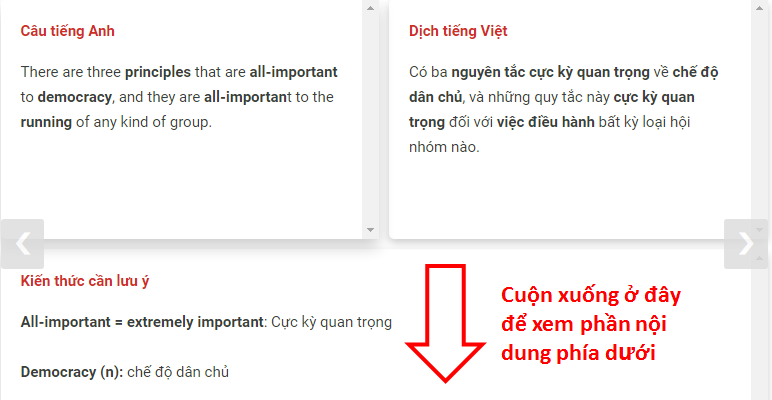
Câu 21: B finding suitable examples 21. Which aspect of their presentation are Mia and Leo both concerned about? B. finding suitable examples Leo nhấn mạnh bài thuyết trình không được quá chung chung mà phải chứng minh các luận điểm bằng cách dẫn ra những trường hợp cụ thể, và việc này sẽ tốn rất nhiều công sức => Mia đồng tình => Việc tìm các trường hợp cụ thể này chính là tìm kiếm các ví dụ phù hợp => Do đó, cả hai bạn đều đang lo lắng về khía cạnh này => Đáp án đúng là B | Leo: It’s more a matter of reporting and evaluating possible developments. But we mustn’t be too general. We’ve got to support our points by referring to specific cases. So that’ll need a lot of work. Mia: I’m afraid so. |
A. meeting the deadline Mia chỉ hỏi xem khi nào phải nộp chứ hai bạn chưa hề bày tỏ sự lo lắng hay bàn bạc sâu hơn về nó, vì vậy loại đáp án A. => Đáp án A là FALSE | Mia: When’s it got to be done by? Leo: In about 6 weeks, so that’s not too much of a rush. |
C. including original ideas Mia lo lắng hỏi liệu có cần nghĩ ra những ý tưởng sáng tạo, mới mẻ (ngược lại với từ original) không. Leo trả lời là không cần, chỉ cần báo cáo và đánh giá các xu hướng thôi, vì vậy loại đáp án C => Đáp án C là FALSE | Mia: […] I’m a bit concerned – are we meant to come up with creative new suggestions for these houses? Leo: I don’t think so. |
Câu 22: A family groups. 22 The students decide to focus their assignment on housing for A. family groups. Leo băn khoăn về việc làm nhà ở cho người già, Mia thấy cũng đúng nhưng cô ấy chốt lại là gợi ý của Leo về việc các thế hệ sống chung với nhau có vẻ thú vị hơn – hãy chọn cái đó. Cụm từ “intergenerational living” (nhiều thế hệ sống chung) đồng nghĩa với “family groups”. => Đáp án đúng là A | Mia: […] We’d better decide now what type of housing we’re going to focus on. Leo: How about housing for different generations living together? Mia: […] But I think your suggestion about intergenerational living might be more interesting – let’s go with that. |
B. old people. Leo băn khoăn về việc làm nhà ở cho người già, Mia thấy cũng đúng nhưng cô ấy đã quay trở lại ý kiến ban đầu của Leo => Họ chỉ THẢO LUẬN chứ KHÔNG quyết định chọn tập trung vào người già => Đáp án B là FALSE | Leo: I was wondering about housing for the elderly? That’s likely to become more important. Mia: Yeah that’s true. But I think your suggestion about intergenerational living might be more interesting – let’s go with that. |
C. single people. Mia gợi ý làm về nhà ở cho một người, nhưng Leo bảo hình như có nhóm khác làm rồi nên loại đáp án C => Đáp án C là FALSE | Mia: […] Or accommodation for one person? Leo: I think someone else is doing that. |
Câu 23: B constructing tall buildings. 23 The students agree that demand for accommodation in urban areas should be met by B. constructing tall buildings. Cụm từ “multi-storey apartment blocks” (chung cư nhiều tầng) đồng nghĩa với “constructing tall buildings” (xây dựng các tòa nhà cao tầng) => Leo đồng ý => Cả hai bạn cùng đồng thuận với giải pháp này => Chọn B. => Đáp án đúng là B | Leo: OK. Now I think the future demand is mainly going to be for accommodation in urban areas. So one way of meeting that demand might be to use […] Mia: […] But I think the solution is to design multi-storey apartment blocks. Leo: Building up rather than out. yes. |
A. repurposing offices and factories. Leo gợi ý giải pháp cải tạo các tòa nhà thương mại có sẵn, điều này tương đương với đáp án A. Tuy nhiên, Mia đã ngắt lời để đưa ra ý kiến khác, nghĩa là họ chưa chốt phương án này => Đáp án A là FALSE | Leo: So one way of meeting that demand might be to use existing commercial buildings and adapt them to form accommodation … |
C. developing creative ideas for smaller homes. Mia đề xuất những cách độc đáo để sắp xếp không gian cho các ngôi nhà nhỏ hơn, tương đương với đáp án C. Nhưng ngay sau đó, cô ấy dùng từ khóa BUT => Chọn giải pháp thiết kế nhà cao tầng => Đáp án C là FALSE | Mia: … or come up with original ways of organising space so that people can live in smaller homes. But I think the solution is to design multi-storey apartment blocks. |
Question 24-30 Dạng Matching Cách làm: Bước 1: Đọc qua câu hỏi (ko bị paraphrase) Bước 2: Đọc kỹ phương án, phân biệt giống/khác Bước 3: Nghe, ghi chú paraphrase Bước 4: Chọn đáp án | |
Câu 24: use of roof space for gardens – B This would be especially beneficial for city residents. Mia nói rằng việc làm vườn trên mái sẽ cải thiện rất lớn cảm xúc của bạn nếu bạn sống trong một tòa nhà cao tầng ở đô thị => Đáp án là B | Leo: OK. How about increased use of roof space on high-rise buildings for gardens? Mia: Yes. In fact it doesn’t have to be high-rise, you can do it on a one-storey building in a suburb, but it would greatly improve how you feel if you live in an urban high-rise. |
Câu 25: shared working spaces – E This could encourage creativity. Leo nhận xét rằng không gian làm việc chung giúp mọi người tương tác và trò chuyện với những người khác ngành nghề, và đó là cách mà các ý tưởng mới thường được tạo ra. => Đáp án là E | Mia: […] I think homes of the future will all need access to a shared working space, […] Leo: Yes, so they aren’t having to travel to an office but can still interact with others. That’s often how new ideas get generated – by chatting to someone from a different profession. |
Câu 26: moveable internal walls – I This would suit both existing and new members of a household. Leo giải thích những bức tường di động sẽ giúp không gian thay đổi theo nhu cầu của gia đình, ví dụ khi con cái lớn bắt đầu đi làm vẫn ở chung với bố mẹ, hoặc khi có người lớn tuổi chuyển đến ở cùng. => Đáp án là I | Mia: Yeah. I read about a type of design where the internal walls of an apartment are moveable, […] Leo: Like when children leave school and start working but still continue to live with their parents for many years? Or when an elderly relative moves in with the family … it would mean they could still have their own space. specially designed for their needs. |
Câu 27: smart mirrors in bathrooms – A This could cause unnecessary anxiety. Cả hai bạn đều nghi ngờ về ý tưởng này. Mia giải thích rằng mọi người có thể sẽ lo lắng về những tình trạng sức khỏe hoàn toàn không có gì nghiêm trọng. => Đáp án là A | Mia: […] Have you heard about those smart bathroom mirrors which can monitor people’s health? Leo: Hmm, not so sure they’re a good idea. Mia: Nor am I. People might worry about conditions which aren’t serious at all. |
Câu 28: bike sheds with charging points – D This would have environmental benefits. Mia khẳng định việc có nhà để xe đạp điện sẽ khuyến khích mọi người đạp xe thay vì đi ô tô, và điều đó tốt hơn nhiều cho hành tinh của chúng ta. => Đáp án là D | Leo: What about transport? Wouldn’t it be good if there were bike sheds with charging points, […] Mia: Yes. That would encourage more people to cycle, instead of using their car. Much better for the planet. |
Câu 29: restriction of cars to certain areas – H This would help some people but cause problems for others. Leo nói việc cấm ô tô ở một số khu vực để làm phố đi bộ sẽ rất tuyệt vời cho các gia đình có trẻ em. Nhưng Mia phản bác lại rằng nếu là người khuyết tật hay người già có thể thấy bất tiện. => Đáp án là H | Leo: I read about one housing development where cars had to be left just outside it, so the centre was all a pedestrianised area. Great for families with children. Mia: Maybe. But what if you’re disabled or elderly and can”t walk far? It wouldn’t be so good for people like that. |
Câu 30: 30 communal vegetable plots – G This could enable retired people to share a project. Mia nói rằng các mảnh đất trồng rau chung sẽ là một cách tuyệt vời để những người lớn tuổi (không còn đi làm nữa) làm quen với nhau. => Đáp án là G | Mia: I saw a scheme for communal vegetable plots, where neighbours could decide what to grow together. That’d be a great way for older people to get to know one another, especially if they’re no longer going out to work. |