Giải đề IELTS Cambridge 21 – Test 4 Reading Passage 1: The problems and benefits created by the spread of the water hyacinth in Kenya

Cùng IZONE luyện tập giải đề IELTS Cambridge 21 Test 4 Reading Passage 1 The problems and benefits created by the spread of the water hyacinth in Kenya và tham khảo phần giải thích đáp án chi tiết trong bài viết này nhé!
Bài đọc IELTS Cambridge 21 Test 4 Reading Passage 1
READING PASSAGE 1
You should spend about 20 minutes on Questions 1–13, which are based on Reading Passage 1 below.
The problems and benefits created by the spread of the water hyacinth in Kenya
Water hyacinth (Eichhornia crassipes), an aquatic plant native to South America, first appeared in countries in Africa in the early 1900s. Scientists there called it the ‘world’s worst aquatic weed’, after it spread from the southernmost tip of Africa in the early 1900s and started obstructing major dams and rivers.
In east Africa the plant arrived with Belgian colonists in Rwanda, who liked the look of its glossy leaves and delicate purple flowers floating in their ponds. But by the 1980s, it had ‘escaped’ out of the country via the Kagera river and made its way downstream to Lake Victoria. There, with no natural predators and perfect temperature conditions, the plant began spreading in the open water, blocking fishing routes and providing a new habitat for disease-carrying mosquitoes.
For the women who smoke fish from the lake to sell, it has meant declining income, as the boats that once brought the fish to shore by the hundreds struggle to navigate through the mass of plants. But water hyacinth isn’t their only headache. In order to smoke the fish that they buy, they must gather huge quantities of firewood, sometimes walking as far as 10km each way to collect enough to complete their work. And each day as they cook, they breathe in the thick, grey smoke. About three out of four families in Kenya depend on wood or charcoal to cook their daily meals, and the rate is even higher in rural areas, Kenya’s latest demographic and health survey shows. Using solid fuels like these for cooking increases indoor pollution. The World Health Organization estimates that about 14,300 Kenyans die annually as a result of indoor air pollution – most of which is caused by cooking and heating sources.
Some years ago, on the shores of Lake Victoria, huge piles of water hyacinth that villagers had taken out of the water in an attempt to clear it were a common sight. But buried in those decaying waxy leaves was a renewable energy gold mine. It turns out the floating plant isn’t just good at spreading – its foliage also contains a high ratio of carbon to nitrogen. It’s a magic combination that has captivated researchers’ imaginations since as early as the 1980s when, across the world, they began to explore its potential as a biofuel. Just about 4kg of the dried plant would be enough to cater for a large family’s daily energy needs, early research predicted.
In 2014, Nigerian academics announced they had got better yields of biofuel gas when they mixed the plant with chicken manure. A few years later, Kenyan scientists confirmed what their Nigerian peers and others had already found: manure worked to improve the process of converting the weed into gas.
In 2018, the technology came to a village on the shore of Lake Victoria, called Dunga. The project promised a two-for-one solution to the dual menaces of the water hyacinth and dependence on firewood. The community received a pair of donated biogas digesters – machines that would transform a mix of water hyacinth and cow dung into biogas for cooking.
The digesters work a bit like a stomach. The mixture goes in one end – think of it as a mouth – and over the next 20 to 30 days, it goes through a fermentation process and breaks down, giving off gas that comes out the other end. From there, the clean-burning gas is passed through pipes to the point of use, just like traditional domestic gas. In Dunga, the machines produce enough gas to serve about 60% of the village’s population. It is used in domestic stoves and for other household tasks such as purifying water and incubating chicks.
The project is testing whether biogas can provide an effective alternative to firewood and charcoal in rural Kenyan communities. Results indicate that the programme seems to be working. The women who smoke the lake fish are already getting sick less often. Besides, they don’t have to devote a lot of time every day to gathering firewood, which is a great relief. As a result, they’re able to make more money for their families from other enterprises.
Kanyiva Muindi is an epidemiologist and air pollution research fellow at the African Population and Health Research Centre in Nairobi. She says families who switch to the smokeless cooking method could expect fewer respiratory diseases. Women, young girls and children are particularly vulnerable because they are the ones who cook in the kitchen or outside over fires.
How much better the biogas stoves will be for the community’s health still needs more research, says Dominic Kahumbu Wanjihia, Biogas International’s chief executive. But unless the price of the machines drops, it’s pretty clear that most communities will never be able to afford any, since they sell for about $750.
Kanyiva says affordability is a challenge worth addressing, given the huge health and environmental dangers posed by ‘dirty’ fuels such as wood, charcoal and kerosene. If biogas could become affordable on a large scale, she says it ‘would be life-changing for millions on the African continent and beyond’.
Questions 1–7
Do the following statements agree with the information given in Reading Passage 1?
In boxes 1–7 on your answer sheet, write
TRUE if the statement agrees with the information
FALSE if the statement contradicts the information
NOT GIVEN if there is no information on this
- Water hyacinth was introduced as a decorative plant in east Africa.
- Fishermen took some water hyacinth plants to Lake Victoria.
- It is now difficult to force boats through the thick water hyacinth on Lake Victoria.
- Chemicals produced by the water hyacinth plants are affecting the numbers of fish in Lake Victoria.
- Cooking with charcoal has been proved to be even worse for people’s health than cooking with wood.
- People found it impossible to remove much water hyacinth from Lake Victoria.
- Scientists started investigating the possibility of using water hyacinth to generate biogas in the last century.
Questions 8–10
Complete the flow-chart below.
Choose NO MORE THAN TWO WORDS from the passage for each answer.
Write your answers in boxes 8–10 on your answer sheet.
Generating biogas for domestic use in Dunga
| First, place water hyacinth together with some 8 ………………………….. into a digester |
↓
| Leave the mixture until the 9 ………………………….. is completed |
↓
| Capture the gas emitted by the digester and use 10 ………………………….. to transport it to individual homes |
↓
| Then use the gas for cooking as well as making water fit for human consumption |
Questions 11–13
Complete the notes below.
Choose ONE WORD ONLY from the passage for each answer.
Write your answers in boxes 11–13 on your answer sheet.
Cooking with biogas in Dunga
Benefits for the women in the village of cooking with biogas
- no need for them to spend so much 11 ………………………….. collecting fuel
- they can focus on different tasks that bring in 12 …………………………..
- they are less likely to experience certain diseases connected to burning wood
Drawbacks of changing to biogas
- the 13 ………………………….. of the digesters is beyond the reach of most villages.
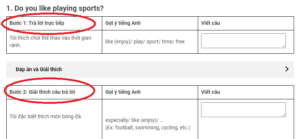
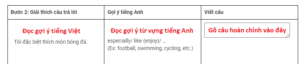
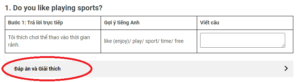
Luyện tập Cam 21 với giao diện chuẩn thi máy IDP/BC tại Website Luyện tập Listening và Reading của IZONE:
Trải nghiệm ngay Web Luyện tập IZONE để tiến bộ hơn mỗi ngày! |
Đáp án & Giải chi tiết IELTS Cambridge 21 Test 4 Reading Passage 1
Questions 1-7: Dạng TRUE/FALSE/NOT GIVEN Cách làm: Bước 1: Đọc kĩ câu hỏi và gạch chân từ khóa Bước 2: Scan từ khóa đã gạch trong bài đọc Bước 3: Chú ý tới controlling words (not, only, the majority etc.) Bước 4: Chọn đáp án phù hợp Chọn đáp án bằng cách lần lượt trả lời 2 câu hỏi: Câu 1: Các thông tin trong câu hỏi ĐỀU TÌM ĐƯỢC NỘI DUNG TƯƠNG ỨNG trong bài đọc hay không? *Nội dung tương ứng là những nội dung cùng chỉ về 1 điều, mang cùng 1 chức năng trong câu. Ví dụ: Anh ấy đến nơi lúc 8h vs. Sau 9h anh ấy mới tới => “lúc 8h” và “sau 9h” đều nêu thời điểm anh ta tới nơi => 2 thông tin này dù khác về nội dung những vẫn được coi là tương ứng với nhau (đều chỉ mặt thời gian) Nếu không (có thông tin trong câu hỏi mà không có phần tương ứng trong bài đọc): đáp án là NOT GIVEN. Nếu có: loại phương án NOT GIVEN và chuyển sang câu hỏi 2 Câu 2: Có thông tin nào trong câu hỏi bị TRÁI NGƯỢC/SAI LỆCH với nội dung bài đọc hay không? Nếu không (mọi thông tin đều khớp): đáp án là TRUE. Nếu có: đáp án là FALSE | |
Câu 1: Water hyacinth was introduced as a decorative plant in east Africa. Thông tin này có thể tìm thấy trong bài đọc nên ta loại trừ khả năng NOT GIVEN “Was introduced” là được du nhập vào nơi nào được thể hiện qua từ “arrived” trong bài đọc. Địa điểm “east Africa” đều được đề cập trong câu hỏi lẫn đoạn văn trong bài. Thay vì nói “a decorative plant” thì bài đọc mô tả loài cây này “vẻ ngoài của những chiếc lá bóng loáng và những bông hoa màu tím mỏng manh trôi nổi trong ao của họ” => Đáp án là: TRUE | Đoạn 2: In east Africa the plant arrived with Belgian colonists in Rwanda, who liked the look of its glossy leaves and delicate purple flowers floating in their ponds. |
Câu 2: Fishermen took some water hyacinth plants to Lake Victoria. Bài đọc đề cập rằng “Loài cây này tự trôi theo dòng sông Kagera xuống hồ Victoria (“escaped… via the Kagera river”) chứ không phải do ngư dân chủ động mang đến.” → Thông tin trái ngược hoàn toàn với đề bài. => Đáp án là FALSE | Đoạn 2: But by the 1980s, it had ‘escaped’ out of the country via the Kagera river and made its way downstream to Lake Victoria. |
Câu 3: It is now difficult to force boats through the thick water hyacinth on Lake Victoria. Ta tìm được thông tin này qua đoạn 2 của bài đọc nên loại đáp án NOT GIVEN Hồ Victoria được nhắc đến ở đoạn 2, và trong đoạn 3 được đề cập lần nữa qua “the lake” nên ta có một đối tượng trùng khớp câu hỏi. Cụm từ “struggle to navigate through-chật vật tìm lối đi qua” đã thể hiện rõ ý “difficult to force boats through” trong câu hỏi. Ngoài ra, “mass of plants-những thảm thực vật dày đặc” trong bài đọc ám chỉ thick water hyacinth. Mật độ dày đặc của còn được miêu tả ở cuối đoạn 2 “the plant began spreading in the open water, blocking fishing routes – loài thực vật này bắt đầu lan rộng ra các vùng nước thoáng, làm tắc nghẽn các tuyến đường đánh cá…” => Đáp án là TRUE | Đoạn 2: But by the 1980s, it had ‘escaped’ out of the country via the Kagera river and made its way downstream to Lake Victoria. There, with no natural predators and perfect temperature conditions, the plant began spreading in the open water, blocking fishing routes and providing a new habitat for disease-carrying mosquitoes. Đầu đoạn 3: For the women who smoke fish from the lake to sell it has meant declining income, as the boats that once brought the fish to shore by the hundreds struggle to navigate through the mass of plants. |
Câu 4: Chemicals produced by the water hyacinth plants are affecting the numbers of fish in Lake Victoria. Bài đọc chỉ đề cập việc cây bèo làm cản trở đường đi của thuyền cá (blocking fishing routes) và làm giảm thu nhập của ngư dân, hoàn toàn không có thông tin nói về việc bèo tiết ra “hóa chất” (chemicals) làm ảnh hưởng đến số lượng cá trong hồ Victoria. => Đáp án là NOT GIVEN | Đoạn 2: There, with no natural predators and perfect temperature conditions, the plant began spreading in the open water, blocking fishing routes and providing a new habitat for disease-carrying mosquitoes. Đoạn 3: For the women who smoke fish from the lake to sell it has meant declining income, as the boats that once brought the fish to shore by the hundreds struggle to navigate through the mass of plants. |
Câu 5: Cooking with charcoal has been proved to be even worse for people’s health than cooking with wood. Bài đọc nhắc đến cả củi (wood) và than củi (charcoal) là nhóm chất đốt rắn gây ô nhiễm không khí trong nhà, nhưng hoàn toàn không đưa ra so sánh rằng loại nào gây hại cho sức khỏe “hơn” loại nào nên ta không có cơ sở khẳng định thông tin trên là TRUE hay FALSE. => Đáp án là NOT GIVEN | Đoạn 3: About three out of four families in Kenya depend on wood or charcoal to cook their daily meals, and the rate is even higher in rural areas, Kenya’s latest demographic and health survey shows. Using solid fuels like these for cooking increases indoor pollution. The World Health Organization estimates that about 14,300 Kenyans die annually as a result of indoor air pollution – most of which is caused by cooking and heating sources. |
Câu 6: People found it impossible to remove much water hyacinth from Lake Victoria. Câu hỏi cho rằng không thể loại bỏ những cây thủy sinh trong hồ nhưng thực tế người dân đã vớt được những đống bèo rất lớn ra khỏi lòng hồ (“had taken out of the water”), do đó việc khẳng định “bất khả thi” (impossible) là sai. Ngoài ra động từ chia quá khứ đơn “found” cũng đã trùng khớp mốc thời gian của bài đọc “some years ago-vài năm trước” → Thông tin mâu thuẫn với đề bài. => Đáp án là FALSE | Đoạn 4: Some years ago, on the shores of Lake Victoria, huge piles of water hyacinth that villagers had taken out of the water in an attempt to clear it were a common sight. |
Câu 7: Scientists started investigating the possibility of using water hyacinth to generate biogas in the last century. Ta có thể tìm được tất cả thông tin từ bài đọc nên loại từ được đáp án NOT GIVEN Thông tin trong bài đọc được diễn đạt qua các từ đồng nghĩa như “researchers – scientists”, “started investigating-began to explore” (bắt đầu nghiên cứu/khám phá). Kể cả mốc thời gian cũng được đề cập cụ thể hơn “since as early as the 1980s” thay vì là “in the last century – thế kỷ trước”. Và thông tin quan trọng nhất để đưa ra đáp án cuối cùng là cụm “possibility of using water hyacinth to generate biogas” được đề cập qua “its potential as a biofuel-tiềm năng của nó như một loại nhiên liệu sinh học”. => Đáp án là TRUE | Đoạn 4: It’s a magic combination that has captivated researchers‘ imaginations since as early as the 1980s when, across the world, they began to explore its potential as a biofuel. Just about 4kg of the dried plant would be enough to cater for a large family’s daily energy needs, early research predicted. |
Questions 8-10: Dạng Flowchart Completion Cách làm: Bước 1: Khoanh tròn giới hạn từ được điền Bước 2: Nghiên cứu Diagram/ Table/ Flowchart và xác định loại từ cho mỗi chỗ trống Bước 3: Skim bài text để tìm ra những đoạn liên quan chứa đáp án Bước 4: Scan đoạn văn và điền đáp án đúng, chú ý giới hạn từ | |
Câu 8: First, place water hyacinth together with some………………………..into a digester. Tiêu đề flowchart là “Generating biogas for domestic use in Dunga” giúp ta xác định được đoạn có chứa thông tin nằm ở Đoạn 6 Từ cần điền là danh từ đếm được số nhiều hoặc không đếm được do trước khoảng trống có lượng từ “some” Nội dung bài đọc đề cập “biogas digesters-hầm ủ các chất thải hữu cơ“ sẽ chuyển “a mix of water hyacinth and cow dung-một hỗn hợp giữa lục bình (bèo tây) và phân bò” thành khí sinh học dùng cho nấu ăn. Hỗn hợp 2 chất này hoàn toàn trùng khớp cách nói “place water hyacinth together with.. – cho bèo tây (lục bình) cùng với … vào trong bể phân hủy sinh học” => Đáp án là cow dung | Đoạn 6: In 2018, the technology came to a village on the shore of Lake Victoria, called Dunga. The project promised a two-for-one solution to the dual menaces of the water hyacinth and dependence on firewood. The community received a pair of donated biogas digesters – machines that would transform a mix of water hyacinth and cow dung into biogas for cooking. |
Câu 9: Leave the mixture until the ……….. is completed Từ cần điền là danh từ đếm được số ít hoặc không đếm được do động từ sau khoảng trống là “is” Nội dung bài có mô tả rằng “Hỗn hợp đi vào từ miệng ống-khoảng 20-30 ngày sau, hỗn hợp trải qua quá trình lên men (goes through a fermentation process) cho đến khi phân rã hoàn toàn để sinh ra khí ga → khớp với ý “đợi cho đến khi quá trình hoàn thành”. => Đáp án là fermentation process | Đoạn 7: The digesters work a bit like a stomach. The mixture goes in one end – think of it as a mouth – and over the next 20 to 30 days, it goes through a fermentation process and breaks down, giving off gas that comes out the other end |
Câu 10: Capture the gas emitted by the digester and use…………………….to transport it to individual homes Từ cần điền là danh từ không đếm được /đếm được số nhiều, do trước khoảng trống chỉ có động từ use, không có mạo từ a/an hay the gì xuất hiện Bài đọc đề cập “khí đốt sạch được dẫn qua các đường ống-passed through pipes” là cách diễn đạt khác nhưng trùng khớp với “use… to transport it” của đề bài. Bên cạnh đó, individual homes được nhắc đến thông qua các từ cụ thể hơn như “domestic gas-khí ga dùng trong hộ gia đình” hay “village’s population-người dân trong làng” => Đáp án là pipes | Đoạn 7: From there, the cleanburning gas is passed through pipes to the point of use, just like traditional domestic gas. In Dunga, the machines produce enough gas to serve about 60% of the village’s population. It is used in domestic stoves and for other household tasks such as purifying water and incubating chicks. |
Questions 11-13: Dạng Sentence Completion Cách làm: Bước 1: Đọc kĩ câu hỏi và gạch chân từ khóa, khoanh tròn giới hạn từ Bước 2: Xác định từ loại và loại thông tin cần điền trong chỗ trống (VD: noun – a person) Bước 3: Scan từ khóa đã xác định trong đoạn văn Bước 4: Điền vào chỗ trống, kiểm tra lại giới hạn từ & ngữ pháp | |
Câu 11: no need for them to spend so much ………………. collecting fuel Từ cần điền là danh từ không đếm được, do trước khoảng trống có lượng từ much Nội dung bài đề cập “họ không cần dành nhiều thời gian mỗi ngày cho việc nhặt củi”, “no need-don’t have to” hay “spend so much…” được diễn đạt qua cụm từ “devote a lot of time” => Đáp án là time | Đoạn 8: Besides, they don’t have to devote a lot of time every day to gathering firewood, which is a great relief. As a result, they’re able to make more money for their families from other enterprises. |
Câu 12: they can focus on different tasks that bring in ……………….. Từ cần điền là danh từ không đếm được hoặc đếm được dạng số nhiều, do trước khoảng trống có cụm từ bring in (theo sau là something)- nghĩa là kiếm ra cái gì/ mang lại cái gì Câu cuối đoạn 8 có đề cập rằng “Kết quả là, họ có thể kiếm ra tiền cho gia đình từ những hoạt động kinh doanh khác” => Đáp án là money | Đoạn 8: Besides, they don’t have to devote a lot of time every day to gathering firewood, which is a great relief. As a result, they‘re able to make more money for their families from other enterprises. |
Câu 13: the ……………………..of the digesters is beyond the reach of most villages Từ cần điền là danh từ không đếm được hoặc đếm được dạng số ít/số nhiều Nội dung bài đề cập “hầu hết các cộng đồng sẽ không bao giờ có đủ tiền mua cái gì vì giá bán khoảng 750 đô la” đồng nghĩa với việc “cái gì vượt quá khả năng kinh tế của hầu hết các ngôi làng”. Nếu chỉ đọc phần này ta cũng phần nào đoán được nội dung được nhắc đến sẽ liên quan đến chi phí, giá cả. => Đáp án là price | Đoạn 10: But unless the price of the machines drops, it’s pretty clear that most communities will never be able to afford any, since they sell for about $750. |
Trên đây là phần giải đề IELTS Cambridge 21 Test 4 Reading Passage 1 The problems and benefits created by the spread of the water hyacinth in Kenya chi tiết từ IZONE. Luyện tập giải Cam 21 tại chuyên mục Giải đề Cambridge với phần giải thích đáp án chi tiết.