Bài mẫu IELTS Speaking: Talk about the benefits of academic study
“Talk about the benefits of academic study” là một chủ đề IELTS Speaking có thể xuất hiện trong các bài thi thực tế. Trong bài viết này, IZONE sẽ phân tích chủ đề và đưa ra bài mẫu cùng với các từ vựng có thể dùng trong bài nói này.
Phân tích chủ đề “Talk about the benefits of academic study”
Chủ đề này có thể được dùng rộng rãi trong cả 3 phần thi IELTS Speaking, các câu hỏi và bài luận cần nói sẽ xoay quanh về lợi ích của “academic study”.
Đối với phần thi đầu tiên của IELTS Speaking, ta có thể bắt gặp một số câu hỏi sau:
|
Bài mẫu IELTS Speaking Part 1: Talk about the benefits of academic study
- Do you enjoy studying? Why or why not?
Yes, I really do. I’m a curious person, so I enjoy discovering new things and expanding my knowledge.
- What are the benefits of studying?
Studying can enrich your personal life by exposing you to new perspectives and cultures. It also offers a chance to build meaningful connections with people who share your passions.
- What subject did you find most interesting in school? Why?
I found History the most engaging. I’ve always been fascinated by how past events have shaped our present world.
- How do you think studying can help people in their future?
Studying builds a strong foundation for better career opportunities. It also equips people with the ability to adapt to a fast-changing world.
Dưới đây là một từ vựng thuộc chủ đề được dùng trong những câu hỏi trên:
| Từ vựng Tiếng Anh | Phiên âm (Pronunciation) | Nghĩa (Meaning) |
| Curious (adj) | /ˈkjʊəriəs/ | Tò mò, ham học hỏi |
| Discover (v) | /dɪˈskʌvər/ | Khám phá, tìm ra |
| Career prospects (n) | /kəˈrɪər ˈprɒspekts/ | Triển vọng nghề nghiệp |
| Develop (v) | /dɪˈveləp/ | Phát triển |
| Critical thinking (n) | /ˈkrɪtɪkl ˈθɪŋkɪŋ/ | Tư duy phản biện |
| Engaging (v) | /ɪnˈɡeɪdʒɪŋ/ | Hấp dẫn, lôi cuốn |
| Fascinated by (v) | /ˈfæsɪneɪtɪd baɪ/ | Bị lôi cuốn, mê hoặc bởi |
| Shape (v) | /ʃeɪp/ | Định hình |
| Foundation (n) | /faʊnˈdeɪʃn/ | Nền tảng, nền móng |
| Equip (v) | /ɪˈkwɪp/ | Trang bị (kỹ năng, kiến thức) |
| Ability (n) | /əˈbɪləti/ | Khả năng, năng lực |
| Adapt (v) | /əˈdæpt/ | Thích nghi, thích ứng |
Bài mẫu IELTS Speaking Part 2: Talk about the benefits of academic study
Đối với part 2 của IELTS Speaking, thí sinh thường được yêu cầu nói về chủ đề cụ thể như trên và nội dung nói được gợi ý bằng cue card của kỳ thi. Chúng mình sẽ có cue card như sau:
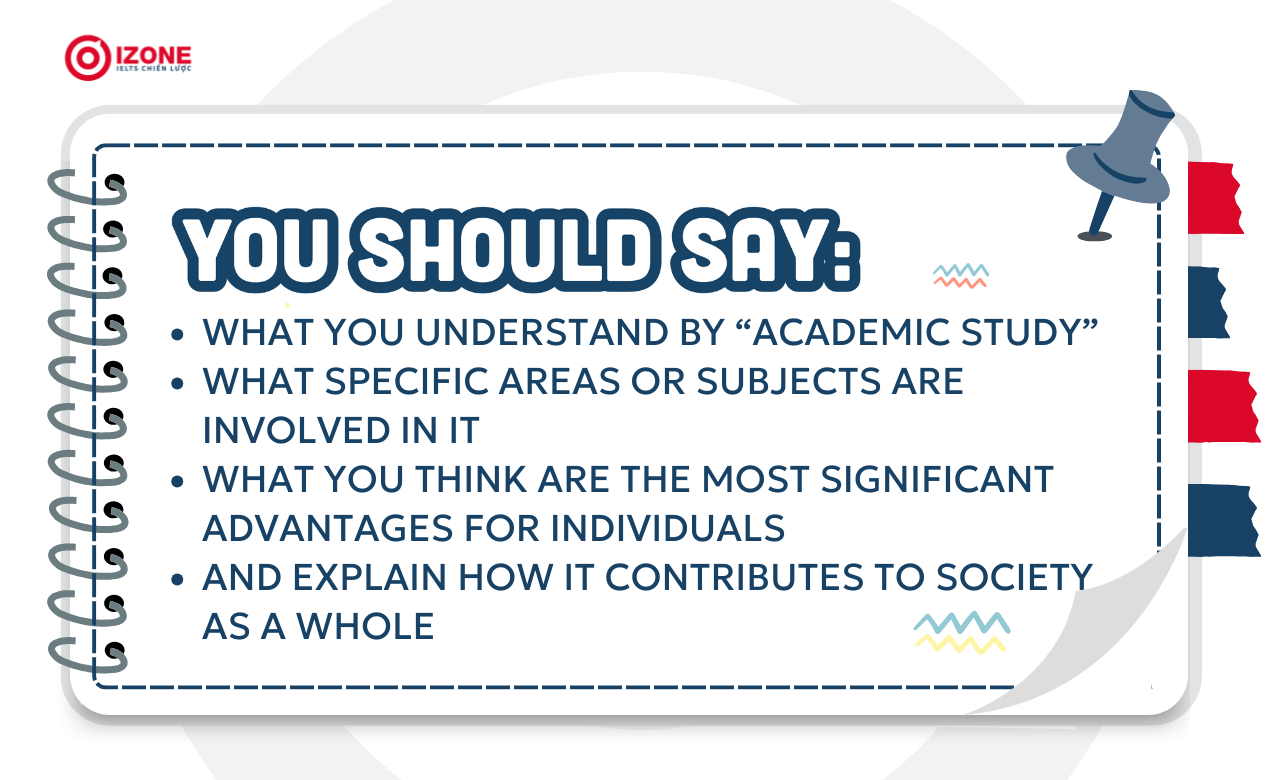
Một số câu trả lời mẫu cho những gợi ý trên:
what you understand by “academic study” | Academic study:
|
what specific areas or subjects are involved in it |
|
what you think are the most significant advantages for individuals |
|
and explain how it contributes to society as a whole. |
|
To me, academic study is fundamentally about the pursuit of knowledge within a formal educational setting, typically at university. It goes beyond casual learning, involving in-depth research and critical analysis. This kind of study includes a wide range of fields. For instance, in the sciences, you have subjects like biology and physics, while the humanities cover areas such as literature and history. Essentially, it’s about intellectual inquiry across diverse disciplines.
There are a lot of advantages but I do have two main ones. Firstly, it equips us with specialized skills and knowledge vital for career success, opening up better job opportunities. Secondly, it significantly enhances our critical thinking and problem-solving abilities, teaching us how to analyze information and make informed decisions. On a broader scale, for the whole society, academic study is crucial for driving innovation and progress. It’s the foundation for scientific breakthroughs and technological advancements that improve everyone’s lives. Moreover, it cultivates an educated populace, which is essential for a stable and prosperous society.
In short, academic study is not just about getting a degree; it is a crucial core for individual growth and societal advancement.
Từ/Cụm từ tiếng Anh | Phiên âm (Pronunciation) | Nghĩa (Meaning) |
pursuit of knowledge (np) | /pərˈsuːt əv ˈnɒlɪdʒ/ | Sự theo đuổi kiến thức |
formal educational setting (np) | /ˈfɔːrməl ˌɛdʒəˈkeɪʃənəl ˈsɛtɪŋ/ | Môi trường giáo dục chính quy |
casual learning (np) | /ˈkæʒuəl ˈlɜːrnɪŋ/ | Học tập thông thường, học qua loa (không chính quy/sâu sắc) |
in-depth research (np) | /ˌɪnˈdɛpθ rɪˈsɜːrtʃ/ | Nghiên cứu chuyên sâu |
critical analysis (np) | /ˈkrɪtɪkəl əˈnæləsɪs/ | Phân tích sâu |
intellectual inquiry (np) | /ˌɪntəˈlektʃuəl ˈɪnkwəri/ | Sự tìm hiểu tri thức |
disciplines (n) | /ˈdɪsəplɪnz/ | Các ngành học, bộ môn |
equips us with (pv) | /ɪˈkwɪps ʌs wɪð/ | Trang bị cho chúng ta với… |
critical thinking (np) | /ˈkrɪtɪkəl ˈθɪŋkɪŋ/ | Tư duy phản biện |
problem-solving abilities (np) | /ˈprɒbləm ˈsɒlvɪŋ əˈbɪlətiz/ | Khả năng giải quyết vấn đề |
scientific breakthroughs (np) | /ˌsaɪənˈtɪfɪk ˈbreɪkθruːz/ | Những đột phá khoa học |
technological advancements (np) | /ˌtɛknəˈlɒdʒɪkəl ædˈvɑːnsmənts/ | Những tiến bộ công nghệ |
individual growth (np) | /ˌɪndɪˈvɪdʒuəl ɡrəʊθ/ | Sự phát triển cá nhân |
societal advancement (np) | /səˈsaɪətəl ədˈvɑːnsmənt/ | Sự tiến bộ của xã hội |
Bài mẫu IELTS Speaking Part 3: Talk about the benefits of academic study
Sau khi kết thúc phần thi Speaking thứ 2, giám khảo sẽ hỏi thí sinh một vài các câu hỏi. Tuy nhiên đối với phần này ta cần trả lời sâu hơn và kỹ hơn part 1. Dưới đây là một số câu hỏi thuộc chủ đề này:
- What is the main purpose of education in your opinion? Has it changed over time?
- Besides gaining knowledge, what other personal qualities can people develop through academic study?
- How important are critical thinking and problem-solving skills in academic study?
- Do you believe that all citizens should have access to higher education, regardless of their financial background? Why?
- Some people believe that practical skills are more important than academic qualifications in today’s job market. Do you agree or disagree?
- What is the main purpose of education in your opinion? Has it changed over time?
– In my opinion, the main purpose of education is to empower individuals with critical thinking and adaptability, enabling them to contribute meaningfully to society. While historically it focused more on vocational skills, today’s education emphasizes lifelong learning and innovation to navigate our rapidly changing world. The goal has certainly broadened to include developing diverse skills for a complex future.
- Besides gaining knowledge, what other personal qualities can people develop through academic study?
– Beyond knowledge acquisition, academic study significantly enhances discipline and perseverance through consistent effort and demanding tasks. It also fosters intellectual curiosity and an open mind, encouraging individuals to question and explore diverse perspectives. These qualities are crucial for continuous personal growth and understanding.
- How important are critical thinking and problem-solving skills in academic study?
– Critical thinking and problem-solving skills are crucial in academic study; they’re essential tools, not just desirable traits. Critical thinking allows students to analyze information and evaluate arguments deeply. Similarly, problem-solving enables them to apply knowledge to real-world issues, forming the core of genuine learning and innovation.
- Do you believe that all citizens should have access to higher education, regardless of their financial background? Why?
– I strongly believe all citizens should have equitable access to higher education, regardless of finances. Education is a fundamental human right and a powerful catalyst for societal progress. Ensuring access promotes social mobility, reduces inequality, and ultimately enriches society with skilled talent and innovation. It’s an investment for a brighter future.
- Some people believe that practical skills are more important than academic qualifications in today’s job market. Do you agree or disagree?
– I actually disagree with this perspective. While practical skills are valuable, academic qualifications often lead to better-paying, intellectual jobs. Many manual labor roles are increasingly being automated by robots, making them less secure. So, a strong academic background appears more vital for future career prospects.
Từ/Cụm từ tiếng Anh | Phiên âm | Nghĩa tiếng Việt (Ngữ cảnh) |
vocational skills (np) | /voʊˈkeɪʃənəl skɪlz/ | Các kỹ năng nghề nghiệp |
lifelong learning (np) | /ˈlaɪflɒŋ ˈlɜːrnɪŋ/ | Học tập suốt đời |
knowledge acquisition (np) | /ˈnɒlɪdʒ ˌækwɪˈzɪʃən/ | Sự tiếp thu kiến thức |
intellectual curiosity (np) | /ˈfɒstər ˌɪntəˈlɛktʃuəl ˌkjʊəriˈɒsəti/ | Sự ham học hỏi |
open mind (np) | /ˌoʊpən ˈmaɪnd/ | Tư duy cởi mở |
real-world issues (np) | /ˌriːəl wɜːrld ˈɪʃuːz/ | Các vấn đề thực tế |
equitable access (np) | /ˈɛkwɪtəbəl ˈæksɛs/ | Tiếp cận công bằng |
financial background (np) | /faɪˈnænʃəl ˈbækɡraʊnd/ | Hoàn cảnh tài chính |
social mobility (np) | /ˈsoʊʃəl moʊˈbɪləti/ | Sự dịch chuyển xã hội (lên/xuống tầng lớp) |
enrich (v) | /ɪnˈrɪtʃ/ | Làm phong phú/giàu có |
academic qualifications (np) | /ˌækəˈdɛmɪk ˌkwɒlɪfɪˈkeɪʃənz/ | Bằng cấp học thuật |
lucrative positions (np) | /ˈluːkrətɪv pəˈzɪʃənz/ | Các vị trí/công việc sinh lợi (kiếm nhiều tiền) |
manual labor (np) | /ˈmænjuəl ˈleɪbər/ | Công việc lao động chân tay |
Kết luận
Vậy là chúng mình đã đi qua các bài mẫu và từ vựng của chủ đề “Talk about the benefits of academic study”. Hy vọng bài viết này sẽ giúp ích trong quá trình ôn luyện của bạn và đừng quên liên hệ IZONE để được tư vấn nhé!
Xem thêm: Câu Hỏi How Often Trong IELTS Speaking: Hướng Dẫn và Mẹo Trả Lời Hiệu Quả