Giải đáp án Three problems of geosequestration IELTS Listening
Cùng luyện tập với bài nghe Three problems of geosequestration IELTS Listening và tham khảo phần giải thích đáp án chi tiết từ IZONE nhé!
Bài nghe Three problems of geosequestration IELTS Listening
Questions 31-33
Choose the correct letter, A, B, or C.
31 Society cannot
32 Turning carbon dioxide into a solid
33 Seawater
Questions 34-40
Complete the table.
Write NO MORE THAN TWO WORDS OR A NUMBER for each answer.
| Three Problems of Geosequestration | ||
| Risk of leaks | Cost | 34 still not proven |
| Gas would become 35 | expensive,particularly the36 | Require the plant to burn37 of its coal |
| ↓ | ↓ | ↓ |
| risk of widespread 38 | Price of electricitycould 39 | release of more Sulphur,ash, and 40 |
Điểm số của bạn là % - đúng / câu
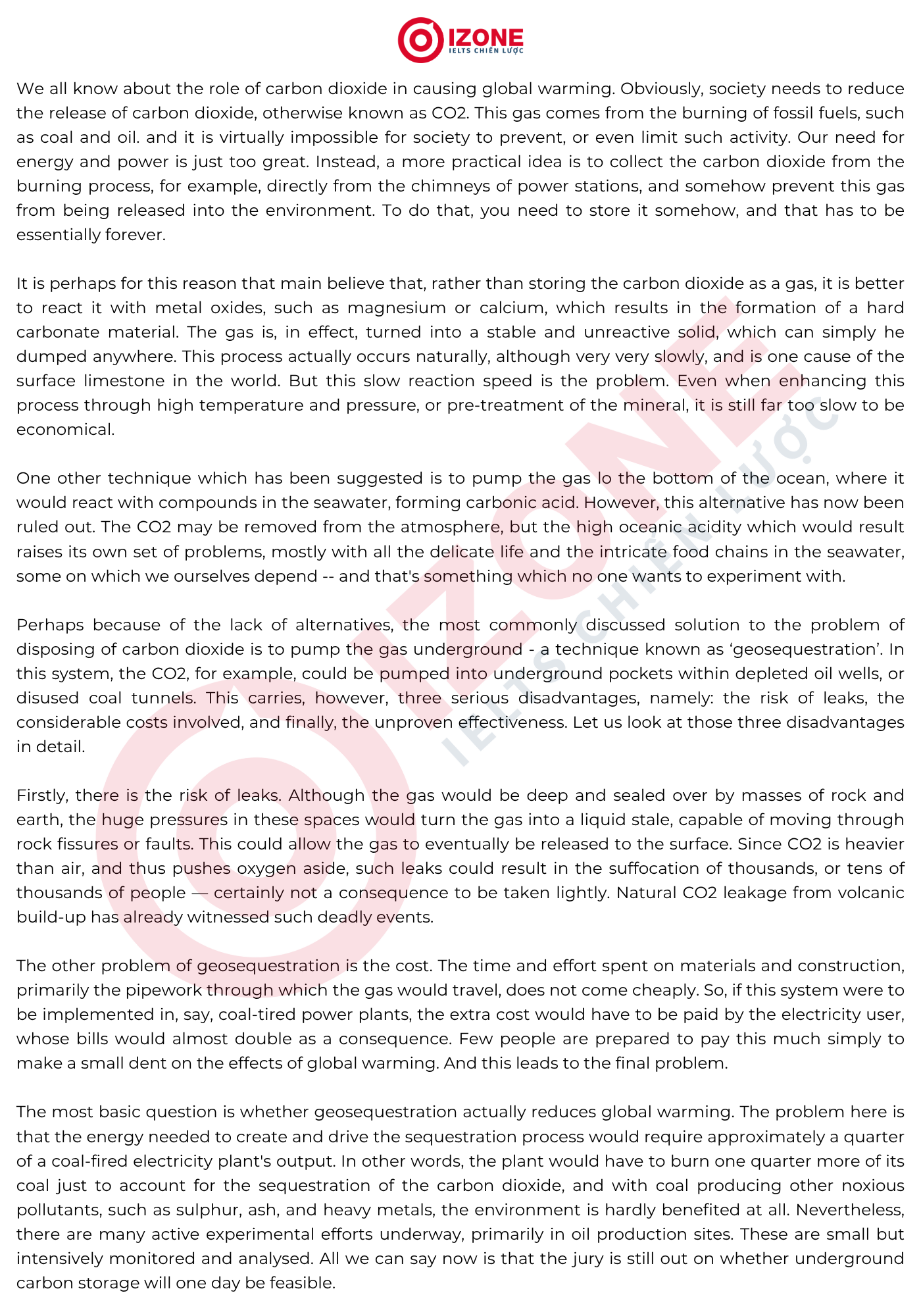
Audio transcript Three problems of geosequestration IELTS Listening
Đáp án và giải thích đáp án chi tiết Three problems of geosequestration IELTS Listening answers
| 31. B | 36. pipework |
| 32. B | 37. a quarter |
| 33. B | 38. suffocation |
| 34. effectiveness | 39. double |
| 35. (a) liquid | 40. heavy metals |
Giải thích đáp án chi tiết Three problems of geosequestration IELTS Listening answers
Question 31-33: Dạng MCQ Cách làm:
Lưu ý: Ta có thể loại trừ đáp án bằng cách lần lượt trả lời 2 câu hỏi:
| |
31. Society cannot | |
B. reduce waste C02. Nhận xét:
Cụ thể: Giải thích: Chúng ta không thể giảm đáng kể khí CO2 vì vẫn cần đốt nhiên liệu hóa thạch. Đáp án B đúng. | This gas comes from the burning of fossil fuels, such as coal and oil. and it is virtually impossible for society to prevent, or even limit such activity. |
A. find more coal and oil. Nhận xét:
Cụ thể: Giải thích: Không có thông tin nói là không thể tìm thêm. Bài chỉ nói là vẫn cần đốt các nhiên liệu này. Đáp án sai. | This gas comes from the burning of fossil fuels, such as coal and oil. and it is virtually impossible for society to prevent, or even limit such activity. |
C. take C02 from power stations. Nhận xét:
Cụ thể: Giải thích: Đây lại là điều được xem là thực tế và khả thi. Đáp án sai. | Our need for energy and power is just too great. Instead, a more practical idea is to collect the carbon dioxide from the burning process, for example, directly from the chimneys of power stations, and somehow prevent this gas from being released into the environment. |
32. Turning carbon dioxide into a solid | |
B. can be made faster. Nhận xét:
Cụ thể: Giải thích: Quá trình này diễn ra tự nhiên nhưng rất chậm. Có thể tăng tốc bằng nhiệt độ và áp suất, nhưng vẫn chưa đủ nhanh. Do đó quá trình có thể được đẩy nhanh. Đáp án B đúng. | Even when enhancing this process through high temperature and pressure, or pre-treatment of the mineral, it is still far too slow to be economical. |
A. is slow but practical. Nhận xét:
Cụ thể: Giải thích: Quá chậm để áp dụng thực tế vì tốn kém và không hiệu quả. Đáp án sai. | Even when enhancing this process through high temperature and pressure, or pre-treatment of the mineral, it is still far too slow to be economical. |
C. cannot happen naturally. Nhận xét:
Cụ thể: Giải thích: Sai vì bài nói rõ quá trình này diễn ra tự nhiên. Đáp án sai. | This process actually occurs naturally, although very very slowly, and is one cause of the surface limestone in the world. |
33. Seawater | |
B. has closely connected types of life. Nhận xét:
Cụ thể: Giải thích: Việc tăng độ axit trong nước biển sẽ gây hại đến hệ sinh thái biển vì các mắt xích sinh vật rất phức tạp. Đáp án B đúng. | The CO2 may be removed from the atmosphere, but the high oceanic acidity which would result raises its own set of problems, mostly with all the delicate life and the intricate food chains in the seawater, some on which we ourselves depend |
A. has lots of carbonic acid. Nhận xét:
Cụ thể: Giải thích: Không đúng, vì carbonic acid chỉ hình thành nếu CO2 được bơm vào. Đáp án sai. | One other technique which has been suggested is to pump the gas lo the bottom of the ocean, where it would react with compounds in the seawater, forming carbonic acid. |
C. is highly acidic. Nhận xét:
Cụ thể: Giải thích: Không phải hiện tại, mà chỉ xảy ra nếu CO2 được bơm xuống đáy biển. Đáp án sai. | The CO2 may be removed from the atmosphere, but the high oceanic acidity which would result raises its own set of problems |
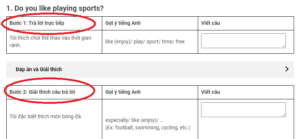
Questions 34-40: Dạng Diagram/ Table/ Flowchart Completion Cách làm: Bước 1: Khoanh tròn giới hạn từ được điền Bước 2: Nghiên cứu Diagram/ Table/ Flowchart và xác định loại từ cho mỗi chỗ trống Bước 3: Skim bài text để tìm ra những đoạn liên quan chứa đáp án Bước 4: Scan đoạn văn và điền đáp án đúng, chú ý giới hạn từ | |
34. __________still not proven Từ vựng cần điền là danh từ. Giải thích: Tác dụng thực tế của phương pháp này vẫn chưa được chứng minh. Đáp án là effectiveness | This carries, however, three serious disadvantages, namely: the risk of leaks, the considerable costs involved, and finally, the unproven effectiveness. |
Gas would become 35.___________ Từ vựng cần điền là danh từ. Giải thích: Dưới áp lực lớn, khí CO2 chuyển thành dạng lỏng, từ đó có thể rò rỉ. Đáp án là q liquid | Although the gas would be deep and sealed over by masses of rock and earth, the huge pressures in these spaces would turn the gas into a liquid stale, capable of moving through rock fissures or faults. |
expensive, particularly the 36.___________ Từ vựng cần điền là danh từ. Giải thích: Phần tốn kém nhất là hệ thống ống dẫn (pipework), nên đây là thành phần gây chi phí lớn. Đáp án là pipework | The time and effort spent on materials and construction, primarily the pipework through which the gas would travel, does not come cheaply. |
Require the plant to burn 37.___________ of its coal Từ vựng cần điền là danh từ. Giải thích: Để vận hành hệ thống này, nhà máy phải đốt thêm 1/4 lượng than nữa. Đáp án là a quarter | The problem here is that the energy needed to create and drive the sequestration process would require approximately a quarter of a coal-fired electricity plant’s output. |
risk of widespread 38.___________ Từ vựng cần điền là danh từ. Giải thích: Nếu khí CO2 rò rỉ, nó có thể gây ra ngạt thở hàng loạt, vì CO2 nặng hơn không khí và đẩy oxy ra ngoài. Đáp án là suffocation | Since CO2 is heavier than air, and thus pushes oxygen aside, such leaks could result in the suffocation of thousands, or tens of thousands of people — certainly not a consequence to be taken lightly. |
Price of electricity could 39.___________ Từ vựng cần điền là động từ. Giải thích: Người tiêu dùng phải trả hóa đơn điện cao gấp đôi nếu áp dụng hệ thống này. Đáp án là double | So, if this system were to be implemented in, say, coal-tired power plants, the extra cost would have to be paid by the electricity user, whose bills would almost double as a consequence. |
release of more Sulphur, ash, and 40.___________ Từ vựng cần điền là danh từ. Giải thích: Đốt thêm than làm tăng lượng khí độc và chất ô nhiễm như lưu huỳnh, tro và kim loại nặng. Đáp án là heavy metals | In other words, the plant would have to burn one quarter more of its coal just to account for the sequestration of the carbon dioxide, and with coal producing other noxious pollutants, such as sulphur, ash, and heavy metals, the environment is hardly benefited at all. |
Trên đây là phần giải thích đáp án chi tiết cho bài nghe Three problems of geosequestration IELTS Listening. Mời bạn tiếp tục luyện tập với các bài tập luyện kỹ năng Listening tại chuyên mục IELTS Listening của IZONE.
Thực hành với: Giải đáp án chi tiết Car rental inquiry IELTS Listening