Giải đề thi IELTS Cambridge 20 – Test 1: Reading Passage 1: The Kākāpō

Cùng IZONE luyện tập giải đề thi IELTS Cambridge 20 – Test 1: Reading Passage 1: The Kākāpō và tham khảo phần giải thích đáp án chi tiết trong bài viết này nhé!

A. Bài đọc Cambridge 20 Test 1 – Reading Passage 1: The Kākāpō

Questions 1-6
Do the following statements agree with the information given in Reading Passage 1?
In boxes 1-6 on your answer sheet, write
TRUE if the statement agrees with the information
FALSE if the statement contradicts the information
NOT GIVEN if there is no information on this
Questions 7-13
Complete the notes below.
Choose ONE WORD AND/OR A NUMBER from the passage for each answer.
New Zealand's kākāpō
A type of parrot:
diet consists of fern fronds, various parts of a tree and 7
nests are created in 8 where eggs are laid.
Arrival of Polynesian settlers
the 9 of the käkāpō were used to make clothes.
Arrival of European colonisers
10 were an animal which they introduced that ate the kākāpō's food sources.
Protecting kākāpō
Richard Henry, a conservationist, tried to protect the käkāpō.
a definite sighting of female kākāpō on Rakiura Island was reported in the year 11
the Recovery Plan included an increase in 12
a current goal of the Recovery Plan is to maintain the involvement of 13 in kākāpō protection.
Điểm số của bạn là % - đúng / câu
B. Đáp án và giải thích chi tiết
|
Questions 1-6: Dạng TRUE/FALSE/NOT GIVEN Cách làm:
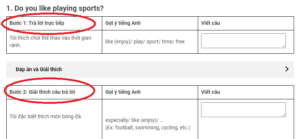
Chọn đáp án bằng cách lần lượt trả lời 2 câu hỏi:
|
|
|
Câu 1. There are other parrots that share the kakapo’s inability to fly.
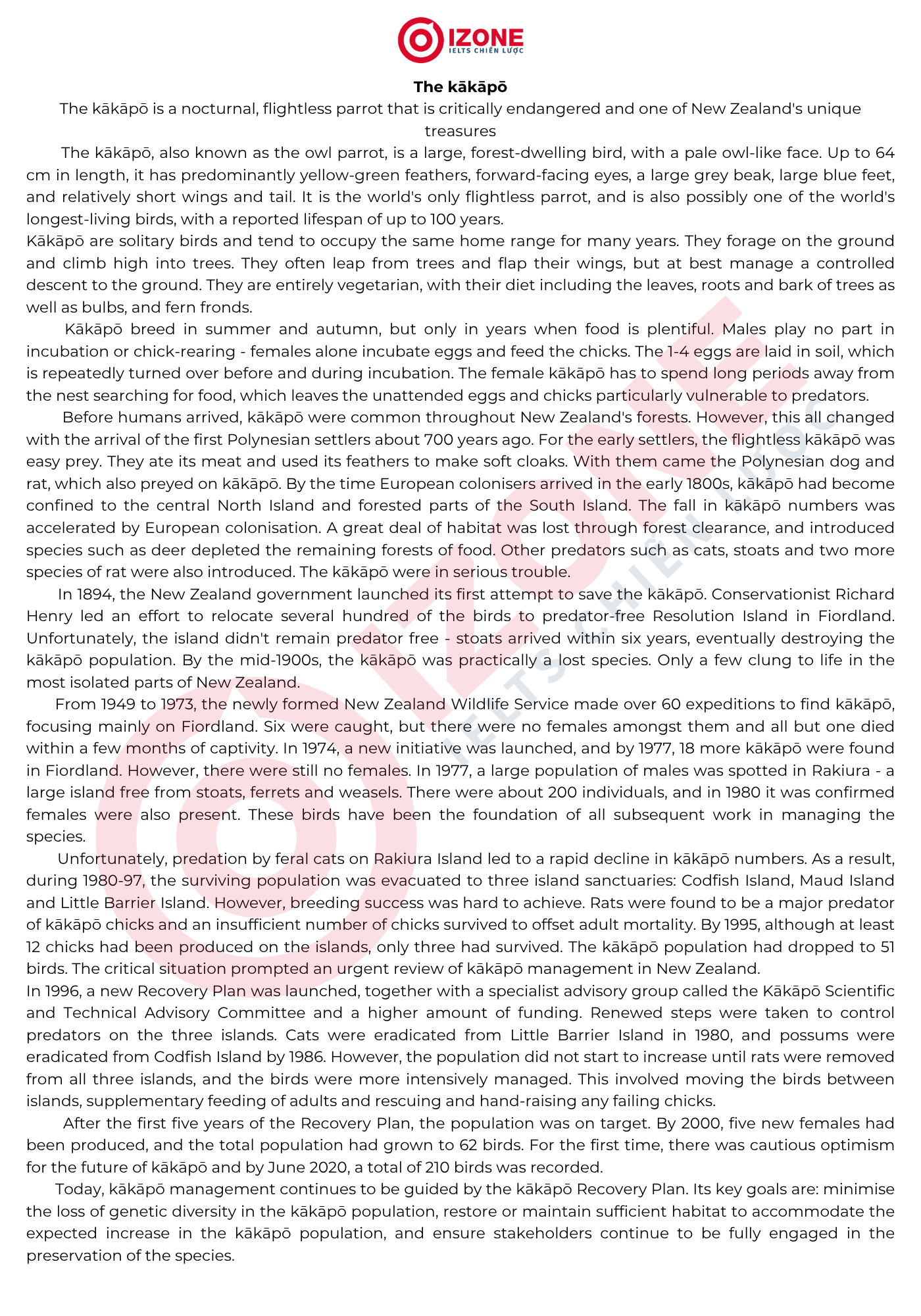
Câu hỏi khẳng định rằng có những loài vẹt khác cũng không thể bay giống như kakapo. Tuy nhiên, thông tin trong đoạn 1 của bài đọc nêu rõ rằng “It is the world’s only flightless parrot”, nghĩa là kakapo là loài vẹt duy nhất trên thế giới không biết bay. Điều này mâu thuẫn trực tiếp với nội dung câu hỏi. Vì vậy, ta có thể kết luận rằng thông tin trong câu hỏi trái ngược với thông tin trong bài. ⇒ Đáp án là: FALSE |
Đoạn 1: The kakapo, also known as the owl parrot, is a large, forest-dwelling bird, with a pale owl-like face. Up to 64 cm in length, it has predominantly yellow-green feathers, forward-facing eyes, a large grey beak, large blue feet, and relatively short wings and tail. It is the world’s only flightless parrot, and is also possibly one of the world’s longest-living birds, with a reported lifespan of up to 100 years. |
|
Câu 2. Adult kakapo produce chicks every year. Câu hỏi nói rằng kakapo trưởng thành sinh sản hằng năm, trong khi bài đọc chỉ rõ: “Kakapo breed in summer and autumn, but only in years when food is plentiful.” Điều này cho thấy việc sinh sản của kakapo không diễn ra hằng năm, mà chỉ xảy ra trong những năm có đủ thức ăn. Do đó, nội dung câu hỏi mâu thuẫn trực tiếp với thông tin trong bài.
⇒ Đáp án là: FALSE |
Đoạn 3: Kakapo breed in summer and autumn, but only in years when food is plentiful. […] |
|
Câu 3. Adult male kakapo bring food back to nesting females.
Câu hỏi nói rằng kakapo đực mang thức ăn cho con cái đang ấp trứng. Tuy nhiên, bài đọc lại khẳng định là con đực không tham gia gì cả trong quá trình ấp trứng mà chỉ có con cái, ngược hoàn toàn với nội dung câu hỏi.
⇒ Đáp án là: FALSE |
Đoạn 3: […] Males play no part in incubation or chick-rearing –females alone incubate eggs and feed the chicks. […] |
|
Câu 4. The Polynesian rat was a greater threat to the kakapo than Polynesian settlers.
Chúng ta cần tìm ra đoạn văn có chứa thông tin như trong câu hỏi: “Chuột Polynesia là mối đe dọa lớn hơn đối với loài vẹt Kakapo so với những người định cư Polynesia.”
Bài đọc có nói rằng cả người định cư và chuột Polynesian đều đe dọa kakapo, nhưng không hề so sánh mức độ đe dọa giữa hai bên. Không có thông tin nào nói bên nào gây hại hơn. ⇒ Đáp án là: NOT GIVEN. |
Đoạn 4: […] However, this all changed with the arrival of the first Polynesian settlers about 700 years ago. For the early settlers, the flightless kakapo was easy prey. They ate its meat and used its feathers to make soft cloaks. With them came the Polynesian dog and rat, which also preyed on kakapo. |
|
Câu 5. Kakapo were transferred from Rakiura Island to other locations because they were at risk from feral cats.
Câu hỏi nói rằng kakapo được chuyển khỏi đảo Rakiura vì chúng bị đe dọa bởi mèo hoang. Thông tin này hoàn toàn được xác nhận trong bài đọc.
Thông tin trong đoạn văn cho thấy việc kakapo bị mèo hoang săn mồi là nguyên nhân trực tiếp dẫn đến việc di dời chúng sang nơi khác.
⇒ Đáp án là: TRUE |
Đoạn 7: Unfortunately, predation by feral cats on Rakiura Island led to a rapid decline in kakapo numbers. As a result, during 1980-97, the surviving population was evacuated to three island sanctuaries: Codfish Island, Maud Island and Little Barrier Island. […] |
|
Câu 6. One Recovery Plan initiative that helped increase the kakapo population size was caring for struggling young birds. Câu hỏi đề cập đến một biện pháp trong Kế hoạch phục hồi là chăm sóc những con non yếu, và điều này được đề cập rõ ràng trong bài: “rescuing and hand-raising any failing chicks.” Theo đoạn văn, việc cứu và nuôi bằng tay những con non gặp vấn đề là một trong những chiến lược giúp tăng số lượng kakapo. ⇒ Đáp án là: TRUE |
Đoạn 8: In 1996, a new Recovery Plan was launched, […] However, the population did not start to increase until […] the birds were more intensively managed. This involved moving the birds between islands supplementary feeding of adults and rescuing and hand-raising any failing chicks. |
|
Questions 7-13: Dạng Sentence Completion Cách làm:
|
|
|
Câu 7. diet consists of fern fronds, various parts of a tree and 7 _______ Chỗ trống nằm sau cụm “and”, đứng sau một danh sách các loại thực phẩm thực vật. Vì vậy, cần điền danh từ. Từ bulbs (củ, ví dụ như củ hành, củ nghệ) xuất hiện trong cùng một chuỗi liệt kê với các phần cây khác, khớp về ngữ pháp và ngữ nghĩa với chỗ trống ⇒ Đáp án là: bulbs |
Đoạn 2: […] They are entirely vegetarian, with their diet including the leaves, roots and bark of trees as well as bulbs, and fern fronds. |
|
Câu 8. nests are created in 8 _______ where eggs are laid. Cần điền một danh từ chỉ địa điểm/vật liệu, nơi tổ được tạo ra. Trong đoạn văn nói về sinh sản, bài đọc miêu tả rằng kakapo cái thường đào hoặc xới đất nhiều lần để đẻ trứng và ấp chúng. Điều này cho thấy tổ được tạo ra trong đất. Từ phù hợp là soil (đất), vì đây chính là nơi kakapo đặt trứng và nuôi con. ⇒ Đáp án là: soil |
Đoạn 3: Kakapo breed in summer and autumn, but only in years when food is plentiful. Males play no part in incubation or chick-rearing -females alone incubate eggs and feed the chicks. The 1-4 eggs are laid in soil, which is repeatedly turned over before and during incubation. |
|
Câu 9. the 9 _______ of the kākāpō were used to make clothes. Nhận xét: Cần một danh từ số nhiều – cái mà kakapo có thể dùng làm quần áo. Bài đọc đề cập rằng người định cư Polynesia sử dụng kakapo làm thực phẩm, và một phần khác của chúng được dùng để làm áo choàng mềm mại – ở đây rõ ràng là lông vũ. ⇒ Đáp án là: feathers |
Đoạn văn: For the early settlers, the flightless kakapo was easy prey. They ate its meat and used its feathers to make soft cloaks. |
|
Câu 10. ______ were an animal which they introduced that ate the kākāpō’s food sources. Cần một danh từ chỉ loài động vật được người châu Âu đưa vào và làm giảm lượng thức ăn của kakapo. Trong đoạn mô tả sự ảnh hưởng sau thời kỳ thực dân châu Âu, bài đọc nói rằng có một số loài vật được mang đến đã ăn bớt thực vật trong rừng, vốn là thức ăn chính của kakapo. Trong số đó, có hươu là loài gặm lá, vỏ cây, rễ… giống như kakapo. Lưu ý kiến thức: Dạng số nhiều của deer vẫn là deer, chứ không cần phải thêm ‘s’ ở sau. ⇒ Đáp án là: deer |
Đoạn 4 A great deal of habitat was lost through forest clearance, and introduced species such as deer depleted the remaining forests of food. |
|
Câu 11. A definite sighting of female kākāpō on Rakiura Island was reported in the year 11 _______. Do có cụm “in the year”, nên cần một năm cụ thể. Trong phần nói về những phát hiện trên đảo Rakiura, ban đầu chỉ có kakapo đực được tìm thấy. Sau đó, vào năm 1980, các nhà khoa học mới xác nhận có sự xuất hiện của cá thể cái, từ đó làm tiền đề cho các hoạt động bảo tồn sau này. ⇒ Đáp án là: 1980 |
Đoạn 6 In 1977, a large population of males was spotted in Rakiura – a large island free from stoats, ferrets and weasels. There were about 200 individuals, and in 1980 it was confirmed females were also present. |
|
Câu 12. the Recovery Plan included an increase in 12 ______. Cần một danh từ có thể được tăng cường hoặc bổ sung trong kế hoạch Phục hồi. Trong giai đoạn kế hoạch phục hồi được tái khởi động, chính phủ New Zealand đã tăng ngân sách hỗ trợ cho các nỗ lực bảo tồn kakapo. Việc cấp thêm kinh phí được xem là yếu tố quan trọng để duy trì các hoạt động nghiên cứu, di dời và nuôi dưỡng. ⇒ Đáp án là: funding |
Đoạn 8: In 1996, a new Recovery Plan was launched, together with a specialist advisory group called the Kakapo Scientific and Technical Advisory Committee and a higher amount of funding. |
|
Câu 13. a current goal of the Recovery Plan is to maintain the involvement of 13 _______ in kākāpō protection. Cần một danh từ số nhiều chỉ người hoặc tổ chức tham gia vào công tác bảo tồn kakapo. Theo đoạn văn, mục tiêu hiện tại của kế hoạch bảo tồn là đảm bảo rằng các bên có liên quan, như nhà khoa học, chính phủ, cộng đồng địa phương, tổ chức môi trường… tiếp tục tham gia tích cực vào việc bảo vệ loài chim quý hiếm này. Từ phù hợp là stakeholders (các bên liên quan), vì đây là nhóm cần được duy trì sự tham gia lâu dài. ⇒ Đáp án là: stakeholders |
Đoạn 10: Today, kakapo management continues to be guided by the kakapo Recovery Plan. Its key goals are: minimise the loss of genetic diversity in the kakapo population, restore or maintain sufficient habitat to accommodate the expected increase in the kakapo population, and ensure stakeholders continue to be fully engaged in the preservation of the species. |
Trên đây là phần luyện tập với bài đọc Giải IELTS Cambridge 20 – Test 1: Reading Passage 1 với phần đáp án giải thích chi tiết do đội ngũ giảng viên IZONE thực hiện.