Accidental scientists IELTS Reading – Giải thích đáp án chi tiết
Luyện giải đề và tham khảo phần giải thích đáp án chi tiết Accidental scientists IELTS Reading do IZONE thực hiện nhé!

Bài đọc Accidental scientists IELTS Reading
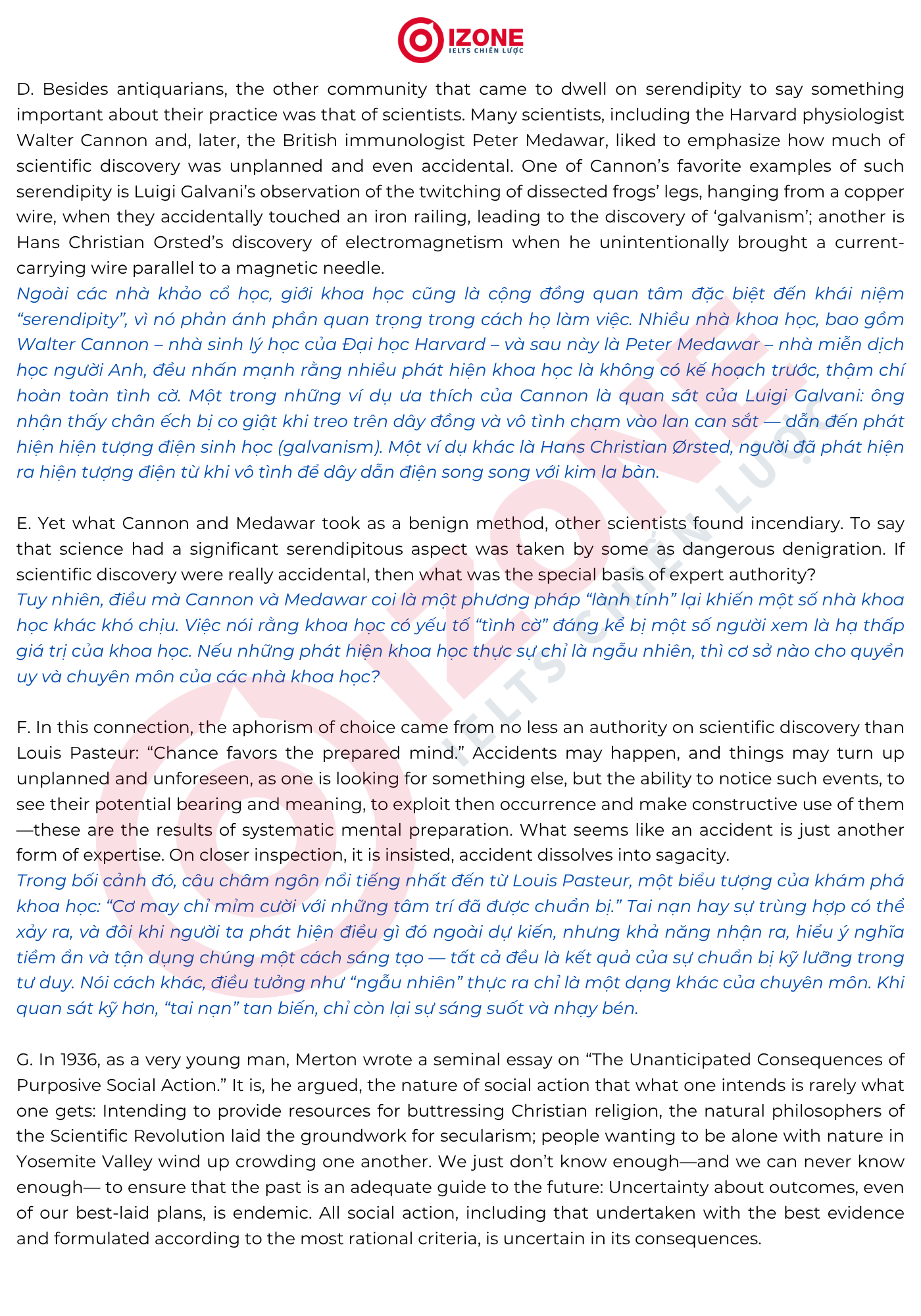

Questions 28-32
Reading passage has seven paragraphs, A-G
Choose the correct heading for paragraphs A -F from the list of headings below. Write the correct number, i-x, in boxes 28-33 on your answer sheet.
List of headings
i Examples of some scientific discoveries
ii Horace Walpole’s fairy tale
iii Resolving the contradiction
iv What is the Scientific Method
v The contradiction of views on scientific discovery
vi Some misunderstandings of serendipity
vii Opponents of authority
viii Reality doesn’t always match expectation
ix How the word came into being
x Illustration of serendipity in the business sector
Questions 33-37
Choose the correct letter, A, B, C or D.
Write the correct letter in boxes 33-37 on your answer sheet.33. In paragraph A, the word “inductivism” means
34. Medawar says “there is no such thing as The Scientific Method” because
35. Many scientists dislike the idea of serendipity because
36. The writer mentions Irving Langmuir to illustrate
37. The example of Yosemite is to show
Questions 38-40
Answer the questions below.
Choose NO MORE THAN TWO WORDS from the passage for each answer. Write your answers in boxes 38-40 on your answer sheet
38. Who is the person that first used the word “serendipity”?
39. What kind of story does the word come from?
40. What is the present name of serendip?
Điểm số của bạn là % - đúng / câu
Đáp án và giải thích chi tiết Accidental scientists Answers IELTS Reading
| 27 v | 33 C |
| 28 ix | 34 B |
| 29 i | 35 D |
| 30 vi | 36 D |
| 31 x | 37 A |
| 32 viii | 38 Horace Walpole |
| 39 fairy tale | |
| 40 Sri Lanka |
Giải thích đáp án chi tiết Accidental scientists Answers IELTS Reading
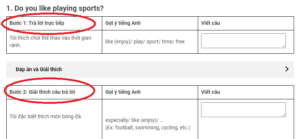
Questions 28-33: Dạng Matching heading Cách làm:
| |
27. Heading v: The contradiction of views on scientific discovery Đoạn A nói về nghịch lý trong khám phá khoa học – nếu bạn biết rõ bạn tìm gì thì không phải là khám phá, còn nếu bạn chẳng biết gì thì bạn không thể nhận ra khi tìm được | Đoạn A: A paradox lies close to the heart of scientific discovery. If you know just what you are looking for, finding it can hardly count as a discovery, since it was fully anticipated. But if, on the other hand, you have no notion of what you are looking for, you cannot know when you have found it, and discovery, as such, is out of the question. |
28. Heading ix: How the word came into being Đoạn C trình bày nguồn gốc từ “serendipity”, và đó là khái niệm trung gian giữa hai cực đối nghịch (giữa có mục đích quá rõ và không biết gì). | Đoạn C: The word did not appear in the published literature until the early 19th century and did not become well enough known to use without explanation until sometime in the first third of the 20th century. |
29. Heading i: Examples of some scientific discoveries Đoạn D đưa ra ví dụ các phát hiện khoa học tình cờ như Orsted với điện từ học. | Đoạn D: One of the examples is Hans Christian Orsted’s discovery of electromagnetism when he unintentionally brought a current-carrying wire parallel to a magnetic needle. Rhetoric about the sufficiency of rational methods was so much hot air. |
30. Heading vi: Some misunderstandings of serendipity Đoạn E chỉ ra một số nhà khoa học xem trọng serendipity, nhưng người khác thì xem đó là sự hạ thấp chuyên môn, hiểu sai về khám phá khoa học. | Đoạn E: To say that science had a significant serendipitous aspect was taken by some as dangerous denigration. |
31. Heading x: Illustration of serendipity in the business sector Trong đoạn F, Pasteur nói “Chance favors the prepared mind”, tức là phát hiện “tình cờ” thực chất là nhờ trí tuệ chuẩn bị kỹ. Cho thấy cần chuyên môn để biến cơ hội thành phát hiện, phản biện lại ý kiến “serendipity = may mắn”. | Đoạn F: “Chance favors the prepared mind.” Accidents may happen, and things may turn up unplanned and unforeseen, as one is looking for something else, but the ability to notice such events, to see their potential bearing and meaning, to exploit their occurrence and make constructive use of them—these are the results of systematic mental preparation. |
32. Heading viii: Reality doesn’t always match expectation Đoạn G cho thấy ý định ban đầu (như bảo vệ tôn giáo, hoặc tìm sự yên tĩnh ở Yosemite) thường dẫn tới kết quả ngược lại – minh chứng rằng kết quả thường không như kỳ vọng. | Đoạn G: It is, he argued, the nature of social action that what one intends is rarely what one gets: Intending to provide resources for buttressing Christian religion, the natural philosophers of the Scientific Revolution laid the groundwork for secularism; people wanting to be alone with nature in Yosemite Valley wind up crowding one another. |
Questions 33 – 37: Dạng MCQ Cách làm:
Chứng minh các đáp án ĐÚNG/SAI bằng cách lần lượt trả lời 2 câu hỏi:
| |
33. In paragraph A, the word “inductivism” means | |
C. accepts chance discoveries Nhận xét:
Cụ thể: Inductivism là không kỳ vọng, chỉ quan sát và để mọi thứ tự phát hiện. Đáp án C đúng. | Đoạn A: In the philosophy of science, these extremes map onto the purist forms of deductivism and inductivism: In the former, the outcome is supposed to be logically contained in the premises you start with; in the latter, you are recommended to start with no expectations whatsoever and see what turns up. |
A. anticipate results in the beginning Nhận xét:
Cụ thể: Đây là mô tả của “deductivism” (đưa ra kết luận từ giả thuyết đã có). Đáp án A sai. | Đoạn A: In the former, the outcome is supposed to be logically contained in the premises you start with; |
B. work with prepared premises Nhận xét:
Cụ thể: Đây cũng là mô tả của deductivism – làm việc với giả định và logic có sẵn. Đáp án B sai. | Đoạn A: the outcome is supposed to be logically contained in the premises you start with. |
D. look for what you want Nhận xét:
Cụ thể: Câu này ám chỉ bạn có mục tiêu cụ thể — điều ngược lại với inductivism. Đáp án D sai. | Đoạn A: If you know just what you are looking for, finding it can hardly count as a discovery, since it was fully anticipated. But if, on the other hand, you have no notion of what you are looking for, you cannot know when you have found it, and discovery, as such, is out of the question. |
34. Medawar says “there is no such thing as The Scientific Method” because | |
B. discoveries tend to happen unplanned Nhận xét:
Cụ thể: Đoạn D cho biết Medawar và Cannon đều tin rằng phần lớn khám phá là tình cờ, không lên kế hoạch. Đáp án B đúng. | Đoạn D: Many scientists, including the Harvard physiologist Walter Cannon and, later, the British immunologist Peter Medawar, liked to emphasise how much of scientific discovery was unplanned and even accidental. […] Indeed, as Medawar insisted, “There is no such thing as The Scientific Method,” no way at all of systematising the process of discovery. |
A. discoveries are made by people with determined mind Nhận xét:
Cụ thể: Mặc dù Medawar đồng ý với câu nói của Pasteur về “prepared mind”, nhưng câu nói “no such thing as The Scientific Method” là để nói quy trình khoa học không luôn có sẵn – vì nhiều khám phá là tình cờ. Đáp án A sai. | Không được đề cập trong bài đọc. |
C. the process of discovery is unpleasant Nhận xét:
Cụ thể: Không có ý nào trong bài nói quá trình khám phá là “unpleasant” (khó chịu). Đáp án C sai. | Không được đề cập trong bài đọc. |
D. serendipity is not a skill Nhận xét:
Cụ thể: Ngược lại, đoạn F cho thấy nhận ra tình cờ là một loại kỹ năng. Đáp án D sai. | Đoạn F: What seems like an accident is just another form of expertise. |
35. Many scientists dislike the idea of serendipity because | |
D. it devalues their scientific expertise Nhận xét:
Cụ thể: Đoạn E nói rõ nếu khám phá là do tình cờ thì giá trị của chuyên môn là gì?. Đáp án D đúng. | Đoạn E: some treated serendipity as a personal capacity; many others exploited the ambiguity of the notion. Yet what Cannon and Medawar took as a benign nose-thumbing at Dreams of Method, other scientists found incendiary. To say that science had a significant serendipitous aspect was taken by some as dangerous denigration. If scientific discovery were really accidental, then what was the special basis of expert authority? |
A. it is easily misunderstood and abused. Nhận xét:
Cụ thể: Dù có thể hiểu sai, nhưng lý do chính khiến các nhà khoa học không thích là vì nó đe dọa đến uy tín chuyên môn. Đáp án A sai. | Không được đề cập trong bài đọc. |
B. it is too unpredictable. Nhận xét:
Cụ thể: Không ai trong bài nói rằng serendipity quá khó lường khiến họ không thích. Đáp án B sai. | Không được đề cập trong bài đọc. |
C. it is beyond their comprehension. Nhận xét:
Cụ thể: Không có nhà khoa học nào được mô tả là không hiểu serendipity. Đáp án C sai. | Không được đề cập trong bài đọc. |
36. The writer mentions Irving Langmuir to illustrate | |
D. accepting uncertainty can help produce positive results. Nhận xét:
Cụ thể: Theo Langmuir, những quan niệm sai lầm về tính cứng nhắc và thực nghiệm trong quá trình nghiên cứu dẫn đến những tổn hại và chấp nhận sự không chắc chắn có thể giúp tạo ra kết quả tích cực. Đáp án D đúng. | Đoạn E: For his own part, Langmuir said that satisfactory outcomes “occurred as though we were just drifting with the wind. These things came about by accident.” If there is no very determinate relationship between cause and effect in research, he said, “then planning does not get us very far.” |
A. planned science should be avoided. Nhận xét:
Cụ thể: Không ai nói cần tránh khoa học có kế hoạch. Thay vào đó, nói rằng kế hoạch cần linh hoạt với sự tình cờ. Đáp án A sai. | Không được đề cập trong bài đọc. |
B. industrial development needs uncertainty. Nhận xét:
Cụ thể: Bài đọc không bàn đến phát triển công nghiệp. Đáp án B sai. | Không được đề cập trong bài đọc. |
C. people tend to misunderstand the relationship between cause and effect. Nhận xét:
Cụ thể: Không nói về hiểu sai mối quan hệ nhân quả. Đáp án C sai. | Không được đề cập trong bài đọc. |
37. The example of Yosemite is to show | |
A. the conflict between reality and expectation. Nhận xét:
Cụ thể: Ý định ban đầu là “muốn ở một mình với thiên nhiên”, nhưng thực tế lại bị đông đúc – minh họa cho sự mâu thuẫn giữa mong muốn và thực tế. Đáp án A đúng. | Đoạn G: people wanting to be alone with nature in Yosemite Valley wind up crowding one another. |
B. the importance of systematic planning. Nhận xét:
Cụ thể: Không hề nhắc đến “kế hoạch hệ thống” ở đây. Đáp án B sai. | Không được đề cập trong bài đọc. |
C. the intention of social action. Nhận xét:
Cụ thể: Gần đúng nhưng không đủ — đoạn này không chỉ nói về “intention” mà nhấn mạnh kết quả không như dự định. Đáp án C sai. | Không được đề cập trong bài đọc. |
D. the power of anticipation. Nhận xét:
Cụ thể: Bài lại nhấn mạnh rằng chúng ta không thể đoán trước kết quả. Đáp án D sai. | Đoạn G: We just don’t know enough—and we can never know enough—to ensure that the past is an adequate guide to the future: Uncertainty about outcomes, even of our best-laid plans, is endemic. |
Questions 38 – 40: Dạng Short answer questions Cách làm:
| |
38. Who is the person that first used the word “serendipity”? Từ cần điền là tên người. Trong đoạn C, tác giả nói rõ ràng rằng Horace Walpole là người đầu tiên sử dụng từ “serendipity” trong tiếng Anh. Đáp án là Horace Walpole. | Đoạn C: The first noted use of “serendipity” in the English language was by Horace Walpole. |
39. What kind of story does the word come from? Từ cần điền là danh từ. Trong đoạn C, Walpole nói ông tạo ra từ “serendipity” dựa trên một truyện cổ tích Ba hoàng tử xứ Serendip. Đáp án là fairy tale. | Đoạn C: He explained that it came from the fairy tale, called The Three Princes of Serendip (the ancient name for Ceylon, or present day Sri Lanka) |
40. What is the present name of serendip? Từ cần điền là danh từ riêng. “Serendip” là tên cổ, và đoạn C nêu rõ tên hiện nay là Sri Lanka. Đáp án là Sri Lanka. | Đoạn C: the ancient name for Ceylon, or present day Sri Lanka |
Bài viết trên IZONE đã cung cấp phần giải thích đáp án chi tiết cho bài đọc Accidental scientists IELTS Reading. Bạn có thể luyện tập kỹ năng Reading tại chuyên mục IELTS Reading của IZONE với các bài luyện tập tương tác có phần giải thích chi tiết.
Thử sức: Can hurricanes be moderated or diverted – Giải đề IELTS Reading chi tiết