Giải đề An assessment of micro wind turbines IELTS Reading
Thực hành luyện tập với bài đọc An assessment of micro wind turbines IELTS Reading trong phần dưới đây và tham khảo giải thích đáp án chi tiết từ IZONE.

Bài đọc An assessment of micro wind turbines IELTS Reading
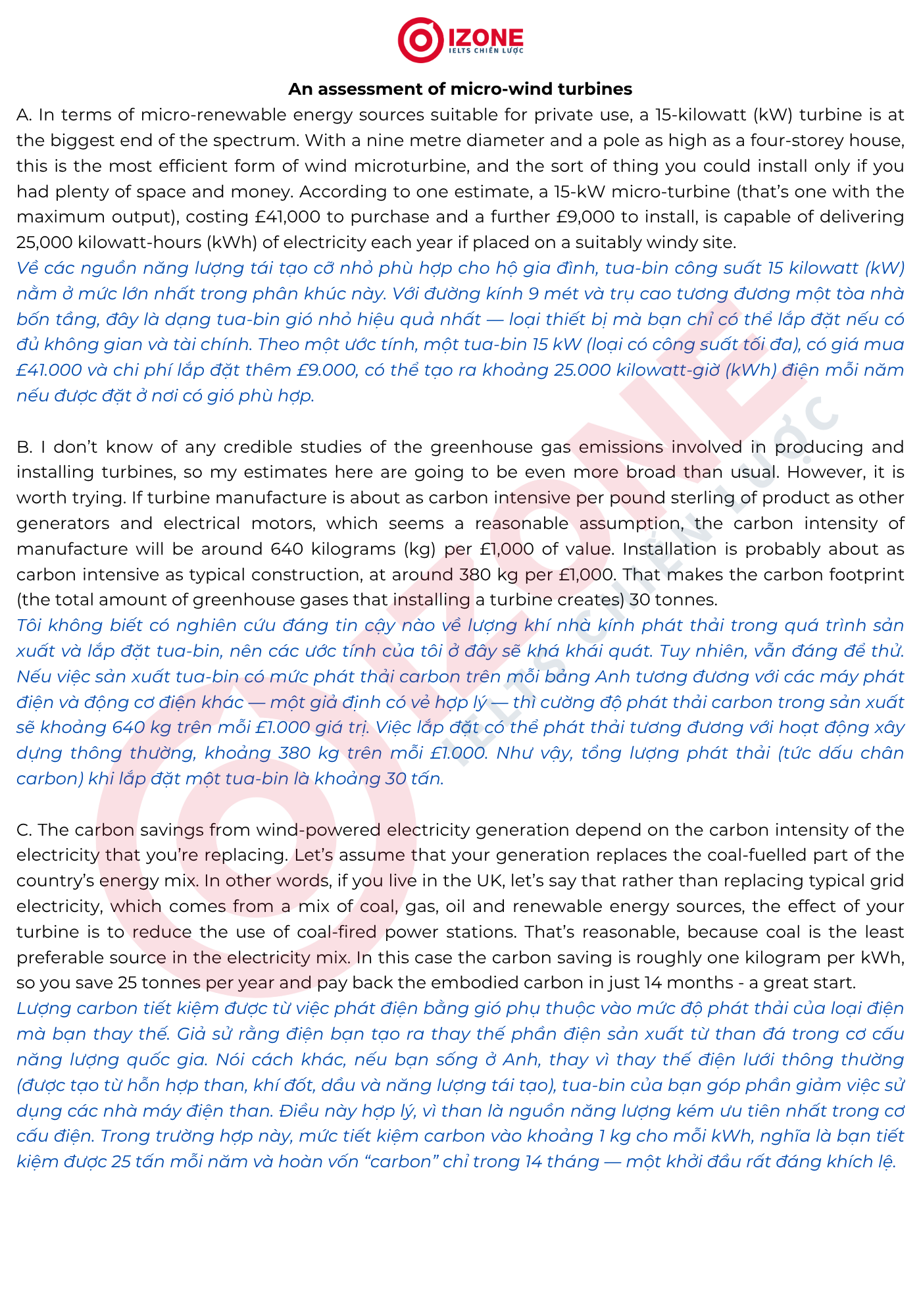
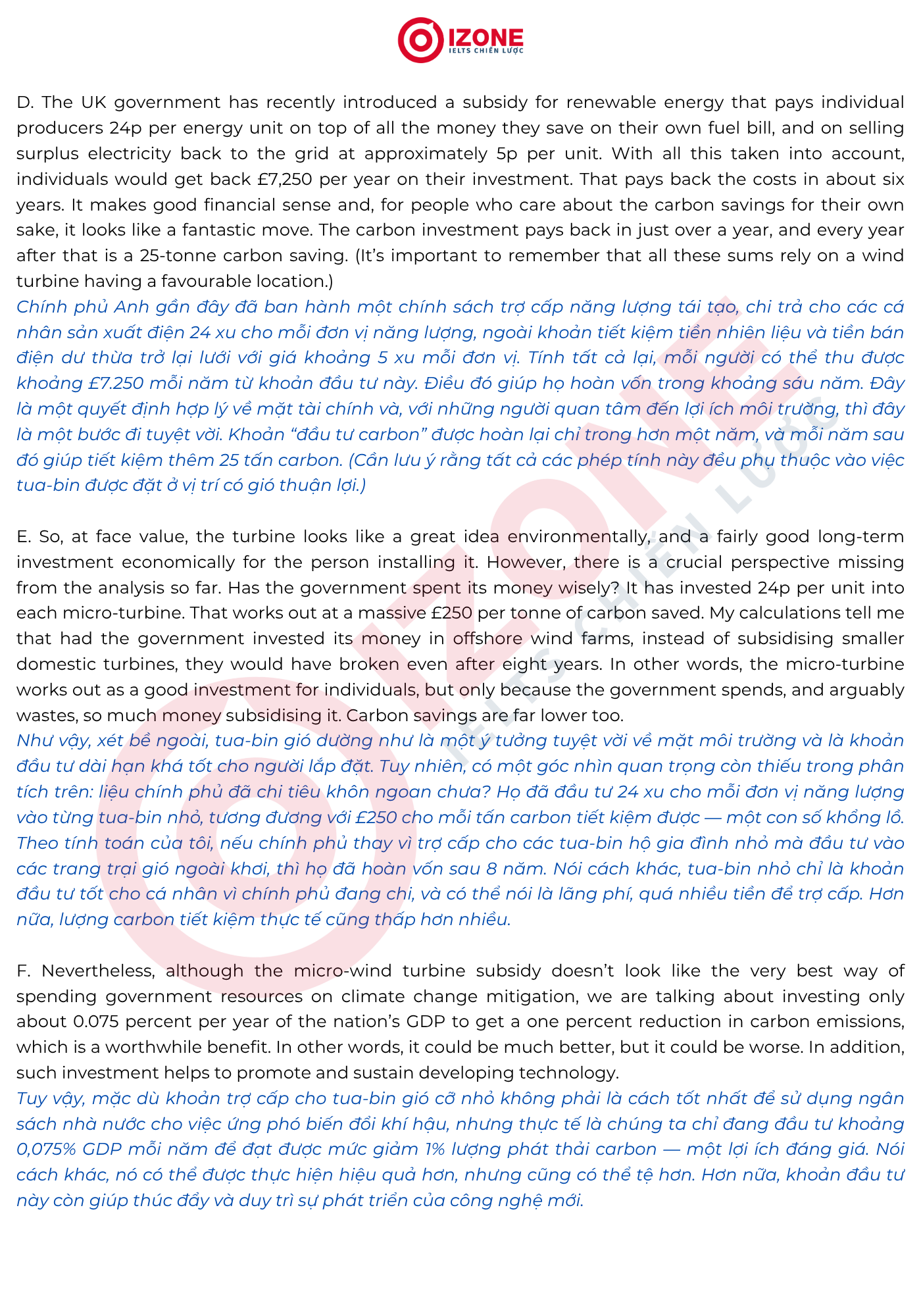
Questions 1-7
Reading Passage 2 has SEVEN paragraphs, A-G.
Choose the correct heading for each paragraph from the list of headings below.
Write the correct number, i-ix.
List of Headings
i. A better use for large sums of money.
ii. The environmental costs of manufacture and installation.
iii. Estimates of the number of micro-turbines in use.
iv. The environmental benefits of running a micro-turbine.
v. The size and output of the largest type of micro-turbine.
vi. A limited case for subsidising micro-turbines.
vii. Recent improvements in the design of micro-turbines.
viii. An indirect method of reducing carbon emissions.
ix. The financial benefits of running a micro-turbine.
Questions 8-9
Choose TWO letters, A-E.
The list below contains some possible statements about micro wind-turbines.
Which TWO of these statements are made by the writer of the passage?
Questions 10-13
Complete the sentences below.
Choose NO MORE THAN THREE WORDS from the passage for each answer.
10. would be a more effective target for government investment than micro-turbines.
11. An indirect benefit of subsidising micro-turbines is the support it provides for
12. Most spending has a effect on the environment.
13. If people buy a micro-turbine, they have less money to spend on things like foreign holidays and .
Điểm số của bạn là % - đúng / câu
Đáp án và giải thích chi tiết An assessment of micro wind turbines IELTS Reading
| 1. v | 8. B |
| 2. ii | 9. E |
| 3. iv | 10. offshore wind farms |
| 4. ix | 11. developing technology |
| 5. i | 12. negative |
| 6. vi | 13. cars |
| 7. viii |
Giải thích đáp án chi tiết An assessment of micro wind turbines IELTS Reading
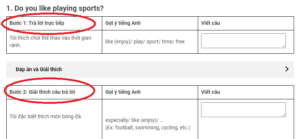
Questions 1 – 7: Dạng Matching heading Cách làm:
| |
1. Heading v. The size and output of the largest type of micro‑turbine. Đoạn A mô tả chi tiết loại micro‑turbine lớn nhất — công suất 15 kW, đường kính 9 mét. | Paragraph A: According to one estimate, a 15-kW micro-turbine (that’s one with the maximum output), costing £41,000 to purchase and a further £9,000 to install, |
2. Heading ii. The environmental costs of manufacture and installation. Đoạn B bàn về lượng khí nhà kính thải ra trong sản xuất và lắp đặt turbine — tức chi phí môi trường của việc chế tạo & lắp đặt. | Paragraph B: If turbine manufacture is about as carbon intensive per pound sterling of product as other generators and electrical motors, which seems a reasonable assumption, the carbon intensity of manufacture will be around 640 kilograms (kg) per £1,000 of value. Installation is probably about as carbon intensive as typical construction, at around 380 kg per £1,000. |
3. Heading iv. The environmental benefits of running a micro‑turbine. Đoạn C trình bày việc tiết kiệm carbon khi turbine vận hành (bằng cách thay thế điện từ than), và thời gian hoàn vốn carbon. | Paragraph C: The carbon savings from wind-powered electricity generation depend on the carbon intensity of the electricity that you’re replacing. […] In this case the carbon saving is roughly one kilogram per kWh, so you save 25 tonnes per year and pay back the embodied carbon in just 14 months – a great start. |
4. Heading ix. The financial benefits of running a micro‑turbine. Đoạn D nói về trợ cấp của chính phủ, doanh thu, và thời gian hoàn vốn kinh tế — tức lợi ích tài chính khi vận hành turbine. | Paragraph D: The UK government has recently introduced a subsidy for renewable energy that pays individual producers 24p per energy unit on top of all the money they save on their own fuel bill, and on selling surplus electricity back to the grid at approximately 5p per unit. With all this taken into account, individuals would get back £7,250 per year on their investment. That pays back the costs in about six years. It makes good financial sense and, for people who care about the carbon savings for their own sake, it looks like a fantastic move. |
5. Heading i. A better use for large sums of money. Ở đoạn E, tác giả đặt câu hỏi liệu chính phủ đã dùng tiền trợ cấp đúng cách, và cho rằng đầu tư vào “offshore wind farms” sẽ hiệu quả hơn — tức là gợi ý “một cách sử dụng tiền lớn tốt hơn”. | Paragraph E: My calculations tell me that had the government invested its money in offshore wind farms, instead of subsidising smaller domestic turbines, they would have broken even after eight years. In other words, the micro-turbine works out as a good investment for individuals, but only because the government spends, and arguably wastes, so much money subsidising it. Carbon savings are far lower too. |
6. Heading vi. A limited case for subsidising micro‑turbines. Đoạn F không hoàn toàn ủng hộ hay bác bỏ trợ cấp, mà nói rằng mặc dù không tối ưu, việc trợ cấp micro‑turbine có thể có giá trị nhỏ so với GDP quốc gia — tức là một “trường hợp giới hạn” ủng hộ. | Paragraph F: Nevertheless, although the micro-wind turbine subsidy doesn’t look like the very best way of spending government resources on climate change mitigation, we are talking about investing only about 0.075 percent per year of the nation’s GDP to get a one percent reduction in carbon emissions, which is a worthwhile benefit. |
7. Heading viii. An indirect method of reducing carbon emissions. Đoạn G nói rằng trợ cấp micro‑turbine còn có hiệu ứng gián tiếp: nó khuyến khích chi tiêu vào công nghệ giảm carbon thay vì chi tiêu vào các hàng hóa/sản phẩm gây carbon (như ô tô, du lịch). | Paragraph G: So if the subsidy encourages people to spend their money on a carbon-reducing technology such as a wind turbine, rather than on carbon-producing goods like cars, and services such as overseas holidays, then the reductions in emissions will be greater than my simple sums above have suggested. |
Question 8-9: Dạng Global MCQ Cách làm: Bước 1: Đọc câu hỏi và gạch chân từ khóa Bước 2: Xác định phần nội dung liên quan đến câu hỏi Bước 3: Skim và tìm ra ý chính trả lời cho câu hỏi Bước 4: Chọn đáp án | |
The list below contains some possible statements about micro wind-turbines. | |
B. Their exact energy output depends on their position. Đoạn A nói rõ nếu đặt ở nơi có nhiều gió, turbine mới có thể sản sinh được 25,000 kWh/năm. Nghĩa là sản lượng phụ thuộc vào vị trí lắp đặt.
Đáp án B đúng. | Paragraph A: According to one estimate, a 15-kW micro-turbine (that’s one with the maximum output), costing £41,000 to purchase and a further £9,000 to install, is capable of delivering 25,000 kilowatt-hours (kWh)’ of electricity each year if placed on a suitably windy site. |
E. They can produce more energy than a household needs. Đúng vì đoạn D nói rõ người dùng có thể bán lượng điện dư thừa về cho lưới điện, tức là turbine có thể tạo ra nhiều điện hơn mức cần dùng.
Đáp án E đúng. | Paragraph D: The UK government has recently introduced a subsidy for renewable energy that pays individual producers 24p per energy unit on top of all the money they save on their own fuel bill, and on selling surplus electricity back to the grid at approximately 5p per unit. |
Questions 10 – 13: Dạng Sentence Completion Cách làm
| |
10. ______________ would be a more effective target for government investment than micro-turbines. Từ vần điền là danh từ làm chủ ngữ cho câu. Nếu chính phủ đầu tư vào điện gió ngoài khơi thay vì turbine nhỏ, thì sẽ hiệu quả hơn. Đây là “mục tiêu hiệu quả hơn cho đầu tư”. Đáp án là offshore wind farms. | Paragraph E: Has the government spent its money wisely? It has invested 24p per unit into each micro-turbine. That works out at a massive £250 per tonne of carbon saved. My calculations tell me that had the government invested its money in offshore wind farms, |
11. An indirect benefit of subsidising micro-turbines is the support it provides for______________. Từ cần điền là danh từ. Khoản đầu tư tuy chưa tối ưu nhưng giúp thúc đẩy và duy trì công nghệ đang phát triển — đây là lợi ích gián tiếp từ việc trợ cấp. Đáp án là developing technology. | Paragraph F: In addition, such investment helps to promote and sustain developing technology. |
12. Most spending has a______________ effect on the environment. Từ cần điền là tính từ vì đứng trước danh từ “effect”. Phần lớn việc chi tiêu đều dẫn đến tác động carbon tiêu cực. Đáp án là negative. | Paragraph G: Input- output modelling has told us that it is actually quite difficult to spend money without having a negative carbon impact. |
13. If people buy a micro-turbine, they have less money to spend on things like foreign holidays and______________. Từ cần điền là danh từ. Nếu không mua turbine thì có thể tiêu tiền vào ô tô hoặc du lịch nước ngoài — cả hai đều gây phát thải carbon. Đáp án là cars. | Paragraph G: So if the subsidy encourages people to spend their money on a carbon-reducing technology such as a wind turbine, rather than on carbon-producing goods like cars, and services such as overseas holidays, then the reductions in emissions will be greater than my simple sums above have suggested. |
Trên đây là phần đáp án và giải thích chi tiết cho bài đọc An assessment of micro wind turbines IELTS Reading. Mời bạn tiếp tục luyện tập với chuyên mục IELTS Reading để nâng cao kỹ năng Reading cùng IZONE.
Luyện tập với The dover bronze age boat IELTS Reading – Giải thích đáp án