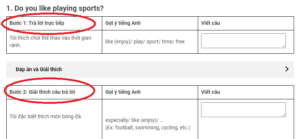
Đáp án & Giải chi tiết Gesture IELTS Reading
Cùng IZONE luyện tập với Gesture IELTS Reading và tham khảo phần giải thích đáp án chi tiết từ IZONE trong bài viết này nhé!
Bài đọc Gesture IELTS Reading
GESTURE
- Gesture is any action that sends a visual signal to an onlooker. To become a gesture, an act has to be seen by someone else and has to communicate some pieces of information to them. It can do this either because the gesturer deliberately sets out to send a signal or it can do it only incidentally. The hand-wave is a Primary Gesture,because it has no other existence or function. Therefore, to make it a gesture, first, it should be clear and unambiguous. Others would be able to understand it instantly when it is shown to them. Nor may any component of a gesture, its force, its direction and amplitude of movement, be altered: otherwise, confusion or misunderstanding may occur.
- Most people tend to limit their use of the term “gesture” to the primary form the hand-wave type—but this misses an important point. What matters with gesturing is not what signals we think we are sending out, but what signals are being received. The observers of our acts will make no distinction between our intentional primary gestures and our unintentional, incidental ones. This is why it is preferable to use the term “gesture” in its wider meaning as an “observed action”. This can be compared to the ring of a telephone. The speed, tone and intensity of a telephone remain the same for any phone call. Even the length of time before being told that the number you are dialing is not answering, unless the caller hangs up, is the same.
- Some gestures people use are universal. The shoulder shrug is a case in point. The shrug is done by bringing the shoulders up, drawing the head in, and turning the palms upwards so as to reveal that nothing is hidden. The shoulder shrug can also demonstrate submission or that what is being said isn’t understood. Another example is that an angry person usually expresses his rage by waving his clenched fist rapidly and forcefully. Surprisingly, you may find that people of different cultures will do the same when they are offended. That is to say, a commonly accepted gesture is shared by them. But if the way the hand is clenched changes, or the amplitude of force and the direction the first is waved alters, the gesture no longer means the same.
- So, is gesture born with us or is it developed as we grow up? Recent research found that gesture is more like a spontaneous reaction when we face certain situations. And we just do that automatically. When people talk, they almost always gesture with their hands. This expressive movement can be coaxed into a choreographic form if observed carefully. People can practice spontaneous gesture by forming pairs, then observing and questioning each other. They then show the group what they have collected from their partners. It is fun to surprise a group using this technique. Because spontaneous gestures are often unconscious, people will sometimes be surprised to have their gestures mirrored back to them, saying “Did I really do that?”
- The attention of research was also drawn to cultural themes. Researchers discovered that if a person has a good set of teeth, he or she would be prone to have a bigger smile than he or she should when good things happen. And if a person possesses a bad set of teeth, he or she would tend to have his or her mouth shut when being teased. And people’s reaction to the same joke also varies: some laugh out loud while others titter. However, this does not cause confusion and it helps to develop our “behavioural”, which is an important aspect of our identity. It was referred to as a Gesture Variant, which indicates that individuals’ gesture production is a complex process, in which speakers’ internal and external factors and interactions could play a role in multi-modal communication.
- During the research, an interesting phenomenon soon caught researchers’ attention. A hand purse gesture, which is formed by straightening the fingers and thumb of one hand and bringing them together so the tips touch, pointing upwards and shaping like a cone, carries different meanings in different countries. In Malta, it means heavy sarcasm: “you may seem good, but you are really bad.”; in Tunisia, it is against recklessness, saying “slow down”; in Italy, it means “What’s the matter?” or “What are you trying to say?”; in France, it means “I am afraid”. However, this gesture has no clear meaning in American culture. And of course, the way the gesture is conducted is similar in different countries.
- But what will happen if the gestures of different countries confront each other? The situation is further complicated by the fact that some gestures mean totally different things in different countries. To take one example, in Saudi Arabia, stupidity can be signalled by touching the lower eyelid with the tip of the forefinger. But this same gesture, in various other countries, can mean disbelief, approval, agreement, mistrust, scepticism, alertness, secrecy, craftiness, danger, or criminality. So people are faced with two basic problems where certain gestures are concerned: either one meaning may be signalled by different actions, or several meanings may be signalled by the same action, as we move from culture to culture. The only solution is to approach each culture with an open mind and learn their gestures as one would learn their vocabulary. These all require considerable skill and training and belong in a totally different world from the familiar gestures we employ in everyday life.
Luyện tập Gesture IELTS Reading
Questions 14-19
Reading Passage 2 has seven paragraphs, A-G.
Choose the correct heading for paragraph A-C and from the list of headings below.
Write the correct number, i-x, in boxes 14-19 on your answer sheet.
List of Headings
i The subconscious nature of gestures
ii The example of regional differences
iii The key factors of gestures
iv Sending out important signals
v How a well-known gesture loses its meaning
vi Performance in a specific setting
vii Recent research of Gesture Variant
viii Comparison to an everyday-use object
ix How will conflict be handled
x Individual deviation of cultural norms
| Example | Answer |
| Paragraph D | i |
Questions 20 - 21
Choose the correct letter, A, B, C or D.
Write your answers in boxes 20-22 on your answer sheet.
20 According to the passage, which aspect of the ringing of a telephone is compared with gestures?
21 In which country should the gesture "Hand Purse" be used with caution?
Questions 22 - 24
Do the following statements agree with the information given in Reading Passage 2?
In boxes 23-25 on your answer sheet, write
TRUE if the statement agrees with the information
FALSE if the statement contradicts the information
NOT GIVEN if there is no information on this
Question 25
According to the passage, what is the writer’s purpose in writing this passage?
Choose the correct letter A, B, C or D
Write you answer in box 26 on your answer sheet.
Điểm số của bạn là % - đúng / câu
Đáp án Gesture IELTS Reading
| 14. iii | 18. ii | 22. NOT GIVEN |
| 15. viii | 19. ix | 23. TRUE |
| 16. v | 20. B | 24. TRUE |
| 17. x | 21. A | 25. D |
Giải chi tiết Gesture IELTS Reading
Questions 14-19: Dạng MATCHING HEADINGS Cách làm:
| |
14 Paragraph A Đoạn A chủ yếu xác định các yếu tố cốt lõi để một hành động được coi là gesture. Cụ thể: tác giả nhấn mạnh rằng một gesture phải là hành động nhìn thấy được, truyền tải thông tin rõ ràng, không mơ hồ, và các yếu tố như lực, hướng, biên độ chuyển động không được tùy ý thay đổi nếu không sẽ gây nhầm lẫn ⇒ Đáp án là iii The key factors of gestures | Therefore, to make it a gesture, first, it should be clear and unambiguous. Others would be able to understand it instantly when it is shown to them. Nor may any component of a gesture, its force, its direction and amplitude of movement, be altered: otherwise, confusion or misunderstanding may occur |
15 Paragraph B Đoạn B mở rộng khái niệm gesture từ chỗ chỉ hiểu là “hand-wave” sang nghĩa rộng hơn là “observed action”, rồi so sánh cách gesture được người khác tiếp nhận với tiếng chuông điện thoại – một vật dụng quen thuộc hằng ngày. ⇒ Đáp án là viii Comparison to an everyday-use object | This is why it is preferable to use the term ‘gesture’ in its wider meaning as an ‘observed action’. This can be compared to the ring of a telephone. The speed, tone and intensity of a telephone remain the same for any phone call. |
16 Paragraph C Đoạn C nói về một số cử chỉ phổ quát (nhún vai, nắm tay khi tức giận), nhưng nhấn mạnh rằng chỉ cần thay đổi cách thực hiện (cách nắm tay, lực, biên độ, hướng vung) thì cùng một cử chỉ sẽ không còn giữ nguyên nghĩa ban đầu nữa. ⇒ Đáp án là v How a well-known gesture loses its meaning | Another example is that an angry person usually expresses his rage by waving his clenched fist rapidly and forcefully. … But if the way the hand is clenched changes, or the amplitude of force and the direction the fist is waved alters, the gesture no longer means the same. |
17 Paragraph E Đoạn E nói về kết quả nghiên cứu gần đây liên quan đến sự khác biệt cá nhân trong cử chỉ, đặc biệt là cách cười, cách phản ứng với trò đùa, từ đó dẫn đến khái niệm “Gesture Variant” – cho thấy việc tạo ra gesture là một quá trình phức tạp, chịu ảnh hưởng của nhiều yếu tố bên trong và bên ngoài. ⇒ Đáp án là vii Recent research of Gesture Variant | The attention of research was also drawn to cultural themes. Researchers discovered that… people’s reaction to the same joke also varies: some laugh out loud while others titter. … It was referred to as a Gesture Variant, which indicates that individuals’ gesture production is a complex process, in which speakers’ internal and external factors and interactions could play a role in multi-modal communication |
18 Paragraph F Đoạn F minh họa sự khác biệt vùng miền/văn hóa trong cách hiểu cùng một cử chỉ – hand purse gesture. Cùng một hình thức cử chỉ nhưng ở mỗi quốc gia lại mang nghĩa khác nhau (mỉa mai, nhắc “chậm lại”, hỏi “có chuyện gì?”, bày tỏ sợ hãi) và thậm chí “no clear meaning in American culture”. ⇒ Đáp án là ii The example of regional differences | A hand purse gesture … carries different meanings in different countries. In Malta, it means heavy sarcasm…; in Tunisia, it is against recklessness, saying ‘slow down’; in Italy, it means ‘What’s the matter?’…; in France, it means ‘I am afraid’. However, this gesture has no clear meaning in American culture. |
19 Paragraph G Đoạn G nói về xung đột ý nghĩa cử chỉ giữa các nền văn hoá (cùng một gesture nhưng nghĩa khác nhau, hoặc cùng một nghĩa nhưng lại dùng các gesture khác nhau), và cách giải quyết xung đột đó: phải tiếp cận với tư duy cởi mở và học gesture như học từ vựng. ⇒ Đáp án là ix How will conflict be handled | But what will happen if the gestures of different countries confront each other? … some gestures mean totally different things in different countries. … people are faced with two basic problems… either one meaning may be signalled by different actions, or several meanings may be signalled by the same action… The only solution is to approach each culture with an open mind and learn their gestures as one would learn their vocabulary. |
Questions 20-21: Dạng MCQ Cách làm: Bước 1: Đọc câu hỏi và gạch chân từ khóa Bước 2: Scan từ khóa trong đoạn văn Bước 3: Tìm ra hiện tượng paraphrase Bước 4: Chọn đáp án đúng, double check bằng cách chứng minh các đáp án còn lại sai Chứng minh các đáp án ĐÚNG/SAI bằng cách lần lượt trả lời 2 câu hỏi:
| |
20 According to the passage, which aspect of the ringing of a telephone is compared with gestures? | |
B. The unchanging sound of the ringing. Tiếng chuông điện thoại luôn giống nhau, không thay đổi theo mục đích hay người gọi → giống như cách người quan sát không phân biệt giữa cử chỉ cố ý và vô tình, họ chỉ “nhận” một tín hiệu giống nhau. ⇒ Đáp án B là TRUE | This can be compared to the ring of a telephone. The speed, tone and intensity of a telephone remain the same for any phone call. Even the length of time before being told that the number you are dialing is not answering… is the same. |
A. The length of the ringing. Ở đây, tác giả nhắc tới “length of time” (độ dài thời gian) nhưng mục đích là để nhấn mạnh rằng mọi thứ đều giống nhau, không đổi – từ speed, tone, intensity đến length of time. ⇒ Đáp án A là FALSE | This can be compared to the ring of a telephone. The speed, tone and intensity of a telephone remain the same for any phone call. Even the length of time before being told that the number you are dialling is not answering… is the same |
C. The telephone ringing intrudes upon our life. Ở đây, tác giả nhắc tới “length of time” (độ dài thời gian) nhưng mục đích là để nhấn mạnh rằng mọi thứ đều giống nhau, không đổi – từ speed, tone, intensity đến length of time. ⇒ Đáp án C là NOT GIVEN | This can be compared to the ring of a telephone. The speed, tone and intensity of a telephone remain the same for any phone call. Even the length of time before being told that the number you are dialling is not answering… is the same |
D. The speed of ringing signals the urgency. Tốc độ reo chuông không thay đổi, không phụ thuộc vào mức độ khẩn cấp, cuộc gọi gấp hay không gấp thì chuông vẫn y như nhau. ⇒ Đáp án D là FALSE | This can be compared to the ring of a telephone. The speed, tone and intensity of a telephone remain the same for any phone call. |
21 In which country should the gesture “Hand Purse” be used with caution? | |
A. Malta Ở Malta, cử chỉ “hand purse” mang sắc thái mỉa mai nặng nề, hàm ý “trông thì có vẻ tốt nhưng thực ra rất tệ”. Đây là một nghĩa tiêu cực, dễ gây xúc phạm, nên nếu bạn không nắm rõ bối cảnh văn hoá mà vẫn dùng cử chỉ này thì rất dễ gây hiểu nhầm hoặc mất lòng, vì vậy nó là gesture cần dùng thận trọng. ⇒ Đáp án D là TRUE | In Malta, it means heavy sarcasm: ‘you may seem good, but you are really bad.’ |
B. Tusinia Ở Tunisia, cử chỉ “hand purse” mang nghĩa kiểu nhắc nhở, cảnh báo: “đừng liều, đi chậm lại, bình tĩnh lại”.
⇒ Đáp án B là FALSE | “In Tunisia, it is against recklessness, saying ‘slow down’…” |
C. Italy Nghĩa của gesture “hand purse” ở Italy chủ yếu là:
⇒ Đáp án C là FALSE | In Italy, it means ‘What’s the matter?’ or ‘What are you trying to say?’ |
D. France Ở Pháp, cử chỉ hand purse chỉ đơn giản mang nghĩa biểu lộ cảm xúc sợ hãi / lo lắng.
⇒ Đáp án D là FALSE | In France, it means ‘I am afraid’. |
Questions 22 – 24: Dạng TRUE/FALSE/NOT GIVEN & YES/NO/NOT GIVEN Cách làm:
Chọn đáp án bằng cách lần lượt trả lời 2 câu hỏi:
| |
22 Angry people are often in the same age range or group.
⇒ Đáp án NOT GIVEN | “Another example is that an angry person usually expresses his rage by waving his clenched fist rapidly and forcefully. Surprisingly, you may find that people of different cultures will do the same when they are offended. That is to say, a commonly accepted gesture is shared by them.” |
23 Personal physical characteristics may affect the gesture used.
⇒ Đáp án TRUE | Researchers discovered that if a person has a good set of teeth, he or she would be prone to have a bigger smile than he or she should when good things happen. And if a person possesses a bad set of teeth, he or she would tend to have his or her mouth shut when being teased |
24 A Gesture Variant can still be understood by the members of the same culture.
⇒ Đáp án TRUE | Researchers discovered that if a person has a good set of teeth, he or she would be prone to have a bigger smile… if a person possesses a bad set of teeth, he or she would tend to have his or her mouth shut when being teased. And people’s reaction to the same joke also varies: some laugh out loud while others titter. However, this does not cause confusion and it helps to develop our ‘behavioural’, which is an important aspect of our identity. It was referred to as a Gesture Variant… |
Questions 25: Dạng MCQ Cách làm: Bước 1: Đọc câu hỏi và gạch chân từ khóa Bước 2: Scan từ khóa trong đoạn văn Bước 3: Tìm ra hiện tượng paraphrase Bước 4: Chọn đáp án đúng, double check bằng cách chứng minh các đáp án còn lại sai Chứng minh các đáp án ĐÚNG/SAI bằng cách lần lượt trả lời 2 câu hỏi:
| |
D. to explain the concept of gesture Bài viết chủ yếu đang giải thích khái niệm gesture một cách toàn diện: bản chất, đặc điểm, biến thể cá nhân, khác biệt văn hóa, cách hiểu. ⇒ D là đáp án chính xác | Gesture is any action that sends a visual signal to an onlooker. |
A. to clarify the origin of gesture-based communication Toàn bộ bài không hề tập trung vào nguồn gốc hay lịch sử hình thành gesture. ⇒ Đáp án A là NOT GIVEN | |
B. to promote the worldwide use of gestures Giọng văn xuyên suốt mang tính giải thích, mô tả, phân tích, chứ không phải “kêu gọi hành động”. Còn cảnh báo về rủi ro khi gestures khác văn hoá “đụng nhau” ⇒ Đáp án A là FALSE | some gestures mean totally different things in different countries… people are faced with two basic problems…The only solution is to approach each culture with an open mind and learn their gestures as one would learn their vocabulary |
C. to investigate whether gesture use affects information content Bài chỉ giải thích gesture là gì, cách chúng được hiểu, khác biệt văn hoá, và khái niệm Gesture Variant — không có câu nào nói về việc gesture làm thay đổi information content. ⇒ Đáp án C là NOT GIVEN | Gesture is any action that sends a visual signal…Some gestures mean totally different things in different countries. |
Trên đây là lời giải chi tiết cho Gesture IELTS Reading. Hy vọng bài viết này giúp ích cho bạn.
Xem thêm: Giải chi tiết IELTS Reading: Coastal archaeology of Britain