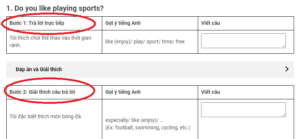
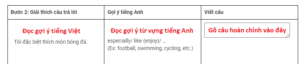
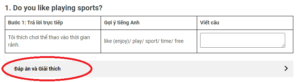
Đáp án & Giải chi tiết Art to the aid of technology IELTS Reading
Cùng IZONE giải đề Art to the aid of technology IELTS Reading để luyện tập nâng cao kỹ năng đọc nhé!
Bài đọc Art to the aid of technology IELTS Reading
Art to the aid of technology
What caricatures can teach us about facial recognition
A Our brains are incredibly agile machines, and it is hard to think of anything they do more efficiently than recognize faces. Just hours after birth, the eyes of newborns are drawn to facelike patterns. An adult brain knows it is seeing a face within 100 milliseconds, and it takes just over a second to realize that two different pictures of a face, even if they are lit or rotated in very different ways, belong to the same person.
B Perhaps the most vivid illustration of our gift for recognition is the magic of caricature-the fact that the sparest cartoon of a familiar face, even a single line dashed off in two seconds, can be identified by our brains in an instant. It is often said that a good caricature looks more like a person than the person themselves. As it happens, this notion, counterintuitive though it may sound, is actually supported by research. In the field of vision science, there is even a term for this seeming paradox-the caricature effect-a phrase that hints at how our brains misperceive faces as much as perceive them.
C Human faces are all built pretty much the same: two eyes above a nose that’s above a mouth, the features varying from person to person generally by mere millimetres. So what our brains look for, according to vision scientists, are the outlying features-those characteristics that deviate most from the ideal face we carry around in our heads, the running average of every “visage” we have ever seen. We code each new face we encounter not in absolute terms but in the several ways it differs markedly from the mean. In other words, we accentuate what is most important for recognition and largely ignore what is not. Our perception fixates on the upturned nose, the sunken eyes or the fleshy cheeks, making them loom larger. To better identify and remember people, we turn them into caricatures.
D Ten years ago, we all imagined that as soon as surveillance cameras had been equipped with the appropriate software, the face of a crime suspect would stand out in a crowd. Like a thumbprint, its unique features and configuration would offer a biometric key that could be immediately checked against any database of suspects. But now a decade has passed, and face-recognition systems still perform miserably in real-world conditions. Just recently, a couple who accidentally swapped passports at an airport in England sailed through electronic gates that were supposed to match their faces to file photos.
E All this leads to an interesting question. What if, to secure our airports and national landmarks, we need to learn more about caricature? After all, it’s the skill of the caricaturist-the uncanny ability to quickly distill faces down to their most salient features-that our computers most desperately need to acquire. Clearly, better cameras and faster computers simply aren’t going to be enough.
F At the University of Central Lancashire in England, Charlie Frowd, a senior lecturer in psychology, has used insights from caricature to develop a better police-composite generator. His system, called EvoFIT, produces animated caricatures, with each successive frame showing facial features that are more exaggerated than the last. Frowd’s research supports the idea that we all store memories as caricatures, but with our own personal degree of amplification. So, as an animated composite depicts faces at varying stages of caricature, viewers respond to the stage that is most recognizable to them. In tests, Frowd’s technique has increased positive identifications from as low as 3 percent to upwards of 30 percent.
G To achieve similar results in computer face recognition, scientists would need to model the artist’s genius even more closely-a feat that might seem impossible if you listen to some of the artists describe their nearly mystical acquisition of skills. Jason Seiler recounts how he trained his mind for years, beginning in middle school, until he gained what he regards as nothing less than a second sight. ‘A lot of people think that caricature is about picking out someone’s worst feature and exaggerating it as far as you can,’ Seiler says. ‘That’s wrong. Caricature is basically finding the truth. And then you push the truth.’ Capturing a likeness, it seems, has less to do with the depiction of individual features than with their placement in relationship to one another. ‘It’s how the human brain recognizes a face. When the ratios between the features are correct, you see that face instantly.’
H Pawan Sinha. director of MIT’s Sinha Laboratory for Vision Research, and one of the nation’s most innovative computer-vision researchers, contends that these simple, exaggerated drawings can be objectively and systematically studied and that such work will lead to breakthroughs in our understanding of both human and machine-based vision. His lab at MIT is preparing to computationally analyze hundreds of caricatures this year, from dozens of different artists, with the hope of tapping their intuitive knowledge of what is and isn’t crucial for recognition. He has named this endeavor the Hirschfeld Project, after the famous New York Times caricaturist Al Hirschfeld.
I Quite simply, by analyzing sketches, Sinha lopes to pinpoint the recurring exaggerations in the caricatures that most strongly correlate to particular ways that the original faces deviate from the norm. The results, he believes, will ultimately produce a rank-ordered list of the 20 or so facial attributes that are most important for recognition: ‘It’s a recipe for how to encode the face,’ he says. In preliminary tests, the lab has already isolated important areas-for example, the ratio of the height of the forehead to the distance between the top of the nose and the mouth.
J On a given face, four of 20 such Hirschfeld attributes, as Sinha plans to call them, will be several standard deviations greater than the mean; on another face, a different handful of attributes might exceed the norm. But in all cases, it’s the exaggerated areas of the face that hold the key. As matters stand today, an automated system must compare its target faces against the millions of continually altering faces it encounters. But so far, the software doesn’t know what to look for amid this onslaught of variables. Armed with the Hirschfeld attributes, Sinha hopes that computers can be trained to focus on the features most salient for recognition, tuning out the others. ’Then.’ Sinha says, ’the sky is the limit’.
Luyện tập Art to the aid of technology IELTS Reading
Questions 1-6
Reading Passage has ten paragraphs, A-J.
Which paragraph contains the following information?
You may use any letter more than once.
Questions 7-10
Look at the following statements and the list of people, A-C, below.
Match each statement with the correct person.
List of People
A Charlie Frowd
B Jason Seiler
C Pawan Sinha
Questions 11-13
Complete the summary below.
Choose NO MORE THAN TWO WORDS from the passage for each answer.
Sinha’s Project
Sinha's aim in the project is to come up with a specific number of what he terms 11 that are key to identification purposes. He hopes these can be used to enable an 12 to identify faces more quickly and more accurately. In order to do this, his team must examine the most frequently 13 features in a large number of cartoon faces.
Điểm số của bạn là % - đúng / câu
Đáp án Art to the aid of technology IELTS Reading
| 1. C | 4. B | 7. B | 10. A |
| 2. G | 5. F | 8. C | 11. Hirschfeld attributes |
| 3. D | 6. D | 9. B | 12. automated system |
| 13. exaggerated |
Giải chi tiết Art to the aid of technology IELTS Reading
|
Questions 1-6: Dạng MATCHING HEADINGS Cách làm:
|
|
|
1 why we have mental images of faces that are essentially caricatures Đoạn C đề cập đến não người mã hoá khuôn mặt theo điểm lệch. Vì đặc điểm khuôn mặt khác nhau chỉ “vài mm”, não sẽ tập trung vào cái lệch chuẩn (mũi hếch, mắt trũng…) → tạo “caricature” trong trí nhớ để nhận diện nhanh. ⇒ Đáp án chính xác là C |
Đoạn C: ...the ideal face we carry around in our heads…We code each new face… differs markedly from the mean…We accentuate what is most important…To better identify… we turn them into caricatures… |
|
2 mention of the length of time it can take to become a good caricaturist Đoạn G nói về việc kỹ năng vẽ caricature không tự nhiên mà có, nghệ sĩ phải luyện tập trong thời gian dài để đạt trình độ gần như “second sight”. ⇒ Đáp án chính xác là G |
Câu G: …he trained his mind for years, beginning in middle school, until he gained what he regards as nothing less than a second sight... |
|
3 an example of how unreliable current security systems can be Đoạn D nói rằng hệ thống nhận diện khuôn mặt trong an ninh (sân bay, giám sát) được kỳ vọng rất cao, nhưng thực tế hoạt động kém, thậm chí mắc lỗi nghiêm trọng. ⇒ Đáp án chính xác là D |
Câu D: …Just recently, a couple who accidentally swapped passports at an airport in England sailed through electronic gates that were supposed to match their faces to file photos… |
|
4 reference to the fact that we can match even a hastily drawn caricature to the person it represents Đoạn B nói rằng chỉ cần một caricature cực kỳ đơn giản, thậm chí vẽ trong vài giây, não người vẫn nhận diện được ngay đó là ai. ⇒ Đáp án chính xác là B |
Câu B: …even a single line dashed off in two seconds, can be identified by our brains in an instant… |
|
5 a summary of how the use of multiple caricatures has improved recognition rates in a particular field Đoạn F mô tả EvoFIT – một hệ thống tạo caricature động (nhiều phiên bản/mức độ phóng đại) để hỗ trợ nhận diện tội phạm trong điều tra cảnh sát. ⇒ Đáp án chính xác là F |
Đoạn F: …produces animated caricatures, with each successive frame showing facial features that are more exaggerated than the last…increased positive identifications from as low as 3 percent to upwards of 30 percent…develop a better police-composite generator… |
|
6 a comparison between facial recognition and another well-established form of identification Đoạn D nói về kỳ vọng ban đầu rằng nhận diện khuôn mặt sẽ chính xác và đáng tin giống như vân tay, nhưng thực tế thì không đạt được như vậy. ⇒ Đáp án chính xác là D |
Đoạn D: …Like a thumbprint, its unique features and configuration would offer a biometric key … |
|
Questions 7-10: Dạng Matching Phrases Cách làm:
Note:
|
|
|
7 A single caricature can be recognised straight away if the parts of the face are appropriately positioned. Câu hỏi nhấn mạnh vì sao chỉ cần 1 caricature vẫn nhận ra ngay → do vị trí / tỉ lệ giữa các bộ phận mặt đúng, không phải do phóng đại một nét riêng lẻ. Jason Seiler giải thích cách não người nhận diện khuôn mặt: ⇒ Đáp án chính xác là B |
… Jason Seiler … Capturing a likeness, …it seems, has less to do with the depiction of individual features than with their placement in relationship to one another. 'It's how the human brain recognizes a face. When the ratios between the features are correct, you see that face instantly… |
|
8 An evaluation of the work of different caricaturists will provide new information about how we see faces. Pawan Sinha (MIT) đúng là người đang làm việc đó: ông tin caricature có thể được nghiên cứu một cách khách quan, có hệ thống, và phòng lab của ông sẽ phân tích hàng trăm caricatures từ nhiều nghệ sĩ để rút ra kiến thức về nhận diện khuôn mặt. ⇒ Đáp án chính xác là C |
…Pawan Sinha. director of MIT's Sinha Laboratory for Vision Research, and one of the nation's most innovative computer-vision researchers, contends that these simple, exaggerated drawings can be objectively and systematically studied and that such work will lead to breakthroughs in our understanding of both human and machine-based vision. His lab at MIT is preparing to computationally analyze hundreds of caricatures this year, from dozens of different artists, with the hope of tapping their intuitive knowledge of what is and isn’t crucial for recognition. He has named this endeavor the Hirschfeld Project, after the famous New York Times caricaturist Al Hirschfeld… |
|
9 People misunderstand what is involved in the design of a caricature. Trong đoạn G, Jason Seiler nói thẳng rằng nhiều người nghĩ caricature chỉ là chọn nét xấu nhất rồi phóng đại, nhưng ông bảo đó là sai và giải thích caricature là tìm “sự thật” của khuôn mặt rồi đẩy sự thật đó lên. ⇒ Đáp án chính xác là B |
…A lot of people think that caricature is about picking out someone’s worst feature and exaggerating it…Seiler says. 'That’s wrong… |
|
10 When given a choice, people will have different views regarding which caricature best represents a particular person’s face. Khi có nhiều lựa chọn (choice), mỗi người sẽ chọn một caricature khác nhau vì họ thấy “giống nhất” theo cách họ nhớ khuôn mặt. Điều này đúng với đoạn F về EvoFIT: nó tạo nhiều mức phóng đại, và mỗi người nhận ra ở một mức khác nhau. ⇒ Đáp án chính xác là A |
…His system, called EvoFIT, produces animated caricatures, with each successive frame showing facial features that are more exaggerated than the last. Frowd's research supports the idea that we all store memories as caricatures, but with our own personal degree of amplification. So, as an animated composite depicts faces at varying stages of caricature, viewers respond to the stage that is most recognizable to them. In tests, Frowd's technique has increased positive identifications from as low as 3 percent to upwards of 30 percent… |
|
Questions 11-13: Dạng Summary Completion without a wordlist Cách làm:
|
|
|
Sinha's aim in the project is to come up with a specific number of what he terms 11___ that are key to identification purposes. Từ cần điền là danh từ số nhiều Đây là thứ mà Sinha đặt tên (terms) cho nó → là các đặc điểm/thuộc tính dùng cho nhận diện khuôn mặt (identification/recognition) ⇒ Đáp án chính xác là Hirschfeld attributes |
…four of 20 such Hirschfeld attributes, as Sinha plans to call them…it's the exaggerated areas of the face that hold the key… |
|
He hopes these can be used to enable an 12___ to identify faces more quickly and more accurately Từ cần điền là danh từ số ít Thứ được “enable” để identify faces → phải là hệ thống/máy móc. ⇒ Đáp án chính xác là automated system |
…As matters stand today, an automated system must compare its target faces against the millions of continually altering faces it encounters… |
|
In order to do this, his team must examine the most frequently 13___ features in a large number of cartoon faces. Từ cần điền là một tính từ Bài nói nhóm của Sinha sẽ phân tích các recurring exaggerations và các exaggerated areas/attributes (tức “features”) trong hundreds of caricatures để phục vụ nhận diện. ⇒ Đáp án chính xác là exaggerated |
…pinpoint the recurring exaggerations in the caricatures…The results, he believes, will ultimately produce a rank-ordered list of the 20 or so facial attributes…it’s the exaggerated areas of the face that hold the key. |
Trên đây là lời giải chi tiết cho bài đọc IELTS Reading: Art to the aid of technology. Hy vọng bài viết này giúp ích cho bạn.