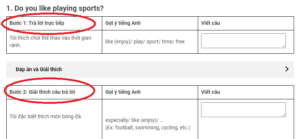
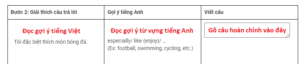
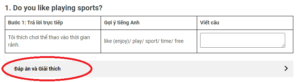
Đáp án & Giải chi tiết Changing Rules for Health Treatment IELTS Reading
Cùng IZONE giải chi tiết đề IELTS Reading: Changing Rules for Health Treatment để luyện tập nâng cao kỹ năng làm bài nhé!
Bài đọc Changing Rules for Health Treatment IELTS Reading
Changing Rules for Health Treatment
People who are grossly overweight, who smoke heavily or drink excessively could be denied surgery or drugs.The National Institute for Health and Clinical Excellence (NICE), which advises on the clinical and cost effectiveness of treatments for the National Health Service (NHS) in the UK, said that in some cases the’self-inflicted’ nature of an illness should be taken into account.
NICE stressed that people should not be discriminated against by doctors simply because they smoked or were overweight. Its ruling should apply only if the treatment was likely to be less effective, or not work because of an unhealthy habit The agency also insisted that its decision was not an edict for the whole NHS but guidance for its own appraisal committees when reaching judgements on new drugs or procedures. But the effect is likely to be the same.
NICE is a powerful body and the cause of much controversy. It is seen by some as a new way of rationing NHS treatment Across the UK, primary care trusts (PCTs) regularly wait for many months for a NICE decision before agreeing to fund a new treatment. One group of primary care trusts is ahead of NICE. Three PCTs in east Suffolk have already decided that obese people would not be entitled to have hip or knee replacements unless they lost weight. The group said the risks of operating on them were greater, the surgery may be less successful and the joints would wear out sooner. It was acknowledged that the decision would also save money.
NICE said no priority should be given to patients based on income, social class or social roles at different ages when considering the cost effectiveness of a treatment. Patients should not be discriminated against on the grounds of age either, unless age has a direct relevance to the condition. NICE has already ruled that IVF should be available on the NHS to women aged 23 to 39 as the treatment has less chance of success in older women. It also recommends that flu drugs should be available to over-65s, as older people are more vulnerable.
But NICE also said that if self-inflicted factors meant that drugs or treatment would be less clinically and cost effective, this may need to be considered when producing advice for the NHS. They state that If the self-inflicted cause of the condition will influence the likely outcome of a particular treatment, then it may be appropriate to take this into account in some circumstances.’They acknowledge that it can be difficult to decide whether an illness such as a heart attack was self-inflicted in a smoker. ‘A patient’s individual circumstances may only be taken into account when there will be an impact on the clinical and cost effectiveness of the treatment’
Prof Sir Michael Rawlins, the chairman of NICE, said: ‘On age we are very clear – our advisory groups should not make recommendations that depend on people’s ages when they are considering the use of a particular treatment unless there is clear evidence of a difference in its effectiveness for particular age groups. Even then, age should only be mentioned when it provides the only practical ‘marker1 of risk or benefit NICE values people, equally, at all ages.’
But Steve Webb, the Liberal Democrat health spokesman, said there was a danger of primary care trusts following the same course of action. There is no excuse for cash-strapped hospitals denying treatment to people whose lifestyle they disapprove of/ he said. Treatment decisions involving people’s lifestyle should be based on clinical reasons, not grounds of cost. The NHS is there to keep people healthy, not to sit in judgement on individual lifestyles.’
A spokesman for NICE said: ‘We want to reassure people that in producing our guidance we are not going to take into consideration whether or not a particular condition was or is self-inflicted. The only circumstances where that may be taken into account is where that treatment may be less effective because of lifestyle choices.’
Jonathan Ellis, the policy manager at Help the Aged, said it was pleased NICE had finally shown an understanding of the importance of tackling age discrimination.’While this is a major feat, there is still some way to go to banish the evident inherent age discrimination that exists within health care services,’he said.The NHS now has much to leam. It will ensure a fairer deal all round for older people using the NHS.’
Luyện tập Changing Rules for Health Treatment IELTS Reading
Questions 1-3
Choose THREE letters A-H.
NB Your answers may be given in any order.
Which THREE of the following statements are true of NICE, according to the text?
Questions 4-6
Choose the correct letter, A, B, C or D.
4 NICE argues that
5 What recommendations has NICE made?
6 NICE admits that
Questions 7-13
Look at the following statements (Questions 7-13) and the list of people below.
Match each statement with the correct person A-C.
| A | Michael Rawlins |
| B | Steve Webb |
| C | Jonathan Ellis |
Điểm số của bạn là % - đúng / câu
Đáp án Changing Rules for Health Treatment IELTS Reading
| 1. B | 4. A | 7. C | 10. A |
| 2. D | 5. D | 8. A | 11. B |
| 3. G | 6. C | 9. B | 12. C |
| 13. A |
Giải chi tiết Changing Rules for Health Treatment IELTS Reading
|
Question 1-3: Dạng Global MCQ Cách làm:
|
|
|
Which THREE of the following statements are true of NICE, according to the text? |
|
|
B It is an agency that offers advice to the NHS. Ngay câu đầu bài đọc nói rõ NICE là cơ quan đưa ra tư vấn/khuyến nghị cho NHS. advises = tư vấn/đưa khuyến nghị ⇒ Đáp án B là TRUE |
NICE… advises on the clinical and cost effectiveness… for the NHS |
|
D It insists its decision should only be applicable in certain situations NICE nhấn mạnh: họ không được phép phân biệt đối xử chỉ vì người ta béo/hút thuốc, và chỉ xem xét yếu tố lifestyle khi nó làm điều trị kém hiệu quả. Tức là chỉ áp dụng trong một số tình huống nhất định, không phải “áp dụng mọi nơi, mọi lúc”. ⇒ Đáp án B là TRUE |
Its ruling should apply only if the treatment was likely to be less effective, or not work because of an unhealthy habit The agency also insisted that its decision was not an edict for the whole NHS but guidance for its own appraisal committees when reaching judgements on new drugs or procedures |
|
G. Many PCTs base their decisions concerning funding on ones made by NICE. Bài nói nhiều Primary Care Trusts (PCTs) đợi NICE ra quyết định rồi mới đồng ý cấp tiền cho điều trị mới. Điều đó nghĩa là quyết định của họ về funding dựa rất nhiều vào NICE. ⇒ Đáp án B là TRUE |
PCTs regularly wait… for a NICE decision before agreeing to fund a new treatment. |
|
A It feels that people with bad health habits should not receive treatment. NICE nói rõ không được phân biệt đối xử chỉ vì hút thuốc/béo TRÁI NGƯỢC với câu hỏi những người có thói quen xấu không nên nhận được điều trị ⇒ Đáp án A là FALSE |
people should not be discriminated against… simply because they smoked or were overweight |
|
C Some of the reports they produce discriminate against the elderly. NICE (và người của NICE) nhấn mạnh không phân biệt tuổi, trừ khi tuổi ảnh hưởng hiệu quả điều trị TRÁI NGƯỢC với câu hỏi: một vài báo cáo nói rằng họ cần phân biệt tuổi tác ⇒ Đáp án C là FALSE |
On age we are very clear – our advisory groups should not make recommendations that depend on people’s ages when they are considering the use of a particular treatment unless there is clear evidence of a difference in its effectiveness |
|
E It is an agency that controls all NHS policy regarding treatments. NICE nói quyết định của họ không phải mệnh lệnh cho toàn NHS, chỉ là hướng dẫn cho hội đồng đánh giá của họ TRÁI NGƯỢC với câu hỏi :cơ quan kiểm soát tất cả các chính sách của NHS liên quan đến điều trị. ⇒ Đáp án E là FALSE |
its decision was not an edict for the whole NHS but guidance for its own appraisal committees |
|
F Its powers are not as extensive as those of the NHS. Bài không hề so sánh kiểu “quyền NICE < NHS”. Thậm chí bài còn nói NICE là “powerful body”. ⇒ Đáp án F là FALSE |
NICE is a powerful body… |
|
H It has made a statement that overweight people will not receive new joints. Sai vì quyết định “không thay khớp nếu không giảm cân” là do 3 PCTs ở east Suffolk, không phải NICE. ⇒ Đáp án H là FALSE |
Three PCTs … have already decided that obese people would not be entitled … |
|
Questions 4-6: Dạng MCQ Cách làm: Bước 1: Đọc câu hỏi và gạch chân từ khóa Bước 2: Scan từ khóa trong đoạn văn Bước 3: Tìm ra hiện tượng paraphrase Bước 4: Chọn đáp án đúng, double check bằng cách chứng minh các đáp án còn lại sai Chứng minh các đáp án ĐÚNG/SAI bằng cách lần lượt trả lời 2 câu hỏi:
|
|
|
4 NICE argues that |
|
|
A rich people should not be given special consideration over the poor. Nhận xét:
Cụ thể: Trong bài, NICE nêu nguyên tắc: khi đánh giá cost-effectiveness của một phương pháp điều trị, không được ưu tiên bệnh nhân dựa trên thu nhập (income), giai cấp (social class) hay vai trò xã hội (social roles) hoàn toàn trùng khớp với câu hỏi ⇒ Đáp án A là chính xác |
NICE said no priority should be given to patients based on income, social class or social roles at different ages when considering the cost effectiveness of a treatment |
|
B only patients from certain classes should be considered for treatment Nhận xét:
Cụ thể: Câu hỏi đề cập chỉ một số giai cấp mới được điều trị TRÁI NGƯỢC với thông tin trong bài đọc: không ưu tiên dựa trên giai cấp. ⇒ Đáp án B là FALSE |
no priority should be given to patients based on income, social class or social roles at different ages |
|
C social roles should be considered when deciding treatment. Nhận xét:
Cụ thể: Câu hỏi đề cập đến việc nên xét vai trò xã hội khi quyết định điều trị TRÁI NGƯỢC với câu hỏi trong bài: không được ưu tiên dựa trên vai trò xã hội ⇒ Đáp án C là FALSE |
no priority should be given to patients based on income, social class or social roles at different ages |
|
D cost of treatment would depend on patients’ income. Nhận xét:
Cụ thể: Câu hỏi đề cập đến việc chi phí điều trị phụ thuộc thu nhập → Bài đang nói về nguyên tắc không ưu tiên khi đánh giá tính hiệu quả chi phí, chứ không hề nói “tính giá theo thu nhập. ⇒ Đáp án D là FALSE |
when considering the cost effectiveness of a treatment |
|
5 What recommendations has NICE made? |
|
|
D to allow certain women to have 1 VF treatments Nhận xét:
Cụ thể: Trong đoạn nói về age discrimination, NICE đưa ra khuyến nghị cụ thể: IVF nên được cung cấp trên NHS cho phụ nữ từ 23 đến 39 tuổi, vì ở phụ nữ lớn tuổi hơn thì tỉ lệ thành công thấp hơn. ⇒ Đáp án D chính xác |
NICE has already ruled that IVF should be available on the NHS to women aged 23 to 39 as the treatment has less chance of success in older women. |
|
A to provide older women with IVF treatments Nhận xét:
Cụ thể: NICE nói IVF cho 23–39, và còn giải thích rằng older women có tỉ lệ thành công thấp hơn → không phải ưu tiên IVF cho “older women”. ⇒ Đáp án A là FALSE |
NICE has already ruled that IVF should be available on the NHS to women aged 23 to 39 as the treatment has less chance of success in older women. |
|
B to make flu drugs accessible to women under 40 Nhận xét:
Cụ thể: Bài không hề nói flu drugs cho phụ nữ dưới 40. Flu drugs NICE khuyến nghị cho over-65s. ⇒ Đáp án B là FLASE |
It also recommends that flu drugs should be available to over-65s… |
|
C to give people between 23-39 flu drugs Nhận xét:
Cụ thể: 23–39 là IVF, không phải flu drugs. ⇒ Đáp án B là FALSE |
NICE has already ruled that IVF should be available on the NHS to women aged 23 to 39 as the treatment has less chance of success in older women…It also recommends that flu drugs should be available to over-65s… |
|
6 NICE admits that |
|
|
C it is often hard to determine if a patient has caused his or her condition. Nhận xét:
Cụ thể: Ở phần nói về “self-inflicted” (bệnh do lối sống), NICE thừa nhận việc quyết định một bệnh có phải “tự gây ra” hay không rất khó, ví dụ: người hút thuốc bị heart attack thì có thể liên quan tới thuốc lá, nhưng không dễ kết luận 100% là “self-inflicted”. ⇒ Đáp án C chính xác |
They acknowledge that it can be difficult to decide whether an illness such as a heart attack was self-inflicted in a smoker. |
|
A some drugs used by the NHS were not clinically effective. Nhận xét:
Cụ thể: Bài không nói thuốc NHS “không hiệu quả”. NICE chỉ nói: lifestyle có thể làm treatment kém hiệu quả, chứ không phải bản thân thuốc tệ. ⇒ Đáp án A là FALSE |
only if the treatment was likely to be less effective, or not work because of an unhealthy habit |
|
B their advice is sometimes ignored by the NHS. Nhận xét:
Cụ thể: Không có câu nào nói NHS “phớt lờ” NICE. Ngược lại, bài nói nhiều PCTs chờ quyết định NICE rồi mới cấp tiền. ⇒ Đáp án B là FALSE |
PCTs regularly wait for many months for a NICE decision before agreeing to fund a new treatment. |
|
D they are more concerned about cost effectiveness than patients. Nhận xét:
Cụ thể: NICE nhấn mạnh không được phân biệt theo thu nhập/giai cấp/vai trò/tuổi (trừ khi liên quan trực tiếp hiệu quả). Họ dùng “clinical and cost effectiveness” làm tiêu chí, nhưng không có chỗ nào nói họ “coi tiền hơn người”. ⇒ Đáp án D là FALSE |
no priority should be given to patients based on income, social class…Patients should not be discriminated against on the grounds of age… |
|
Questions 7-13: Dạng Matching Names Cách làm:
Note: Một số tên riêng có thể nối với nhiều hơn 1 đáp án |
|
|
7 This person was happy that-NICE realised age discrimination needed dealing with.
→ Khớp với thông tin trong câu hỏi: người này vui vì NICE nhận ra cần xử lý phân biệt tuổi tác. ⇒ Đáp án chính xác là C Jonathan Ellis |
Jonathan Ellis, the policy manager at Help the Aged, said it was pleased NICE had finally shown an understanding of the importance of tackling age discrimination. |
|
8 This person holds a very high position in the NICE agency. chairman of NICE = chủ tịch NICE → vị trí rất cao trong cơ quan NICE ⇒ Đáp án chính xác là A Michael Rawlins |
Prof Sir Michael Rawlins, the chairman of NICE |
|
9 This person is a member of a political party.
→ Steve Webb gắn trực tiếp với một đảng chính trị ⇒ Đáp án chính xác là B Steve Webb |
But Steve Webb, the Liberal Democrat health spokesman, said… |
|
10 This person says their policy regarding age is precise and easy to understand. On age we are very clear = “Về vấn đề tuổi tác, chúng tôi rất rõ ràng” ⇒ Đáp án chính xác là A Michael Rawlins |
Prof Sir Michael Rawlins, the chairman of NICE, said: ‘On age we are very clear – our advisory groups should not make recommendations that depend on people’s ages… unless there is clear evidence …’ |
|
11 This person does not agree with the position taken by NICE.
→ Đây là lập trường không đồng ý với hướng mà NICE đưa ra ⇒ Đáp án chính xác là B Steve Webb |
But Steve Webb, the Liberal Democrat health spokesman, said there was a danger of primary care trusts following the same course of action…There is no excuse for cash-strapped hospitals denying treatment to people whose lifestyle they disapprove of,” he said…Treatment decisions … should be based on clinical reasons, not grounds of cost …The NHS is there to keep people healthy, not to sit in judgement on individual lifestyles.” |
|
12 This person feels the NHS must further improve its relations with the elderly. some way to go + The NHS now has much to learn = NHS vẫn phải cải thiện thêm để đối xử công bằng hơn với người lớn tuổi. ⇒ Đáp án chính xác là C Jonathan Ellis |
Jonathan Ellis, the policy manager at Help the Aged, said… ‘While this is a major feat, there is still some way to go to banish…age discrimination…The NHS now has much to learn. It will ensure a fairer deal all round for older people using the NHS. |
|
13 This person says that NICE does not discriminate on the grounds of age.
⇒ Đáp án chính xác là A Michael Rawlins |
Prof Sir Michael Rawlins… said: ‘On age we are very clear – our advisory groups should not make recommendations that depend on people’s ages…unless there is clear evidence…Even then, age should only be mentioned when it provides the only practical ‘marker’ of risk or benefit…‘NICE values people, equally, at all ages. |
Trên đây là lời giải chi tiết cho bài đọc Changing Rules for Health Treatment IELTS Reading. Hy vọng bài viết này giúp ích cho các bạn.
Cùng IZONE thử sức với các đề IELTS Reading: