Đề thi & Giải chi tiết Computer games for preschoolers nintendo’s research and design process IELTS Reading
Cùng thực hành giải bài đọc Computer games for preschoolers nintendo’s research and design process IELTS Reading và tham khảo phần giải thích đáp án chi tiết từ IZONE trong bài viết này nhé!
Bài đọc Computer games for preschoolers nintendo’s research and design process IELTS Reading
Computer Games For Preschoolers Nintendo’s Research And Design Process
Designing computer games for young children is a daunting task for game producers, who, for a long time, have concentrated on more “hard core” game fans. This article chronicles the design process and research involved in creating Nintendo DS for preschool gamers.
After speaking with our producers who have a keen interest in designing for the DS, we finally agreed on three key goals for our project. First, to understand the range of physical and cognitive abilities of preschoolers in the context of handheld system game play; second, to understand how preschool gamers interact with the DS, specifically how they control the different forms of play and game mechanics offered by the games presently on the market for this platform; third, to understand the expectation of preschooler’s parents concerning the handheld systems as well as the purchase and play contexts within which game play occurs. The team of research decided that in-home ethnographies with preschoolers and their families would yield comprehensive database with which to give our producers more information and insights, so we start by conducting 26 in-home ethnographies in three markets across the United States: an East coast urban/suburban area, a West coast urban/suburban area, and a Midwest suburban/rural area.
The subject is this study included 15 girls and 11 boys ranging from 3 years and 3 months old to 5 years and 11 months old. Also, because previous research had shown the effects of older siblings on game play (demonstrated, for example, by more advanced motor coordination when using a computer mouse), households were employed to have a combination of preschoolers with and without elder peers. In order to understand both “experienced” and “new” preschool users of the platform, we divided the sample so that 13 families owned at least one Nintendo DS and the others did not. For those households that did not own a DS, one was brought to the interview for the kid to play. This allowed us to see both the instinctive and intuitive movements of the new players (and of the more experienced players when playing new games), as well as the learned movements of the more experienced players. Each of those interviews took about 60 to 120 minutes and included the preschooler, at least one parent, and often siblings and another caregiver.
Three kinds of information were collected after each interview. From any older siblings and the parents that were available, we gathered data about: the buying decisions surrounding game systems in the household, the family’s typical game play patterns, levels of parental moderation with regard to computer gaming, and the most favorite games play by family members. We could also understand the ideology of gaming in these homes because of these in-home interviews: what types of spaces were used for game play, how the system were installed, where the handheld play occurred in the house (as well as on-the-go play), and the number and type of games and game systems owned. The most important is, we gathered the game-playing information for every single kid.
Before carrying out the interviews, the research team had closely discussed with the in-house game producers to create a list of game mechanics and problems tied to preschoolers’ motor and cognitive capabilities that were critical for them to understand prior to writing the games. These ranged from general dexterity issues related to game controllers to the effectiveness of in-game instructions to specific mechanics in current games that the producers were interested in implementing for future preschool titles. During the interviews, the moderator gave specific guidance to the preschooler through a series of games, so that he or she could observe the interaction and probe both the preschooler and his or her parents on feelings, attitudes, and frustrations that arose in the different circumstances.
If the subject in the experiment had previous exposure to the DS system, he or she was first asked to play his or her favorite game on the machine. This gave the researchers information about current level of gaming skill related to the complexity of the chosen one, allowing them to see the child playing a game with mechanics he or she was already familiar with. Across the 26 preschoolers, the Nintendo DS selections scope were very broad, including New Super Mario Bros, Sonic Rush, Nintendogs, and Tony Hawk’s Proving Ground. The interview observed the child play, noting preferences for game mechanic and motor interactions with device as well as the complexity level each game mechanic was for the tested subject. The researchers asked all of the preschoolers to play with a specific game in consultation with our producers, The Little Mermaid: Ariel’s Undersea Adventure. The game was chosen for two major reasons. First, it was one of the few games on the market with characters that appeal to this young age group. Second, it incorporated a large variety of mechanics that highlighted the uniqueness of the DS platform, including using the microphone for blowing or singing.
The findings from this initial experiment were extensive. After reviewing the outcomes and discussing the implications for the game design with our internal game production team, we then outlined the designing needs and presented the findings to a firm specializing in game design. We worked closely with those experts to set the game design for the two preschool-targeted DS games under development on what we had gathered.
As the two DS games went into the development process, a formative research course of action was set up. Whenever we developed new game mechanics, we brought preschoolers into our in-house utility lab to test the mechanics and to evaluate both their simplicity, and whether they were engaging. We tested either alpha or beta versions of different elements of the game, in addition to looking at overarching game structure. Once a full version of the DS game was ready, we went back into the field test with a dozen preschoolers and their parents to make sure that each of the game elements worked for the children, and that the overall objective of the game was understandable and the process was enjoyable for players. We also collected parent’s feedback on whether they thought the game is appropriate, engaging, and worth the purchase.
Questions 1-5
Complete the sentences below.
Choose ONE WORD ONLY from the passage for each answer.
Write your answers in boxes 1-5 on your answer sheet.
Exploratory Research Project
Main Objectives:
Determine the relevant 1. in the context
Observe how preschoolers manage playing
Investigate attitudes of 2. towards games
Subjects:
26 children from different US 3.
Age range: 3 years and 3 months to 5 years and 11 months
Some children have older 4.
Equal number of new and 5. players
Some households have Nintendo DS and some don’t
Length of Interview:
1-2 hours
Questions 6-9
Do the following statements agree with the information given in Reading Passage?
In boxes 6-9 on your answer sheet, write
TRUE if the statement agrees with the information
FALSE if the statement contradicts the information
NOT GIVEN if these is no information on this
Questions 10-13
Complete the flow-chart below.
Choose NO MORE THAN TWO WORDS from the passage for each answer.
Write your answer in boxes 10-13 on your answer sheet.
Using the results of the study
↓
Presentation of design requirements to a specialist 10
↓
Testing the mechanics of two new games in the Nintendo lab
(assess 11 and interest)
↓
A 12 of the games trailed be twelve children
↓
Collection of 13 from parents
Điểm số của bạn là % - đúng / câu
Đáp án và giải thích đáp án chi tiết bài đọc Computer games for preschoolers nintendo’s research and design process
| 1. abilities | 6. NOT GIVEN |
| 2. parents | 7. TRUE |
| 3. markets | 8. TRUE |
| 4. siblings | 9. FALSE |
| 5. experienced | |
| 10. firm | 12. full version |
| 11. simplicity | 13. feedback |
|
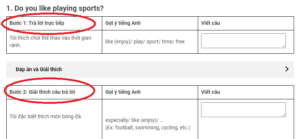
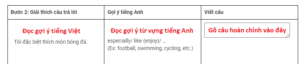
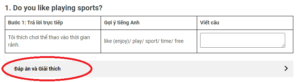
Giải thích đáp án chi tiết Computer games for preschoolers nintendo’s research and design process IELTS Reading Questions 1-5: Dạng Sentence CompletionCách làm: Bước 1: Đọc kĩ câu hỏi và gạch chân từ khóa, khoanh tròn giới hạn từ Bước 2: Xác định từ loại và loại thông tin cần điền trong chỗ trống (VD: noun – a person) Bước 3: Scan từ khóa đã xác định trong đoạn văn Bước 4: Điền vào chỗ trống, kiểm tra lại giới hạn từ & ngữ pháp |
|
|
1. Determine the relevant _____ in the context Từ cần điền là một danh từ để để hoàn thành cụm danh từ theo cấu trúc the + adjective + noun. => Bài đọc đề cập mục tiêu đầu tiên của dự án là “to understand the range of physical and cognitive abilities of preschoolers” Đáp án là “abilities” |
we finally agreed on three key goals for our project. First, to understand the range of physical and cognitive abilities of preschoolers in the context of handheld system game play; |
|
2. Investigate attitudes of _____ towards games Từ cần điền là một danh từ để hoàn thành cụm “attitudes of + Noun”, vì sau of là một danh từ => Bài đọc cho biết mục tiêu thứ ba của dự án là “to understand the expectation of preschooler’s parents concerning the handheld systems” Đáp án là “parents” |
third, to understand the expectation of preschooler’s parents concerning the handheld systems as well as the purchase and play contexts within which game play occurs. |
|
3. 26 children from different US ____ Từ cần điền vào chỗ trống là một danh từ, vì đứng sau different thường là một danh từ. => Việc nghiên cứu được thực hiện tại 26 cuộc khảo sát tại gia đình trên khắp khu vực Hoa Kỳ trong ba khu vực. Đáp án là “markets” |
so we start by conducting 26 in-home ethnographies in three markets across the United States |
|
4. Some children have older _____ Cần tìm một danh từ, vì sau “have” ở câu trên cần một tân ngữ (ai/cái gì) => Bài đọc cho biết nhóm nghiên cứu đã lựa chọn những gia đình có và không có anh chị để kiểm tra ảnh hưởng của họ tới các trò chơi. Đáp án là “siblings” |
Also, because previous research had shown the effects of older siblings on game play… households were employed to have a combination of preschoolers with and without elder peers |
|
5. Equal number of new and _____ players Từ cần điền là một tính từ, có thể thấy đứng trước “and” là một tính từ, vậy cần thêm một tính từ nữa ở đây để bổ ngữ cho “players” => Cấu trúc song song. => Bài đọc cho biết nhóm nghiên cứu đã chia những gia đình ra sao cho 13 gia đình có ít nhất một máy Nintendo DS và những gia đình còn lại thì không có để nghiên cứu sự khác biệt của việc những trẻ em đã và chưa được sử dụng máy chơi game Nintendo. Đáp án là “experienced” |
In order to understand both “experienced” and “new” preschool users of the platform, we divided the sample so that 13 families owned at least one Nintendo DS and the others did not. |
Questions 6 – 9: Dạng TRUE/FALSE/NOT GIVENCách làm: Bước 1: Đọc kĩ câu hỏi và gạch chân từ khóa Bước 2: Scan từ khóa đã gạch trong bài đọc Bước 3: Chú ý tới controlling words (not, only, the majority etc.) Bước 4: Chọn đáp án phù hợp Chọn đáp án bằng cách lần lượt trả lời 2 câu hỏi: Câu 1: Các thông tin trong câu hỏi ĐỀU TÌM ĐƯỢC NỘI DUNG TƯƠNG ỨNG trong bài đọc hay không? Nội dung tương ứng là những nội dung cùng chỉ về 1 điều, mang cùng 1 chức năng trong câu.
Câu 2: Có thông tin nào trong câu hỏi bị TRÁI NGƯỢC/SAI LỆCH với nội dung bài đọc hay không?
|
|
|
6. One area of research is how far mothers and fathers controlled children’s playing after school.
Đọc đoạn bên của bài đọc sẽ cho ta biết được những thông tin mà đội nghiên cứu đã thu thập được. Trong đó chỉ đề cập tới mức độ điều độ của cha mẹ chứ không đề cập tới việc ba mẹ kiểm soát việc chơi các trò chơi điện tử sau giờ học Vậy đáp án là NOT GIVEN |
Three kinds of information were collected after each interview. From any older siblings and the parents that were available, we gathered data about: the buying decisions surrounding game systems in the household, the family’s typical game play patterns, levels of parental moderation with regard to computer gaming, and the most favorite games play by family members |
|
7. The researchers are allowed a free access to the subject’s houses
Các thí nghiệm được thực hiện tại nhà của các gia đình Vậy đáp án là TRUE |
So we start by conducting 26 in-home ethnographies in three markets across the United States: |
|
8. The researchers regarded The Little Mermaid: Ariel’s Undersea Adventure as likely appeal to preschoolers.
Bài viết đề cập rằng đây là một trong số ít những trò chơi trên thị trường có nhân vật mà thường xuyên xuất hiện với nhóm tuổi trẻ Vậy đáp án là TRUE |
The researchers asked all of the preschoolers to play with a specific game in consultation with our producers, The Little Mermaid: Ariel’s Undersea Adventure. The game was chosen for two major reasons. First, it was one of the few games on the market with characters that appeal to this young age group. Second, it incorporated a large variety of mechanics that highlighted the uniqueness of the DS platform, including using the microphone for blowing or singing. |
|
9. The Little Mermaid: Ariel’s Undersea Adventure is operated entirely by hand controls.
Trò chơi The little Mermaid sử dụng nhiều cơ chế làm nổi bật tính độc đáo của nền tảng DS, bao gồm việc sử dụng micro để thổi hoặc hát. Chứ không phải chỉ sử dụng mỗi điều khiển bằng tay. Đáp án là FALSE |
Second, it incorporated a large variety of mechanics that highlighted the uniqueness of the DS platform, including using the microphone for blowing or singing. |
Questions 10-13: Dạng Flowchart CompletionCách làm: Bước 1: Khoanh tròn giới hạn từ được điền Bước 2: Nghiên cứu Diagram/ Table/ Flowchart và xác định loại từ cho mỗi chỗ trống Bước 3: Skim bài đọc để tìm ra những đoạn liên quan chứa đáp án Bước 4: Scan đoạn văn và điền đáp án đúng, chú ý giới hạn từ |
|
| 10. Presentation of design requirements to a specialist ____Từ cần điền là một danh từ để hoàn thành cụm tính-danh “specialist + Noun” (chuyên về một cái gì)Sau khi xem xét kết quả và thảo luận về ý nghĩa của việc thiết kế trò chơi, họ sẽ phác thảo nhu cầu thiết kế và trình bày kết quả cho một công ty thiết kế trò chơiĐáp án là “firm” | we then outlined the designing needs and presented the findings to a firm specializing in game design. |
|
11. Testing the mechanics of two new games in the Nintendo lab (assess 11 _____ and interest) Từ cần tìm là một danh từ, vì sau “and” đã là một danh từ (interest) nên để đảm bảo cấu trúc song song trong câu, từ cần điền là một danh từ Bất cứ khi nào họ phát triển những cơ chế trò chơi mới, họ sẽ mang những đứa trẻ mẫu giáo tới để kiểm tra cơ chế và đánh giá tính đơn giản và sự hấp dẫn của cơ chế đó. Đáp án là “simplicity” |
Whenever we developed new game mechanics, we brought preschoolers into our in-house utility lab to test the mechanics and to evaluate both their simplicity, and whether they were engaging. |
|
12. A ____ of the games trailed Cần tìm một danh từ để hoàn thiện cụm danh từ đang còn thiếu trong câu. Một khi phiên bản hoàn thiện của một tựa game DS đã sẵn sàng, họ thử nghiệm thực tế với hàng chục trẻ mẫu giáo và cha mẹ của chúng để đảm bảo rằng mỗi yếu tố của trò chơi đều phù hợp với trẻ. Đáp án là “full version” |
Once a full version of the DS game was ready, we went back into the field test with a dozen preschoolers and their parents to make sure that each of the game elements worked for the children |
|
13. Collection of _____ from parents Cần tìm một danh từ để hoàn thành cụm “Collection of + noun” (Tổng hợp/sưu tập về …) Họ cũng thu thập sự phản hồi của cha mẹ về suy nghĩ của họ về tựa game rằng nó có phù hợp, hấp dẫn và đáng mua hay không. Đáp án là “feedback” |
We also collected parents’ feedback on whether they thought the game is appropriate, engaging, and worth the purchase |
Tổng kết
Bài viết trên IZONE đã cung cấp phần giải thích đáp án chi tiết cho bài đọc Computer games for preschoolers nintendo’s research and design process IELTS Reading. Mời bạn tiếp tục luyện tập kỹ năng Reading tại chuyên mục IELTS Reading của IZONE.