Giải đề IELTS Cambridge 20 – Test 4: Listening Part 3
A. Bài nghe Cambridge 20 – Test 4: Listening Part 3
Questions 21 and 22
Choose TWO letters, A-E
Which TWO benefits for children of learning to write did both students find surprising?
Questions 23 and 24
Choose TWO letters, A-E
For children with dyspraxia, which TWO problems with handwriting do the students think are easiest to correct?
Questions 25-30
Choose the correct letter, A, B or C.
Teaching handwriting
25. What does the woman say about using laptops to teach writing to children with dyslexia?
26. When discussing whether to teach cursive or print writing, the woman thinks that
27. According to the students, what impact does poor handwriting have on exam performance?
28. What prediction does the man make about the future of handwriting?
29. The woman is concerned that relying on digital devices has made it difficult for her to
30. How do the students feel about their own handwriting?
Điểm số của bạn là % - đúng / câu
B. Audiotranscripts
| MAN | How are you getting on with the assignment on handwriting? |
| WOMAN | Not too bad. You know, I hadn’t realised that children benefit in so many ways from learning to write. It’s such an important skill, and yet most people think handwriting is less important than in the past, because people hardly ever write by hand these days. |
| MAN | Yes, and all the evidence suggests children should learn to write by hand before they learn to type, not least because it helps their memory. |
| WOMAN | That’s right. The physical act of writing helps children to remember letters. That seems pretty obvious when you think about it. |
| MAN | What’s less obvious is how it helps develop their concentration. They have to sit still and focus on one thing. |
| WOMAN | Yeah, that aspect of handwriting had never occurred to me before. |
| MAN | Same here. I’m not sure I understand how it improves children’s imagination, though. |
| WOMAN | Well there was that study which showed that primary age children generated more ideas when they were writing by hand than using a keyboard I would have guessed that would be the case |
| MAN | Hmm yeah I never associated spatial awareness with handwriting either. I thought spatial awareness was more to do with knowing where you are in relation to objects or other people. |
| WOMAN | I thought that too. But good spatial awareness is essential for writing because you have to space words correctly. It’s not just fine motor skills that improve through writing, as I’d always assumed. |
| MAN | Handwriting is so much harder for children with dyspraxia, who have problems coordinating movement. It’s good there are lots of things you can do in the classroom to help them. They need so much more support with letter formation. You need to play lots of games to help them distinguish letter shapes. It takes a lot of patience. |
| WOMAN | Yeah, I like the idea of using one of those pens that lights up if you press too hard. That seems like a really simple solution. |
| MAN | Yes, absolutely. I’m not sure there’s much you can do about children with dyspraxia writing very slowly. It’s more important to focus on accuracy and as they get more confident, I think they eventually speed up. |
| WOMAN | One quite simple thing you can do is to use grid paper. So they write each letter in a box and that trains them to space the letters correctly. |
| MAN | Indeed, that’s more important for legibility than trying to get them to write in a straight line. |
| Before you hear the rest of the discussion, you have some time to look at questions 25 to 30. you. Now listen and answer questions 25 to 30. | |
| MAN | For some children, it might be better to teach them to write on a laptop rather than by hand, like children with dyslexia. They often really struggle with handwriting and some just give up. |
| WOMAN | Yeah, it’s not as frustrating for them if they get things wrong. On a keyboard, they can be more willing to have a go. But I read that developing fluency isn’t any faster. |
| MAN | That’s right. Did you read that article on the benefits of teaching print rather than cursive handwriting, where the letters are joined up? |
| WOMAN | Yes. Well, in the past, cursive writing was certainly considered more stylish and educated, but not anymore. Teachers’ attitudes have changed because it’s been proved that cursive is more difficult to learn, especially for children with learning difficulties who find joining up letters really challenging. |
| MAN | I agree. I was always worried that my poor handwriting affected my exam results, and now research shows that I was right to worry. I’m sure a lot of students think it’s unfair that they’re being judged on their handwriting, not just their knowledge. |
| WOMAN | Marks are definitely affected if examiners can read the script. That is why it has always been so important to teach children to write legibly. Do you think the role of handwriting will change in the future |
| MAN | I can’t see that changing much. Touch typing still isn’t taught in most schools, which is a shame. But maybe that won’t be necessary in the future, because people will also be able to write by hand on digital devices. Anyway, teachers understand the value of handwriting. It’s a basic life skill. |
| WOMAN | True. However, the fact is that people are writing by hand less and less and relying on digital devices. That does cause some problems. |
| MAN | You mean like note-taking. There are lots of apps for that. |
| WOMAN | And for reading historical documents, apparently. But my mum is shocked by my awful spelling and the fact that my punctuation is really inconsistent. I think you can put that down to lack of practice. |
| MAN | I expect so. Personally, I miss writing by hand. I hardly ever write anything now. I remember my grandparents had such beautiful handwriting and it was so individual. Nobody I know would be able to identify my handwriting now. It’s a shame. |
| WOMAN | I know. I feel the same way. I used to write a diary by hand and now I do that digitally. It just seems less effort to do it that way. So it’s not just a problem… |
C. Đáp án và giải thích chi tiết
|
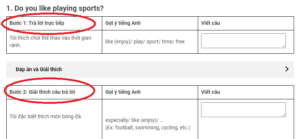
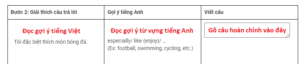
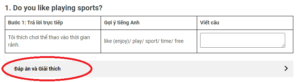
Part 3: Question 21-24 Dạng MCQ (Chọn 2 đáp án đúng) Cách làm:
Lưu ý: Ta có thể loại trừ đáp án bằng cách lần lượt trả lời 2 câu hỏi:
|
|
|
Câu 21 – 22: Which TWO benefits for children of learning to write did both students find surprising |
|
|
C. improved concentration Trong bài, khi một bạn học sinh nói là lợi ích ít được biết đến hơn của việc viết là nó giúp tăng khả năng cho trẻ nhỏ => cả 2 bạn học sinh đều chưa biết điều này trước đây ⇒ Đáp án đúng là C |
Man: What’s less obvious is how it helps develop their concentration. They have to sit still and focus on one thing. Woman: Yeah, that aspect of handwriting had never occurred to me before. Man: Same here |
|
E. improved spatial awareness Việc luyện viết cũng giúp trẻ em tăng nhận thức về không gian vì chúng phải học cách chăn hoảng cách và cả 2 học sinh đều không nghĩ đến điều này trước đây. ⇒ Đáp án đúng là E |
Man: I never associated spatial awareness with handwriting either. I thought spatial awareness was more to do with knowing where you are in relation to objects or other people. Woman: I thought that too. But good spatial awareness is essential for writing because you have to space words correctly. It’s not just fine motor skills that improve through writing, as I’d always assumed |
|
A. improved fine motor skills Cả 2 bạn đều kỳ vọng là việc luyện viết sẽ tăng cường khả năng vận động => điều này không còn mới đối với cả 2 bạn ⇒ Đáp án A là FALSE |
Woman: It’s not just fine motor skills that improve through writing, as I’d always assumed |
|
B. improved memory Cả 2 bạn đều đồng ý là việc học viết sẽ giúp trẻ em tăng cường trí nhớ => điều này không còn mới đối với cả 2 bạn ⇒ Đáp án B là FALSE |
Man: Yes, and all the evidence suggests children should learn to write by hand before they learn to type, not least because it helps their memory. Woman: That’s right |
|
D. improved imagination Trước đó một học sinh không hiểu vì sao viết lại tăng cường trí tưởng tượng cho trẻ em thì bạn học sinh còn lại đã nhắc đến nghiên cứu => điều này không mới mẻ cho cả 2 bạn ⇒ Đáp án D là FALSE |
Man: I’m not sure I understand how it improves children’s imagination, though. Woman: Well there was that study which showed that primary age children generated more ideas when they were writing by hand than using a keyboard. I would have guessed that would be the case Man: Hmm yeah |
|
Câu 23-24: For children with dyspraxia, which TWO problems with handwriting do the students think are easiest to correct? |
|
|
A. not spacing letters correctly Việt giãn chữ không đều có thể được khắc phục dễ dàng khi cho những đứa trẻ mắc hội chứng Dyspraxia (rối loạn phối hợp phát triển) là dùng vở ô ly ⇒ Đáp án đúng là A |
Woman: One quite simple thing you can do is to use grid paper. So they write each letter in a box and that trains them to space the letters correctly. |
|
Câu 24: C. applying too much pressure when writing Việc sử dụng bút phát sáng khi ấn quá nhiều lực được coi là một giải pháp khá đơn giản ⇒ Đáp án đúng là C |
Woman: Yeah, I like the idea of using one of those pens that lights up if you press too hard. That seems like a really simple solution |
|
B. not writing in a straight line Đoạn hội thoại chỉ đề cập đến mức độ ưu tiên của vấn đề không viết thẳng hàng, chứ không hề nói nó dễ sửa hay không. ⇒ Đáp án B là NOT GIVEN |
Woman: One quite simple thing you can do is to use grid paper. So they write each letter in a box and that trains them to space the letters correctly. Man: Indeed, that’s more important for legibility than trying to get them to write in a straight line. |
|
D. confusing letter shapes Việc phân biệt mặt chữ đối với trẻ mắc chứng dyspraxia cần rất nhiều sự kiên nhẫn. Điều này cho thấy đây là một vấn đề khó và tốn thời gian để sửa ⇒ Đáp án B là FALSE |
Man: They need so much more support with letter formation. You need to play lots of games to help them distinguish letter shapes. It takes a lot of patience. |
|
E. writing very slowly Không có nhiều thứ có thể làm để cải thiện tốc độ của trẻ mắc chứng dyspraxia. Câu này cho thấy đây là một vấn đề rất khó, thậm chí gần như không thể khắc phục. ⇒ Đáp án E là FALSE |
Man: I’m not sure there’s much you can do about children with dyspraxia writing very slowly. |
|
Section 3: Question 25-30 Dạng MCQ Cách làm:
Lưu ý: Ta có thể loại trừ đáp án bằng cách lần lượt trả lời 2 câu hỏi:
|
|
|
Câu 25: What does the woman say about using laptops to teach writing to children with dyslexia? |
|
|
C. Children react more positively if they make a mistake. Khi dùng laptop, trẻ em mắc hội chứng dyspraxia sẽ mạnh dạn thử và sai hơn là so với học trên giấy => Đáp án đúng là C |
Man: For some children, it might be better to teach them to write on a laptop rather than by hand, like children with dyslexia. They often really struggle with handwriting and some just give up. Yeah, it’s not as frustrating for them if they get things wrong. Woman: On a keyboard, they can be more willing to have a go. But I read that developing fluency isn’t any faster. Man: That’s right. |
|
A. Children often lack motivation to learn that way Khi dùng laptop, trẻ em mắc hội chứng dyspraxia sẽ mạnh dạn thử và sai hơn là so với học trên giấy, chứ không phải thiếu động lực hơn ⇒ Đáp án A là FALSE |
Woman: On a keyboard, they can be more willing to have a go. But I read that developing fluency isn’t any faster. |
|
B. Children become fluent relatively quickly. Khi dùng laptop, trả em mắc hội chứng dyspraxia cũng không có được sự trôi chảy nhanh hơn ⇒ Đáp án B là FALSE |
Woman: On a keyboard, they can be more willing to have a go. But I read that developing fluency isn’t any faster. |
|
Câu 26: When discussing whether to teach cursive or print writing, the woman thinks that |
|
|
A. cursive writing disadvantages a certain group of children. Cursive handwriting được cho là khó đối với một số nhóm đối tượng học sinh, nhất là những người mang hội chứng dyspraxia => gây bất lợi cho họ => Đáp án đúng là A |
Man: Did you read that article on the benefits of teaching print rather than cursive handwriting, where the letters are joined up? Woman: Yes, Well, in the past, cursive writing was certainly considered more stylish and educated, but not anymore. Teachers’ attitudes have changed because it’s been proved that cursive is more difficult to learn, especially for children with learning difficulties who find joining up letters really challenging |
|
B. print writing is associated with lower academic performance. Cuộc thảo luận không hề đề cập đến việc chữ in liên quan đến kết quả học tập thấp hơn. => Đáp án B là NOT GIVEN |
|
|
C. most teachers in the UK prefer a traditional approach to handwriting. Bài nghe nói rằng các giáo viên đang dần rời bỏ cách tiếp cận truyền thống (dạy cursive writing – chữ viết nối) chứ không phải ưa chuộng nó ⇒ Đáp án án C là FALSE |
[…] Well, in the past, cursive writing was certainly considered more stylish and educated, but not anymore. Teachers’ attitudes have changed because it’s been proved that cursive is more difficult to learn, especially for children with learning difficulties who find joining up letters really challenging |
|
Câu 27: According to the students, what impact does poor handwriting have on exam performance |
|
|
A. There is evidence to suggest grades are affected by poor handwriting. Học sinh nam bày tỏ rằng anh ấy luôn lo lắng liệu chữ viết có ảnh hưởng đến điểm bài thi của mình, và anh ấy cũng tìm thấy những nghiên cứu chỉ ra việc đó. Sau đó, học sinh nữ đồng tính với quan điểm này => Đáp án đúng là A |
Man: I was always worried that my poor handwriting affected my exam results, and now research shows that I was right to worry. I’m sure a lot of students think it’s unfair that they’re being judged on their handwriting, not just their knowledge. Woman: Marks are definitely affected if examiners can read the script. That’s why it always been so important to teach children to write legibly |
|
B. Neat handwriting is less important now than it used to be. Cuộc thảo luận khẳng định rằng chữ viết tay vẫn rất quan trọng vì nó ảnh hưởng đến điểm số. ⇒ Đáp án B là FALSE |
Woman: Marks are definitely affected if examiners can read the script. That’s why it always been so important to teach children to write legibly |
|
C. Candidates write more slowly and produce shorter answers. trong đoạn hội thoại này, các sinh viên không thảo luận về tốc độ viết hay độ dài câu trả lời. Họ chỉ tập trung vào việc giám khảo không đọc được bài và điều đó ảnh hưởng đến điểm số. ⇒ Đáp án C là NOT GIVEN |
|
|
Câu 28: What prediction does the man make about the future of handwriting? |
|
|
B.Children will continue to learn to write by hand. Theo sinh viên nam, giáo viên luôn hiểu được tầm quan trọng của chữ viết tay, nó là kỹ năng sống cơ bản => trẻ em sẽ tiếp tục học viết tay => Đáp án đúng là B |
Woman:Do you think the role of handwriting will change in the future I can’t see that changing much. Man: Touch typing still isn’t taught in most schools, which is a shame. But maybe that won’t be necessary in the future, because people will also be able to write by hand on digital devices. Anyway, teachers understand the value of handwriting. It’s a basic life skill. Woman: True. |
|
A. Touch typing will be taught before writing by hand. Học sinh nam chỉ nói rằng việc đánh máy “vẫn chưa được dạy ở hầu hết các trường học, thật đáng tiếc”, chứ không dự đoán nó sẽ được dạy trước khi viết tay. ⇒ Đáp án A là NOT GIVEN |
Man: Touch typing still isn’t taught in most schools, which is a shame. But maybe that won’t be necessary in the future, because people will also be able to write by hand on digital devices. Anyway, teachers understand the value of handwriting. It’s a basic life skill. |
|
C. People will dislike handwriting on digital devices Học sinh nam chỉ đề cập rằng “mọi người cũng sẽ có thể viết tay trên các thiết bị kỹ thuật số” nhưng không hề bình luận về việc họ sẽ thích hay không thích điều đó. ⇒ Đáp án C là NOT GIVEN |
Man: Touch typing still isn’t taught in most schools, which is a shame. But maybe that won’t be necessary in the future, because people will also be able to write by hand on digital devices. Anyway, teachers understand the value of handwriting. It’s a basic life skill. |
|
Câu 29: The woman is concerned that relying on digital devices has made it difficult for her to |
|
|
B.spell and punctuate. Việc viết lên các thiết bị điện tử đã khiến chữ của cô này xấu và dấu câu thì không nhất quán => đáp án đúng là B. |
Woman: However, the fact is that people are writing by hand less and less and relying on digital devices. That does cause some problems. Man: You mean like note-taking. There are lots of apps for that. Woman: And for reading historical documents, apparently. But my mum is shocked by my awful spelling and the fact that my punctuation is really inconsistent. |
|
A. take detailed notes. Mặc dù học sinh nam có nhắc đến các ứng dụng ghi chú, nhưng học sinh nữ không hề nói rằng cô gặp khó khăn trong việc này. Mối quan tâm của cô ấy là về chính tả và dấu câu => đáp án A là NOT GIVEN |
Man: You mean like note-taking. There are lots of apps for that. Woman: And for reading historical documents, apparently. But my mum is shocked by my awful spelling and the fact that my punctuation is really inconsistent. |
|
C.read old documents. Học sinh nữ chỉ nhắc đến việc là có nhiều ứng dụng đọc tài liệu lịch sử, chứ không nói là cô ấy có gặp khó khăn trong vấn đề này. => đáp án C là NOT GIVEN |
Man: You mean like note-taking. There are lots of apps for that. Woman: And for reading historical documents, apparently. But my mum is shocked by my awful spelling and the fact that my punctuation is really inconsistent. |
|
Câu 30: How do the students feel about their own handwriting? |
|
|
C. regretful that they have lost the habit Cả 2 người đều cảm thấy tiếc nuối khi không còn viết tay nhiều như trước nữa => Đáp án đúng là C |
Man: Personally, I miss writing by hand. I hardly ever write anything now. I remember my grandparents had such beautiful handwriting and it was so individual. Nobody I know would be able to identify my handwriting now. It’s a shame. Woman: I know. I feel the same way. |
|
A. concerned they are unable to write quickly Tốc độ viết không được đề cập trong phần cuối khi 2 học sinh bày tỏ cảm xúc về chữ viết của mình. => Đáp án A là NOT GIVEN |
|
|
B. embarrassed by comments made about it Trong bài không đề cập đến những bình luận về chữ viết của 2 bạn học sinh, mà khiến họ phải xấu hổ. => Đáp án B là NOT GIVEN |
Man: Personally, I miss writing by hand. I hardly ever write anything now. I remember my grandparents had such beautiful handwriting and it was so individual. Nobody I know would be able to identify my handwriting now. It’s a shame. Woman: I know. I feel the same way. I used to write a diary by hand and now I do that digitally. It just seems less effort to do it that way. |