(Nguồn: English Collocations In Use Intermediate)
Chủ đề Hồi tưởng và Cảm nhận là những chủ đề quen thuộc và có liên quan đến đời sống hàng ngày của mỗi chúng ta. Nhưng liệu rằng các bạn đã biết hết những cách diễn đạt hay về chúng trong Tiếng Anh? Bạn sẽ nói như thế nào khi bạn muốn ôn lại chuyện cũ với người bạn từ thuở nhỏ hay khi bạn muốn miêu tả cảm nhận đầu tiên về sếp của bạn?
Hãy cùng IZONE học những cụm từ diễn đạt hay về chủ đề Nguyên nhân và Kết quả trong bài viết này nhé
A. Remembering.

Notice all the memory collocations in this dialogue between two old school friends.
Beth: I saw Terry last night. Do you remember her? We were at school together.
Emma: No, my long-term memory is terrible these days. Come to think of it, my short-term memory isn’t that brilliant either. And I used to have such a good
memory! Anyway, give me a clue.
Beth: She was the one with long black hair and glasses. You always used to say that she reminded you strongly of that singer you used to like.
Emma: Oh, yes. I vaguely remember her now. She used to be friends with Jo, didn’t she?
Beth: Yes. I’d clean forgotten about her too. She ran over to me in the street and said hello. My mind went blank. I could remember her face but I’d completely forgotten her name. But once we started talking, the memories came flooding back. My earliest memory of her is that we all went to the beach with her parents one weekend when we were about 12.
Emma: Oh yes. Now you’re stirring up memories for me. I can distinctly remember being stung by a jellyfish in the water.
Beth: I can see why you wanted to blot out that memory!
Emma: I can vividly remember it now though. Actually, the whole weekend was an unforgettable experience. We told ghost stories all night if I remember rightly.
Beth: Oh yes, that’s right. Now I remember it well. It’s terrible how memories fade as time passes, isn’t it! Mind you, I’m happy to lose some of my more painful memories of school.
(Nhấp vào đây để xem hướng dẫn)
My long-term memory is terrible these days.
Trí nhớ dài hạn của tớ dạo này quá tệ
Long-term memory: trí nhớ dài hạn
Come to think of it, my short-term memory isn’t that brilliant either
Nghĩ kỹ thì, trí nhớ ngắn hạn của tớ cũng không tốt cho lắm
Short-term memory: trí nhớ ngắn hạn
And I used to have such a good memory! Anyway, give me a clue.
Và tớ trước đây từng có trí nhớ tốt! Dù sao, cho tớ một gợi ý đi
Have good memory: có trí nhớ tốt
Give a clue: cho một gợi ý
You always used to say that she reminded you strongly of that singer you used to like.
Cậu từng luôn nói rằng cô ấy luôn làm cậu liên tưởng mạnh mẽ đến một ca sĩ mà cậu thích
Remind strongly of sb/sth: khiến liên tưởng mạnh mẽ đến người/vật nào đó (vì có điểm giống nhau)
I’d clean forgotten about her too.
Tôi quên sạch về cô ấy luôn
Clean forget: quên sạch (clean = completely)
My mind went blank.
Trí óc tớ trở nên trống rỗng
Mind go blank: trí óc trở nên trống rỗng
I could remember her face but I’d completely forgotten her name.
Tớ có thể nhớ mặt những tớ hoàn toàn quên tên cô ấy
Remember face: nhớ khuôn mặt
Completely forget: quên hoàn toàn
But once we started talking, the memories came flooding back.
Nhưng mà một khi cả 2 cùng nói chuyện thì ký ức lại ùa về.
Memories come flooding back: ký ức ùa về
My earliest memory of her is that we all went to the beach with her parents one weekend when we were about 12.
Những ký ức đầu tiên về cô ấy là khi chúng tớ cùng đi biển với bố mẹ cô ấy lúc cả hai 12 tuổi
Earliest memory: ký ức đầu tiên
Now you’re stirring up memories for me. I can distinctly remember being stung by a jellyfish in the water.
Bây giờ cậu đang gợi lại ký ức cho tớ đây. Tớ có thể nhớ rõ ràng việc bị chích bởi sứa dưới nước.
Stir up memories: gợi lại ký ức
Distinctly remember: Nhớ rõ ràng
I can see why you wanted to blot out that memory!
Tớ có thể thấy tại sao cậu muốn xóa đi ký ức đó!
Blot out that memory: xóa đi ký ức đó
I can vividly remember it now though.
Giờ thì tớ có thể nhớ rõ ràng ký ức đó.
Vividly remember: nhớ rõ ràng
Actually, the whole weekend was an unforgettable experience.
Thực ra thì, cả ngày cuối tuần là một trải nghiệm không thể quên được.
Unforgettable experience: trải nghiệm không thể quên
We told ghost stories all night if I remember rightly.
Chúng tớ kể chuyện ma cả đêm nếu tớ nhớ đúng.
If I remember rightly: nếu tớ nhớ đúng
Now I remember it well. It’s terrible how memories fade as time passes, isn’t it!
Bây giờ tớ nhớ rất rõ. Thật là tệ khi trí nhớ nhòa đi theo thời gian, phải không!
Remember something well: nhớ cái gì đó rõ
Memories fade: ký ức nhòa đi
Mind you, I’m happy to lose some of my more painful memories of school.
Tớ vui khi được mất đi vào ký ức đau buồn những ngày đi học.
Painful memories: ký ức đau buồn
B. Sensing.

When I first met my new boss, I had/got the impression that he might be a difficult person to work for. I sensed some tension between us. Now I have a feeling that he is trying to make things difficult for me. I don’t know whether I should trust my intuition and hand in my resignation. Or am I just being ridiculously over-sensitive?
For the last few weeks I’ve been much more sensitive to heat and sensitive to light than I used to be. I’ve always had sensitive skin and sensitive teeth but this is much worse than ever before. My hands have also started going numb if I get at all cold. I used to have an acute sense of smell and acute hearing but I don’t any more.
(Nhấp vào đây để xem hướng dẫn)
I had/got the impression that he might be a difficult person to work for.
Tớ có ấn tượng là ông ta là người sẽ rất khó khăn để làm việc cùng.
Have/get the impression: có ấn tượng là
I sensed some tension between us. Now I have a feeling that he is trying to make things difficult for me.
Tớ cảm nhận có chút căng thẳng giữa 2 tớ và ông ấy. Bây giờ tớ có cảm giác rằng ông ta đang cố làm mọi chuyện khó khăn cho tớ.
Sense tension: cảm nhận căng thẳng
Have a feeling: có cảm giác
I don’t know whether I should trust my intuition and hand in my resignation.
Tớ không biết nên tớ nên tin vào cảm tính của mình và nộp đơn nghỉ việc.
Trust my intuition: tin vào cảm tính
Or am I just being ridiculously over-sensitive?
Hay là tớ đang nhạy cảm quá mức?
Ridiculously over-sensitive: nhạy cảm quá mức
For the last few weeks I’ve been much more sensitive to heat and sensitive to light than I used to be.
Vài tuần qua tôi trở nên nhạy cảm hơn với nhiệt và với ánh sáng.
Sensitive to heat: Nhạy cảm với nhiệt
Sensitive to light: Nhạy cảm với ánh sáng
I’ve always had sensitive skin and sensitive teeth but this is much worse than ever before.
Tôi luôn có làn da nhạy cảm và răng nhạy cảm nhưng điều này còn tồi tệ hơn bao giờ hết.
Sensitive skin: da nhạy cảm
Sensitive teeth: răng nhạy cảm
My hands have also started going numb if I get at all cold.
Tay tôi cũng bắt đầu tê cóng nếu tôi bị lạnh.
Going numb: bị tê
I used to have an acute sense of smell and acute hearing but I don’t any more.
Tôi từng có khứu giác nhạy cảm và thính giác nhạy bén nhưng tôi không còn nữa.
Acute sense of smell: khứu giác nhạy cảm
Acute hearing: thính giác nhạy bén
C. Exercise
Bài 1: Dùng các từ ở phần A để hoàn thành các đoạn sau đây. Từ trong ngoặc là gợi ý.
1. Well, my (first) memory is of sitting in our garden on my mother’s lap. I (not very clearly) remember that there was a cat or dog there too, but I can’t remember much else.
2. I used to have a memory when I was young, but I’m 82 now, and as you get older your memory (memory for things that happened long ago) is very clear, but your memory (memory for things that happened recently) is less good. Sometimes I can’t remember what happened yesterday. But I can (very clearly) remember my first day at school as a child.
3. My mother sometimes tells me things I did or said when I was little but which I’ve (totally) forgotten. One embarrassing memory which I’d rather out (avoid remembering) is when I took some scissors and cut my own hair. It looked awful!
4. Seeing schoolchildren often up all kinds of memories (makes old memories come to the surface) for me. I wasn’t happy at school and I have some (unpleasant) memories of being forced to do sports, which I hated. Sometimes, when I hear certain songs, memories come back (lots of memories return).
Bài 2: Hoàn thành các tổ hợp từ sau về trí nhớ:
1. It was a nightmare. The moment I looked at the exam paper my mind went .
2. Her name’s Lyn, and she worked with Nick a few years ago, if I remember .
3. Let me see if I can remember where we met. Give me a .
4. It was a wonderful trip to India. It was a(n) experience.
Bài 3: Dùng các từ trong bảng để hoàn thành các câu:
| intuition sensitive numb acute impression sensible over-sensitive sensed |
1 Do you ever get the that Silvia is a little mad? She says some very odd things.
2 I a bit of tension between Mark and Pauline. I wonder if they’ve had a row?
3 Usually I can trust my to tell me if someone is lying or not.
4 You’re ridiculously You treat everything I say as a personal attack on you.
5 It was so cold and I had no gloves on. My hands went as I rode my bike.
6 He uses a special face cream and toothpaste as he has skin and teeth.
7 Dogs have hearing and smell, and are often used to rescue disaster victims.
8 Paul is a very person; you can trust him not to do anything foolish.
Bài 4: Chọn tổ hợp từ đúng
1. I distinctly / strongly / rightly remember that we agreed to meet at the gym.
2. I made / had / took the impression that you didn’t like Molly.
3. You must wear gloves in this cold or your fingers will do / have / go numb.
4. I usually find that I can trust / rely / depend my intuition.
5. I’d rather stir up / flood back / blot out such unpleasant memories
1. .
2.
3.
4.
5.
Điểm số của bạn là % – đúng / câu
E. Practice
Part 1:
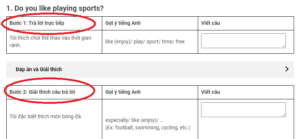
1. Can you remember your childhood friends’ names?
(*) Cố gắng sử dụng 1 số collocations Gợi ý để hình thành câu trả lời. Lưu ý là bạn KHÔNG cần dùng tất cả collocations này trong câu trả lời của mình, chỉ cần chọn ra 1 vài collocations hữu ích.
Collocations (*):
remember their faces, completely forgotten their names, memories fade, have good memory, earliest memory, if I remember correctly
2. Is it easy for you to remember people’s names?
Collocations (*):
short-term memory, long-term memory, have a good memory, vividly remember, remember their face,
3. How would you feel if someone forgot your name?
Collocations (*):
have the impression, overly-sensitive, stir up their memory, clean forgotten, memories fade
Part 2:
Describe a failure in your life that has improved you as a person
You should say:
- who the person was
- where you met him/her
- why/how you met him/her again
Collocations (*):
direct result, suffer the consequences, cause a lot of embarrassment, have a lot of influence on, attract smy mind went blank, clean forgotten, had the impression, remember their face, stir up memories, gave me a clue, trust my intuition, memories came flooding black, vividly remember